Southern Spain, Canary Islands
From Almerimar through the Strait of Gibraltar
A Lot of Work in Almerimar
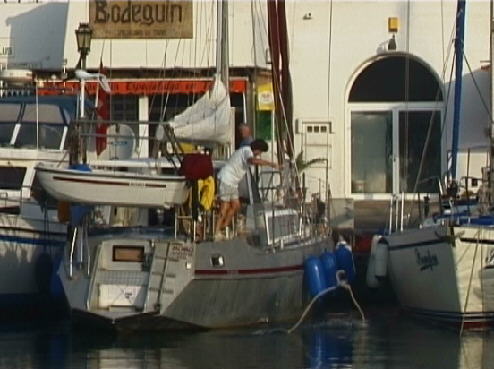
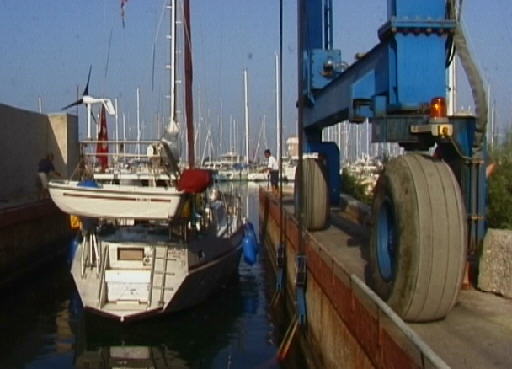
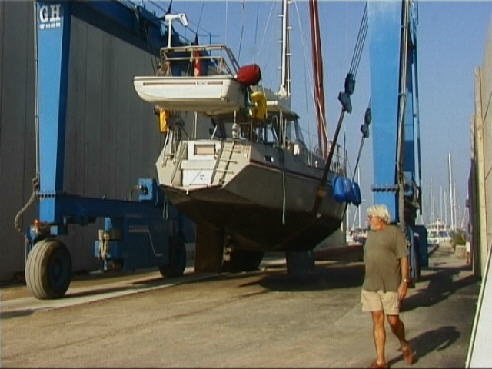
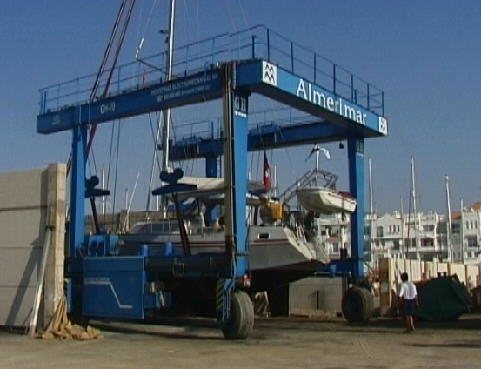
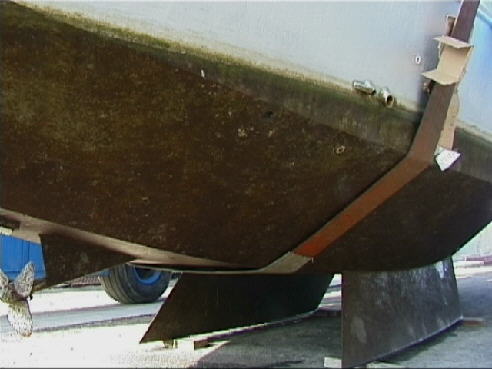
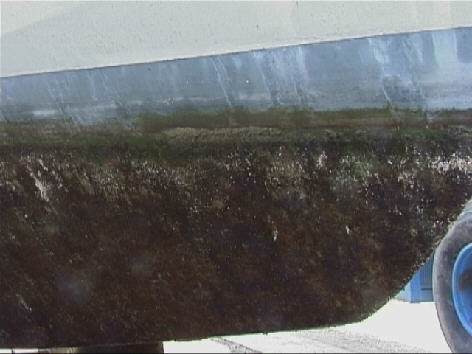
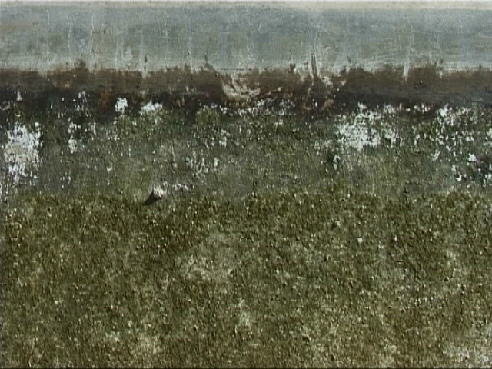
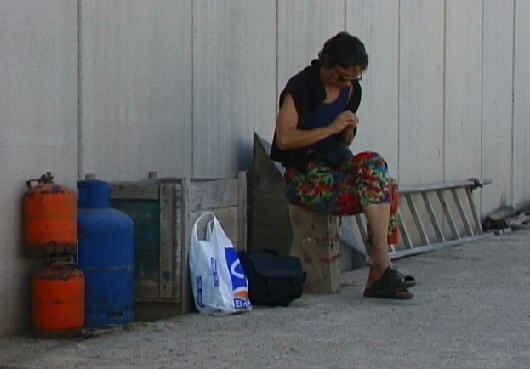
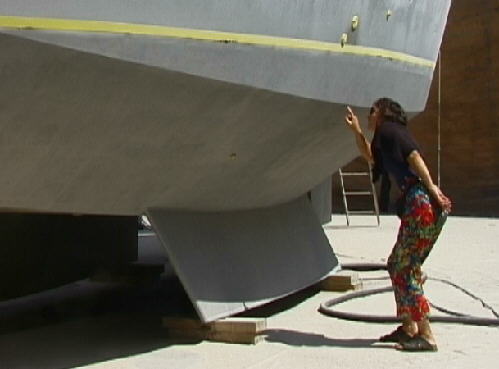
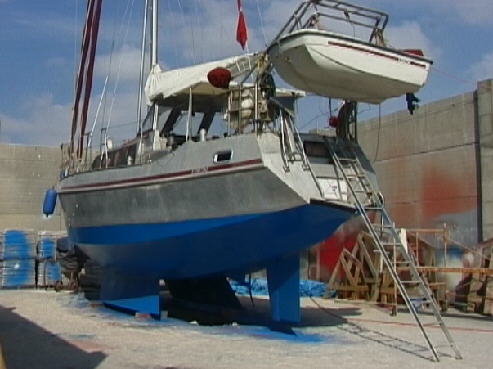
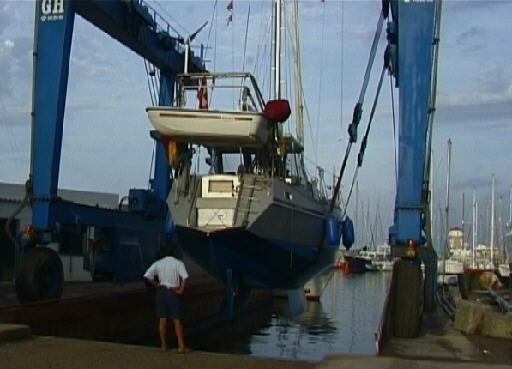
Monday, 2 September. On this day, as had been firmly agreed a month ago, our MOMO was scheduled to be lifted out of the water and sandblasted again. But well, scheduled. Mañana! The sand needed for this simply had not arrived yet. So it meant waiting, and the new date was set for Wednesday. Naturally, the Wednesday appointment did not work out either. Now I was getting slightly impatient (perhaps a bit too loud for the Spaniards), so the next date was agreed for Thursday. When the MOMO was hanging from the crane on Thursday morning around half past ten, a large truck with the eagerly awaited sand arrived right on schedule. First, the sand was unloaded quite leisurely while the MOMO was still hanging quietly in the crane straps and waiting. Along with her, a number of other boats were also waiting, wanting either to get out or back into the water.
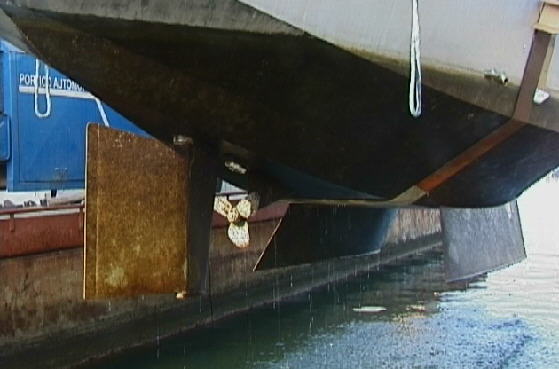
While the workers from PAOLO carried out the underwater work, I was scheduled to install our new watermaker. But what another surprise. The new watermaker was delivered with a 110-volt motor instead of 220 volts. A quick phone call to Mr. Fehlemann from PureWater in Germany, who lightning-fast organized an exchange via plane from America, and about a week later I had two watermakers sitting around in the boat. Now, however, it meant packing the wrong one into the large wooden box and sending it back to Germany by air. Sounds very simple, but here we are in southern Spain and not Central Europe. So the watermaker can now be installed, and right away comes the next, even more unexpected problem. While scraping barnacles off our three-blade propeller, I make a stupid mistake, and one blade of the propeller gets misaligned. No big deal, I think, after all I just had a new rigid spare propeller sent to me. Now I place both propellers next to each other to compare the pitch of the blades. But what a shock. The company SPW GmbH from Germany actually sent me a right-hand instead of, as ordered, a left-hand rotating propeller. Once again UPS receives 240.– € from us, and both propellers go back to the factory in Germany. Here the difference between a good company (PureWater by Mr. Fehlemann) and a less good company becomes clear. The expressly promised return date is not met. So we have to pay additional mooring fees. Parts are replaced on the folding propeller that were allegedly totally defective after only about 150 motor hours. To top it all off, I was supposed to pay another 240.– € for the delayed return transport. Well, as the saying goes: when something goes wrong, you truly get to know a company.
Why is it, though, that these slip-ups by companies always hit us?
A Warning to All Boat Owners Regarding the Port Authority of Almerimar
Shortly before the crane lift, I had to finalize the new contract with the port management, now for the dry dock. Signing that they assume no responsibility for any crane damage, etc. When we inquired at the beginning of August, it was very clear: the space on land costs 7.20 € for our MOMO. We also talked about the necessary sandblasting and other underwater work. Now, therefore, I am back in the Capitaineria and the office worker suddenly demands 300% more. The dry dock for sandblasting is always 300% more, namely 21.90 €. What do you do in this situation? Pay more than initially agreed, or look for another port with sandblasting facilities. But we have no choice. Once again we get to feel that we globetrotters are simply fair game to some people and companies. While I am still discussing matters with the responsible port officials, an angry German boat owner comes along and interrupts our dispute. He has just experienced an even bigger rip-off by the port authority of Almerimar. In January 02, at the boat show in Düsseldorf and also on the internet, a discount of 40% is offered for long-term berths in the port of Almerimar. So the German comes with his boat to this port, only to find out that now only a price reduction of 20% is granted. The harbor master's justification is that the agent in Düsseldorf passed on incorrect prices and the information on the internet was not correct anyway.
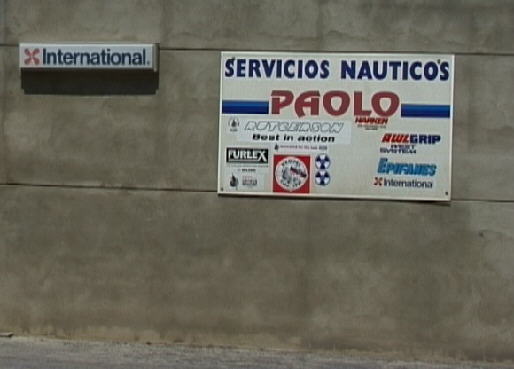
Now, however, I also want to report on the positive aspects of Almerimar. PAOLO's shipyard can be recommended without hesitation. If we were looking for anything, he could usually give us an address. He handled the endless phone calls with the Raytheon importer in Spain for us. The selling price for the additional 20 kg of epoxy primer we needed was an incredible 9.– € per kg lower than what I had to pay in Switzerland at Anwander & Co AG (needless to say, with a 40% shipyard discount). Despite the initial delays, the sandblasting and other underwater work were completed on schedule and satisfactorily. Finally, PAOLO covered a large portion of the 300% dry berth surcharge retroactively demanded by the port authority.
PAOLO, thank you again for your efforts.
Almerimar... and at last we can redo our underwater hull


Motor Sailing to Tarifa
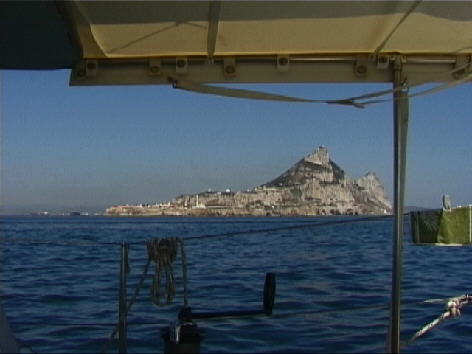
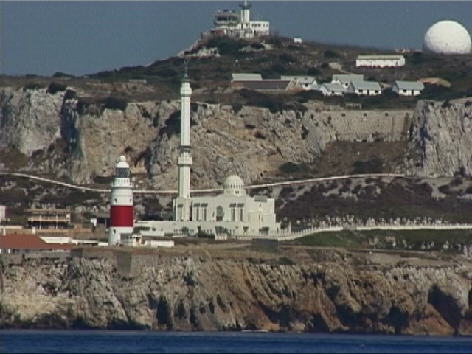
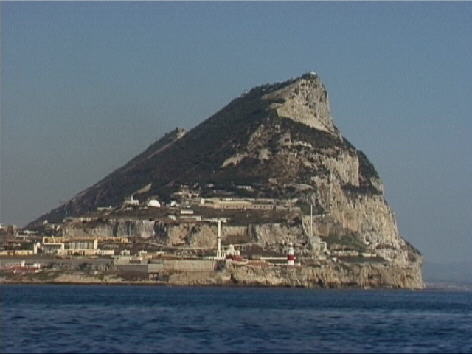
Küre Moser and Wale Iseli are coming to visit us in Almerimar to sail the leg to Gibraltar with us. Everyone is looking forward to wonderful days of sailing with a suitable wind. Unfortunately, this remains a mere anticipation. The sky is cloudless, the temperatures are pleasantly warm, but there is not a breath of wind to be felt. So once again it means: engine on! The saying among sailors that in the Mediterranean there is either too much wind or none at all is confirmed yet again. Without incident, we reach the Rock of Gibraltar. Since the conditions for passing through this strait are just right for us, we skip a stopover and continue straight on to Tarifa.
In the Atlantic for the First Time
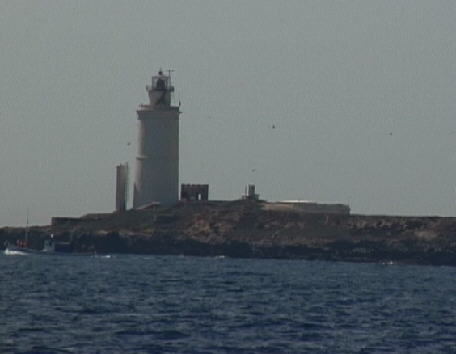
Our next destination is Santa Cruz de Tenerife. Over the next 10 weeks, we want to visit the western Canary Islands. On September 22, we leave Tarifa, the southernmost town in Europe. Our course first takes us along the heavily trafficked shipping lane of Gibraltar and then, as described in the textbook, to cross it at a right angle. Our speedometer tells us that we are sailing through the water at a solid 6 to 7 knots. In reality, however, according to the GPS, we are only making about 3 miles per hour over ground. The reason for this is that I completely underestimated the strong countercurrent prevailing here. Instead of calmly waiting a few hours in the port of Tarifa until the tide (ebb and flow) was right for us, I set off against the laws of nature like a true beginner. The punishment followed immediately, as we now spent several hours sailing along without any significant gain in distance.
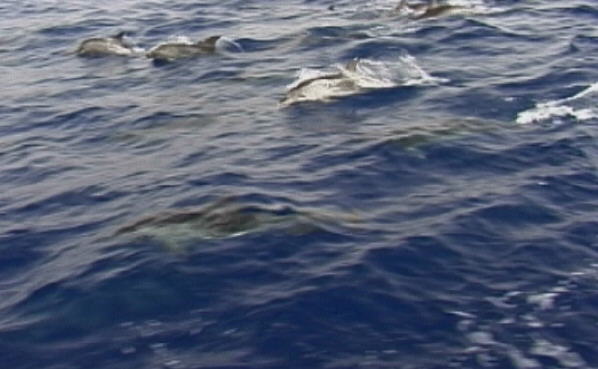
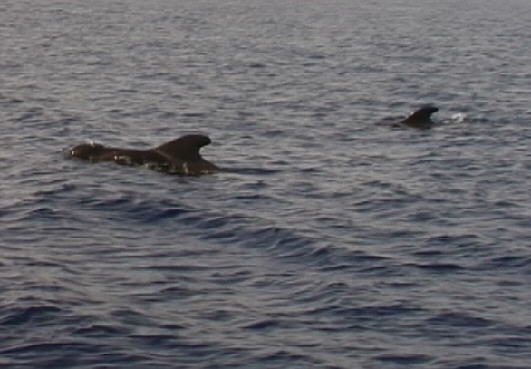
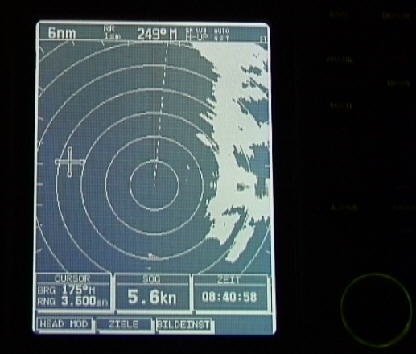
After our second night on the high seas, we have Casablanca abeam and, all of a sudden, the wind right on the nose. Over the next 30 hours, we have to tack against it and consequently make very little headway toward our destination. Just as quickly as the wind previously shifted to the very bad side for us, it is now completely gone. However, the relatively high swell remains and is very unpleasant without wind. So we decide to start our trusty engine again. At that point, we had no idea that we would have to travel under engine power not just for a few hours, but for a few days. That is how we truly learned to appreciate our large diesel tank for the first time. The further we get from Europe, the calmer we become. Yvonne's initial high level of nervousness subsides with every mile covered. Everyday life on board quickly becomes second nature. During the day, we do not have a fixed watch schedule. We have plenty of time together and can once again chat in peace and quiet about everything under the sun. During the nights, it is different. There we have to adhere to specific rest and watch times. We have a great helper in our radar, which alerts us with its shrill whistling tone to a boat or freighter within our danger zone. The egg timer is also repurposed and continually reset to 20 minutes. This ensures that if the on-watch crew member of the MOMO should doze off for a moment, they are immediately woken up again. Without any further noteworthy incidents, visits from whales and dolphins are no longer anything out of the ordinary, we reach our next stage destination on the morning of September 29: Santa Cruz de Tenerife.
The statement Yvonne made shortly after we had safely moored in the harbour surprised me a great deal and pleased me even more: "Actually, it is a real pity that we have already arrived. The lonely time on the high seas was fantastically beautiful."
Now a Little Anecdote at the End
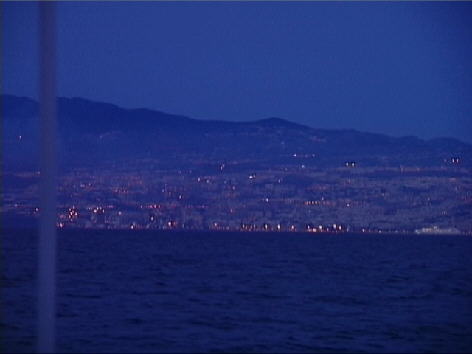
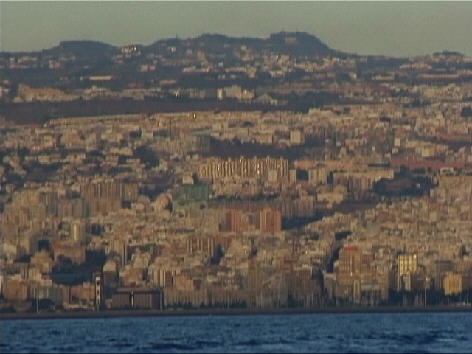
As we enter the harbour of Santa Cruz, I suddenly hear Yvonne calling something incomprehensible from the bow into the cockpit, looking very excited. When I ask, I learn that in the same harbour, two berths away from us, there is another Momo. Also made of aluminum and also a Reinke, just slightly smaller than our MOMO. This one was also built by its owners and very nicely finished at that. Barbara and Wolfgang, a German couple, have been living their dream on this boat for 2 years. At this time, we do not yet know that the two boats will be closely linked, in the truest sense of the word, because of our Aquadrive breakdown. More about this story next month, though.
From Almerimar, through the Strait of Gibraltar, to Santa Cruz de Tenerife