USA . East Coast
On the Intracoastal Waterway: Hilton Head, Charleston, Beaufort
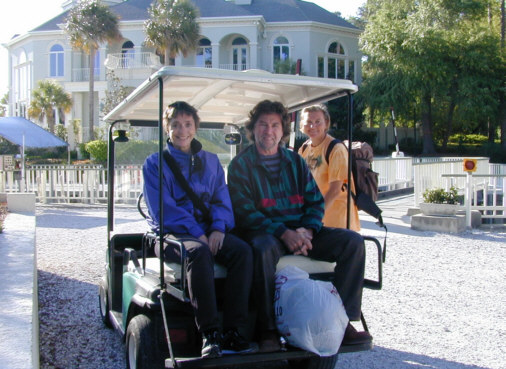
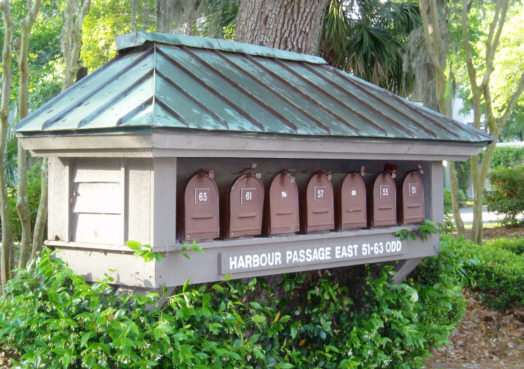
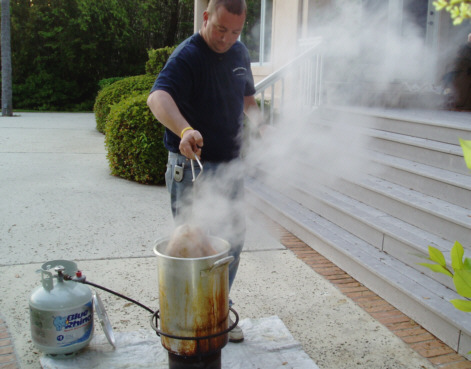
Our next stop, on our way north, was the island of Hilton Head. There we wanted to visit Karin and Klaus from the SY "Lucky Touch", with whom our friends Barbara and Wolfgang had become friends in the Bahamas.
Hilton Head is a completely and very modernly developed island, with many different "plantations". Today, however, nothing is cultivated here anymore. The various "plantations" are self-contained developments, with beautiful and sometimes even magnificent villas. We anchored directly in front of the harbor. Since we were private guests of Karin and Klaus, we could always pass the strictly controlled entrance gate without any problems. Shortly before our arrival, Klaus had unfortunately flown home to Germany on vacation. Thus, the whole burden of hospitality rested solely on Karin's shoulders. She chauffeured us to the various supermarkets several times and also invited us to a real American turkey dinner. She organized and mastered the whole thing perfectly and for that we would like to thank her once again very much.
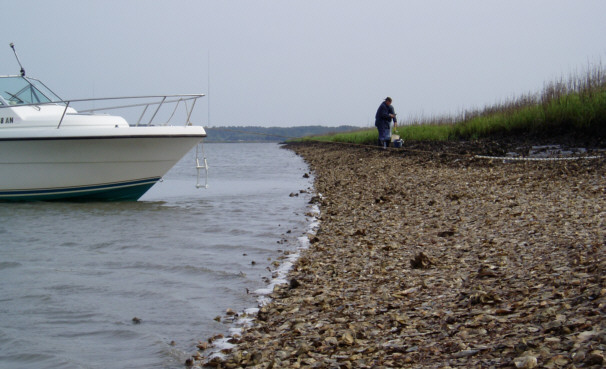
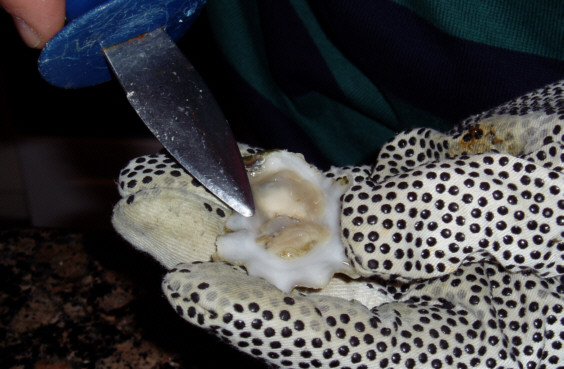
With Franky, her son, Wolfgang and I were able to go "oyster picking". After a short ride with a fast motorboat, we found a huge oyster bank in a side creek. You could really speak of "oyster picking" there. Billions of these actually unsightly mussels lay at our feet. I really felt like I was in the land of milk and honey. Ten mussels in the bucket and one straight into the mouth. It strongly reminded me of our old chicken coop, where we could collect the fresh eggs, partly directly after laying and still warm from the chicken, and sizzle them in the pan afterwards.
Charleston was founded in 1670 at Albemarle Point, on the west bank of the Ashley River, and named "Charles Town" in honor of Charles II. In 1783, when it was granted city rights, the name was changed to Charleston. On April 12, 1861, the American Civil War began in Charleston with the bombardment of Fort Sumter. With the establishment of a naval shipyard in World War I and other military facilities in World War II, an economic boom occurred. The population today is about 100'000.
That is a brief history, because today Charleston is a port city in South Carolina of great importance for coastal and overseas trade. The industry produces, for example, chemical and petrochemical products. In the north of the city are a large shipyard of the US Navy and a US Air Force base. The city is home to, among others, the College of Charleston (1770) and the military academy of South Carolina (1842).
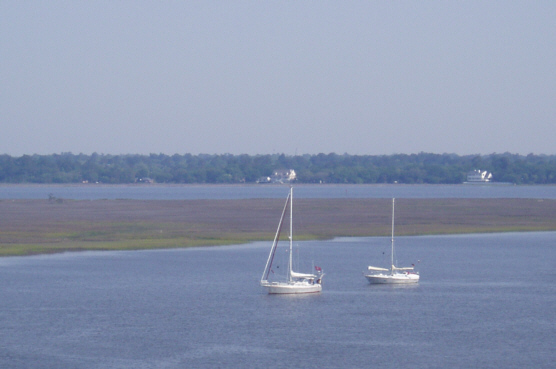
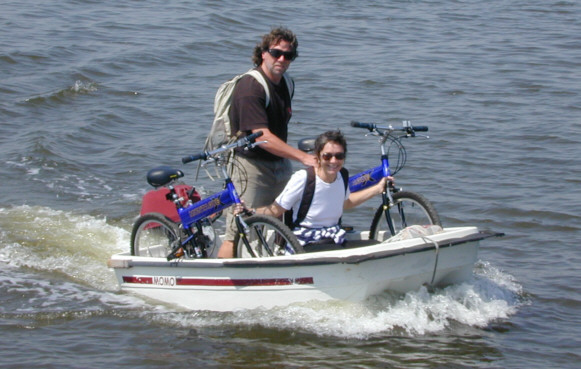
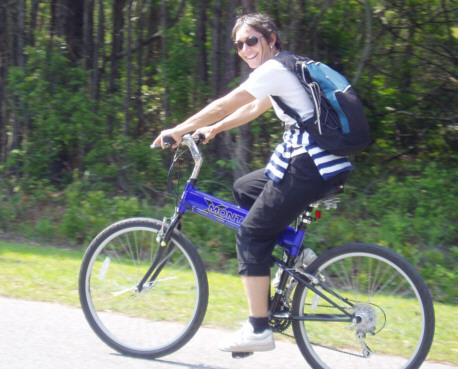
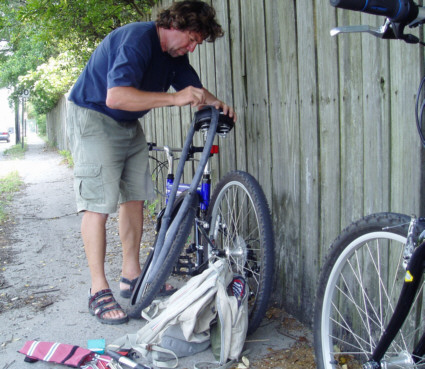
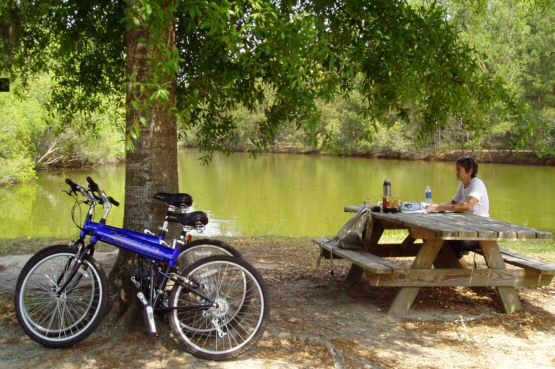
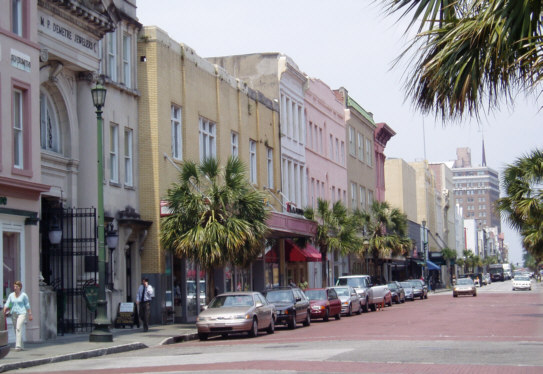
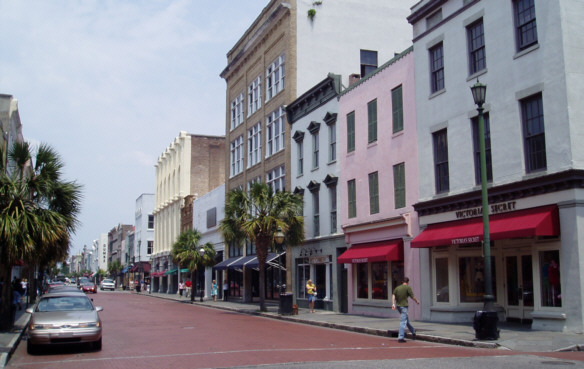
We ourselves had dropped anchor shortly before Charleston, in the quiet Stono River. With our bicycles we could reach the city center, or the surrounding recreation areas with their beautiful county parks, very quickly from there. We liked Charleston very much, because the numerous stylishly and carefully restored houses from the 18th century characterize today's cityscape.
Wilmington / Fire Department and Bernina
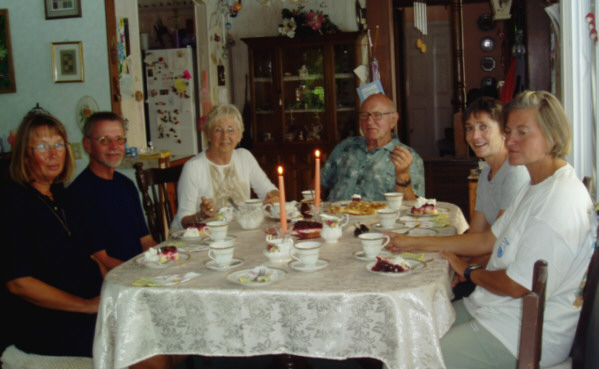
Our next longer stay was planned for Wilmington. We had been in contact by e-mail with the local Trans-Ocean base leader there, announcing our arrival. He was delighted about our visit, as we were the first TO boats to stop by in over two years. Accordingly, Richard and Dorothea spoiled us. They made themselves and their cars available and helped us cover the long distances when running various errands. To top it all off, Dorothea even baked a cake, and a truly exquisite one from her kitchen.
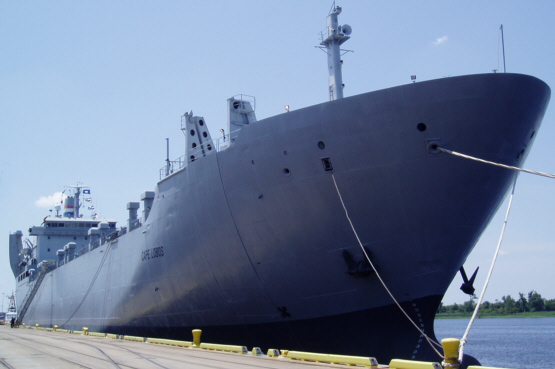
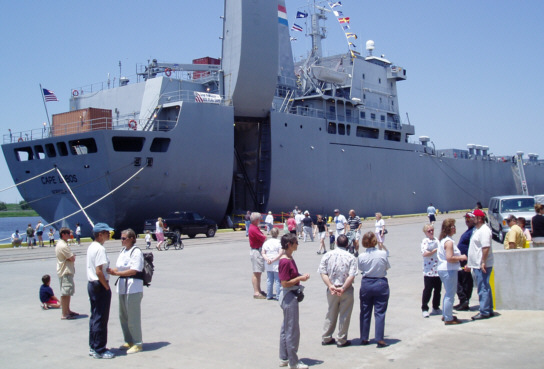
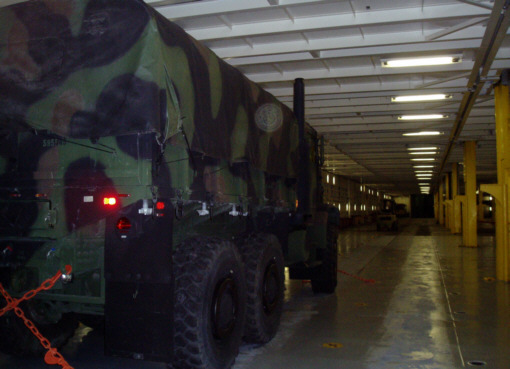
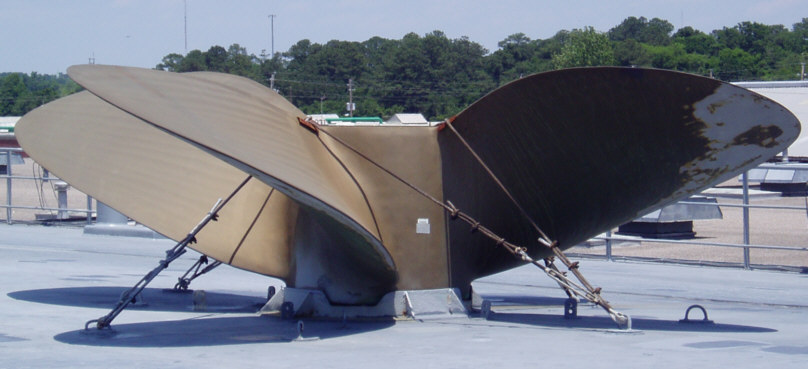
Over the weekend, the "Cape Lobos", a US Navy supply ship, came to Wilmington. During the Maritime Festival, it could of course only be visited on a guided tour. Unfortunately, there was not that much to see. Spartanically furnished captain's and crew quarters, an empty cargo hold, the somewhat antiquated bridge, and that was about it.
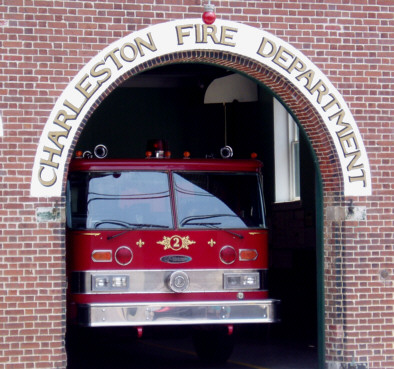
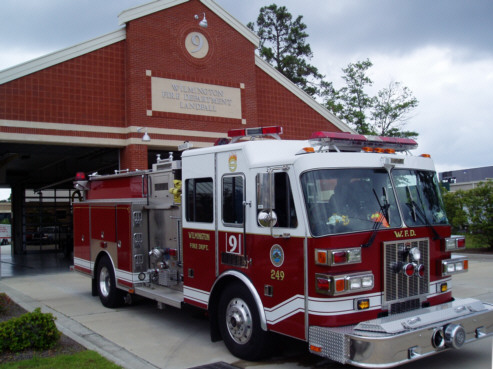
During one of my bicycle exploration tours, I came across the fire station. In front of it stood the pride of the local fire department, a brilliantly polished fire truck. I was totally thrilled by it and naturally had to capture this object with my camera immediately. I was still taking pictures when suddenly a firefighter was standing next to me. He was pleased with my honest compliment about the condition of the well-maintained vehicle, and one word led to another. Finally, it turned out that in his second job, he was a sewing machine mechanic. He still worked for the local representative of the Swiss Bernina sewing machines. I told him that Yvonne had a Bernina machine on board, but that it had only been working unsatisfactorily for about a year. "No problem, I am the right specialist for Bernina problems. Bring the machine to the shop." But now I had a problem. How was I to bring the sewing machine to his employer by bicycle? However, that did not pose an insurmountable task for the American either. The next morning his shift would end and he would be at the shore by our anchorage at eight o'clock, provided, of course, that there wasn't a fire somewhere to fight. Everything worked out perfectly, and at twelve o'clock the repaired sewing machine was brought back to us. This time, the sewing-machine-repairing firefighter even came accompanied by his boss. She definitely wanted to see who was carrying a Bernina sewing machine around the world.
Beaufort / North Carolina
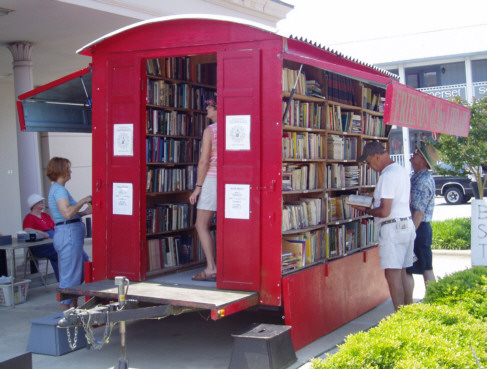
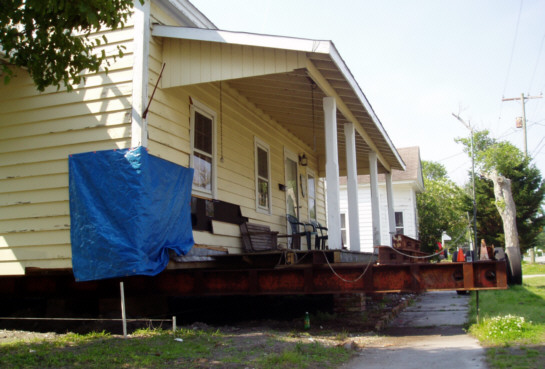
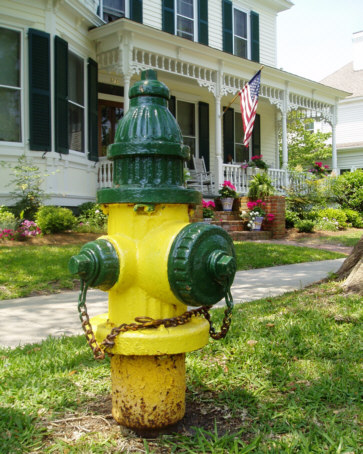
Another small town on our way north was worth a short stay. Aside from a few very nicely renovated houses and the highly interesting North Carolina Maritime Museum, Beaufort had nothing out of the ordinary to offer. But the museum alone was something special. Not just because admission was free here as well, but simply because of how the museum was set up. As is customary here in the USA, the whole thing was supported and maintained by many volunteers. However, that did not mean the exhibition was amateurish. Quite the contrary! What these people had neatly presented and meticulously explained was quite impressive. We were also able to look over the boatbuilders' shoulders and watch how wooden boats are still built there today according to old plans.
ICW - further impressions
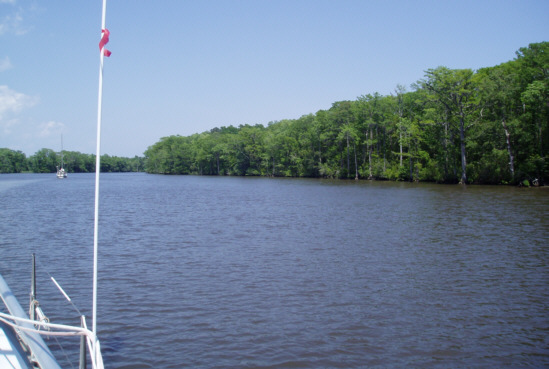
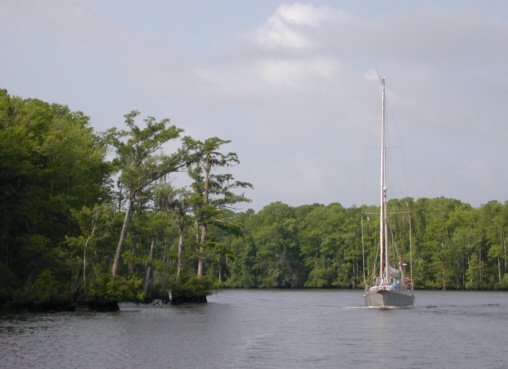
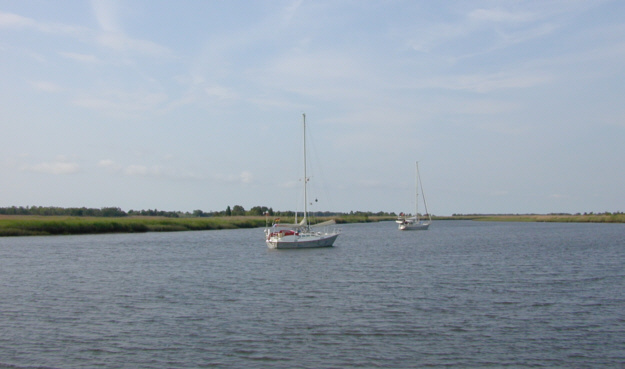
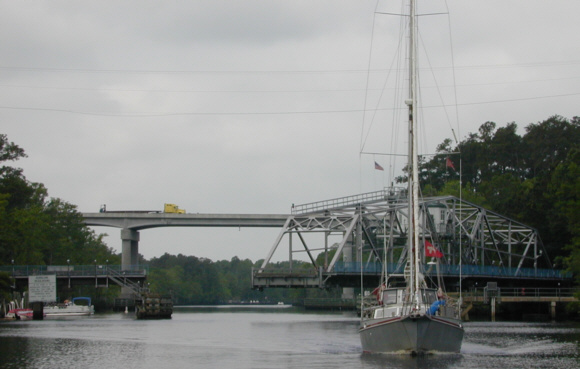
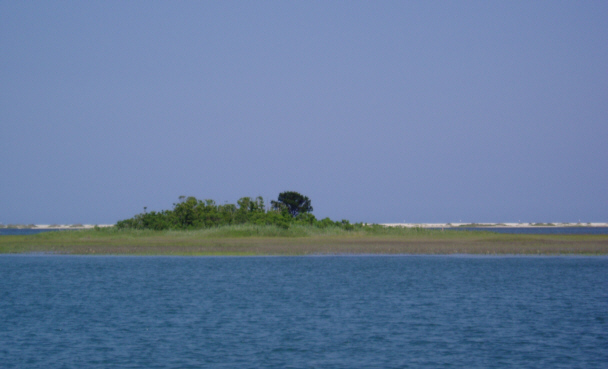
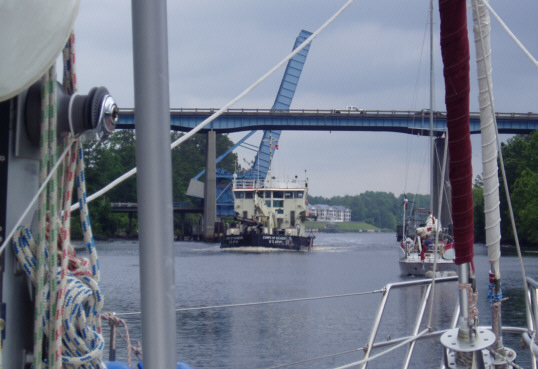
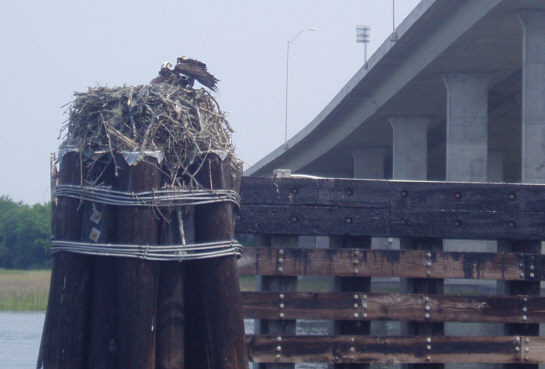
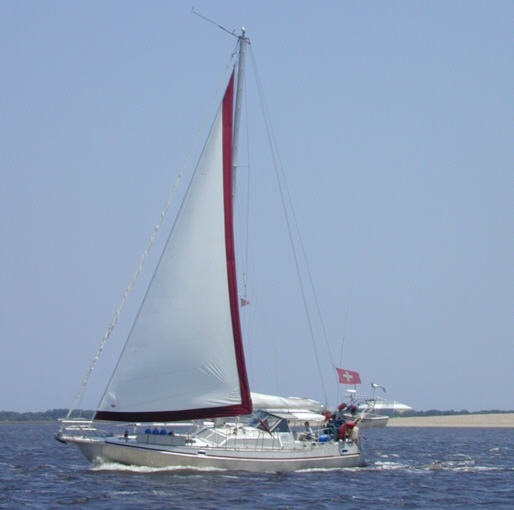
The sometimes quite strong currents of ebb and flow occasionally helped or hindered us. They mostly ran at 1 to 2 knots, in exceptional cases also at 2 to 3 knots. The tidal range was always between half a meter and two meters. The entire ICW is dependent on tides to a very varying degree. This is a phenomenon and we first had to get used to it. Since the waterways (creeks) behind the coastal beaches always have multiple outlets to the sea, it happened repeatedly that the tide, which had previously been so helpfully pushing us, suddenly came toward us halfway because the water was being pressed in through an opening to the sea ahead. Despite careful study of the current tide and current tables, we were surprised several times by such countercurrents.
On some days we encountered barely a dozen other boats, and that right in the middle of the "migration season" heading north. American and Canadian skippers do the same as the retirees jokingly called "Snowbirds", who regularly flee to warm Florida in autumn before the cold northern winter. In spring, coming from their winter quarters in Florida or from the Bahamas, they travel back via the ICW north to the Great Lakes of Canada or to New England. In early autumn, they then embark once again on the six- to eight-week trip heading south. Just as is actually our plan for this year and the next.
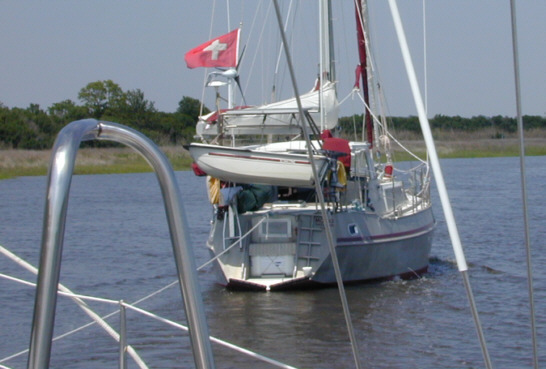
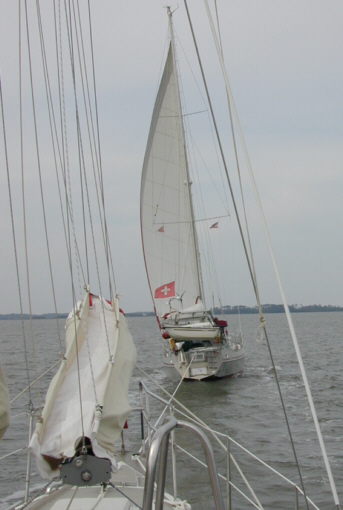
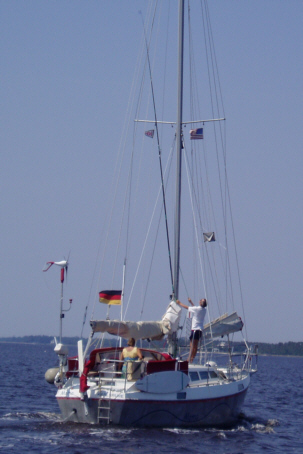
We didn't really experience much out of the ordinary on this stretch of the route, except that the engine's water pump on the German Momo suddenly failed. This naturally happened in one of the very sparsely populated areas. Thus it was clear that our MOMO could finally repay her for "bringing her into port", back then still in Tenerife. So she now took her smaller sister in tow for a full two days. Our engine, which as previously written is unfortunately a bit weak, mastered this extra load without even complaining slightly.