Alaska
Alaska: Humpback Whales and Glacier Bay
Hoonah
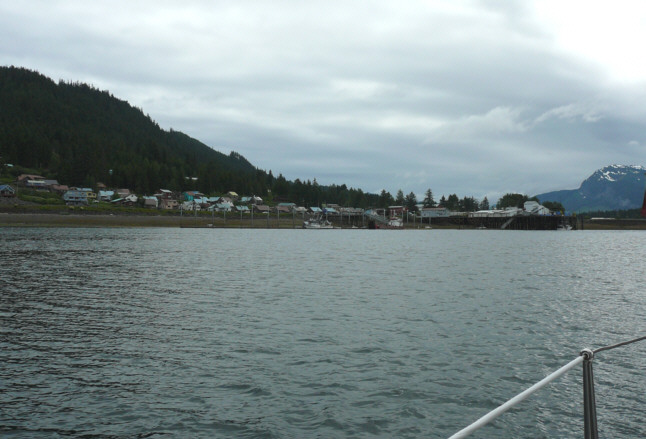
The eastern part of Icy Strait was now in our wake, naturally accompanied by drizzle once again. Hoonah appeared on the horizon to port. This is a small but old native settlement on Chichagof Island. Today, only about 900 people live here, along with, according to the large warning signs posted everywhere, very, very many grizzlies. However, we still have not caught sight of any of them. Until now, Yvonne has spent hours scanning every anchorage with binoculars, but unfortunately with zero success. She is slowly starting to get cabin fever over the bears...
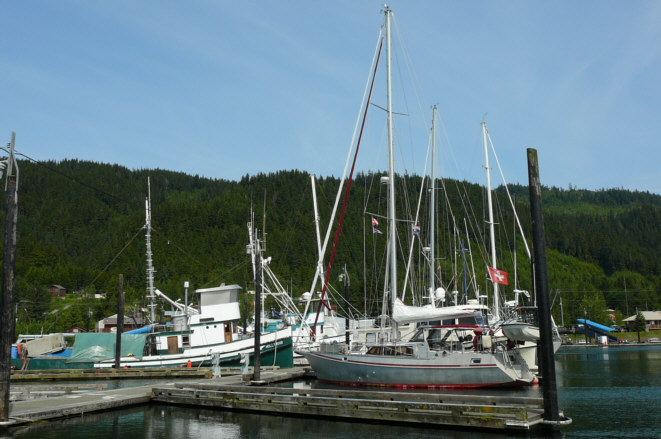
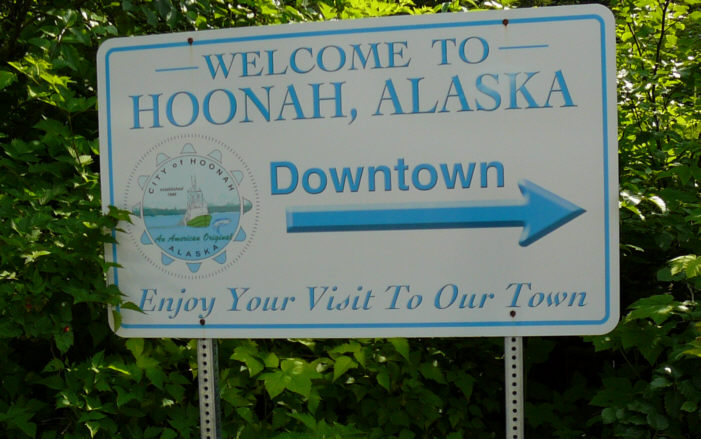
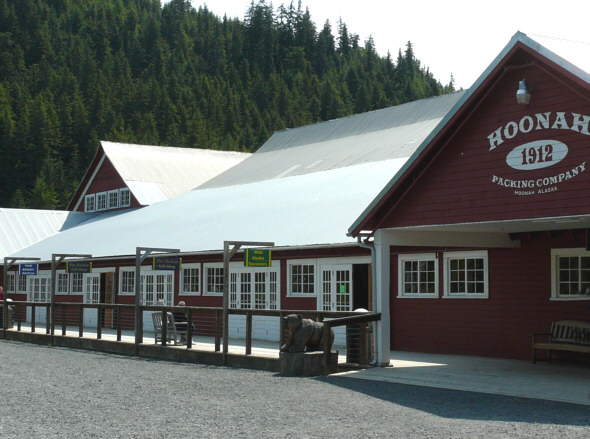
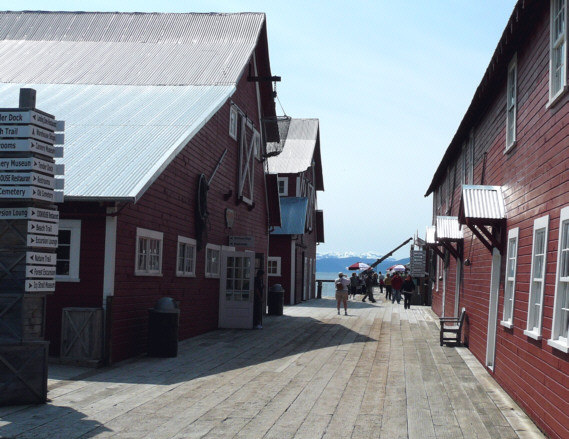
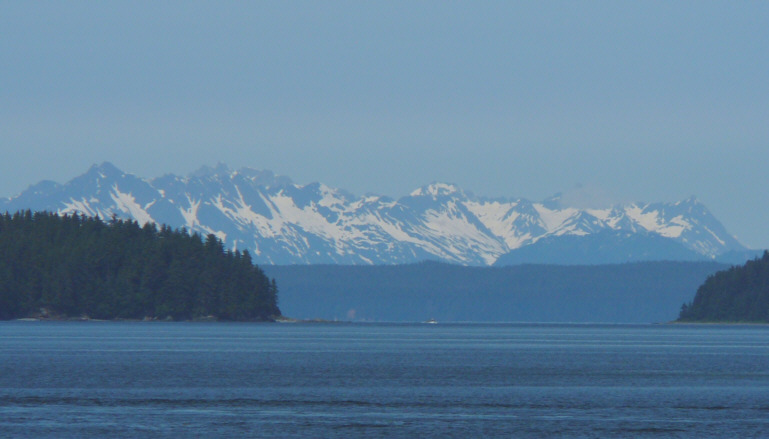
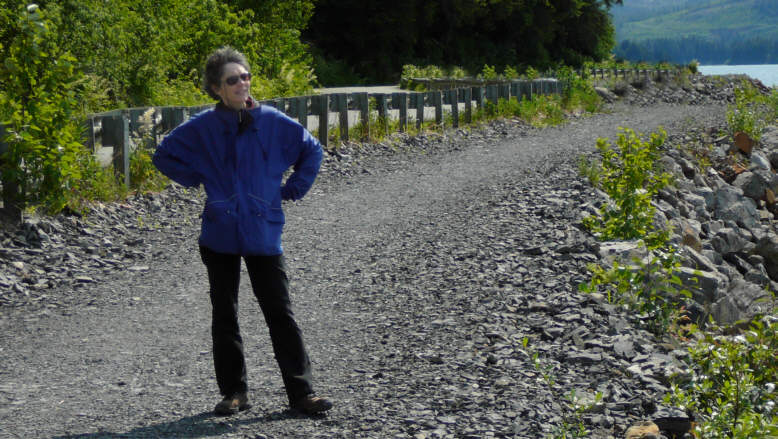
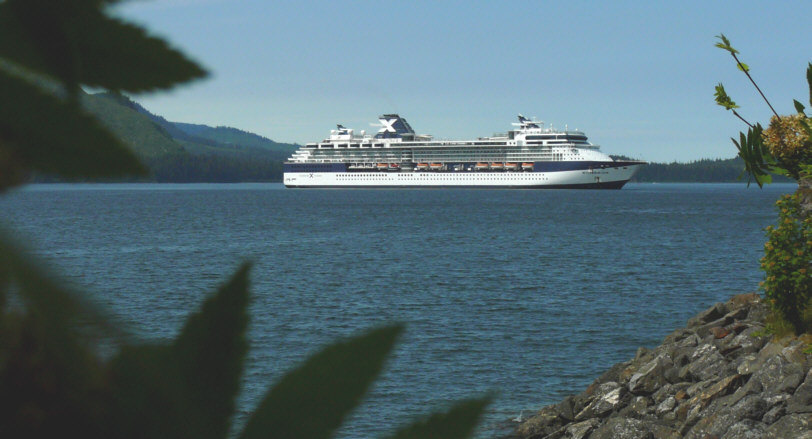
Hoonah means "village by the cliffs" and is the largest Tlingit village in Alaska. It was the main village of the Huna, a Tlingit tribe. In 1880, the North West Company built its first store here, and as early as 1881, a Presbyterian mission with a school was constructed. In 1887, about 450 to 500 people wintered here. From 1901 onwards, people could drop off their mail at the newly established post office. The Hoonah Packing Co. built a large cannery north of the town in 1912. Unfortunately, in 1944, a large part of the town and many priceless Tlingit cultural artifacts were destroyed by a fire.
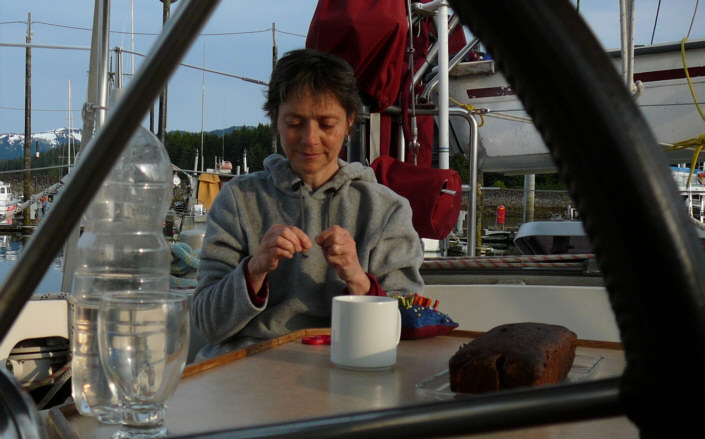
Today's residents live mainly from fishing and the timber industry. However, the example of Hoonah clearly shows that the much-maligned cruise ship business can also have its good sides. Thanks to the ocean liners stopping here for about four hours, the imposing old cannery, which had been left to decay, could be renovated. Today, it presents itself as an impressive and worth-seeing museum. The fact that it is only ever open when a cruise ship is anchored here is completely understandable. The few other tourists who stray here can easily adapt to these times. The day after our arrival in Hoonah presented itself cloudless. Early in the morning, we met Paul, the harbor master, strolling around the dock singing. "Today is one of those very rare Hoonahlulu days," he proudly announced again and again. To explain: a Hoonahlulutag is when there is sunshine the entire day and it gets really warm, around 26 degrees. Indeed, on that day, since..., sorry I no longer remember when exactly this was, we were walking around in just a T-shirt. We were also able to eat cake in the cockpit, and Yvonne worked on her necklaces. I read somewhere once that on such a day, all state employees in Juneau get the day off. Whether this is true, however... well, please without guarantee.
With the reservation for the Glacier Bay Park, there were suddenly some problems after all. During our first contact, while still in Prince Rupert in Canada, we were told that an unusually small number of reservations had been received this year due to extremely high diesel prices. We should just wait until we were only a day's travel away from the park entrance and make the final reservation then. Now we are shortly before the park and receive the following response to our telephone reservation inquiry: "Sorry, no space left. Call back tomorrow at 06:00, maybe a boat didn't arrive, or one cancelled at short notice." The next day, a space had indeed become available, and another one for a week later. So it meant for us that Mad Dog would set off alone the next day and we would wait another week in Hoonah. This was actually no problem at all, but only the arrogant way this state national park organization treats its visitors is incomprehensible. On our one-year USA camper trip, we had certainly visited around 15 national parks and were therefore used to a completely different way of working.
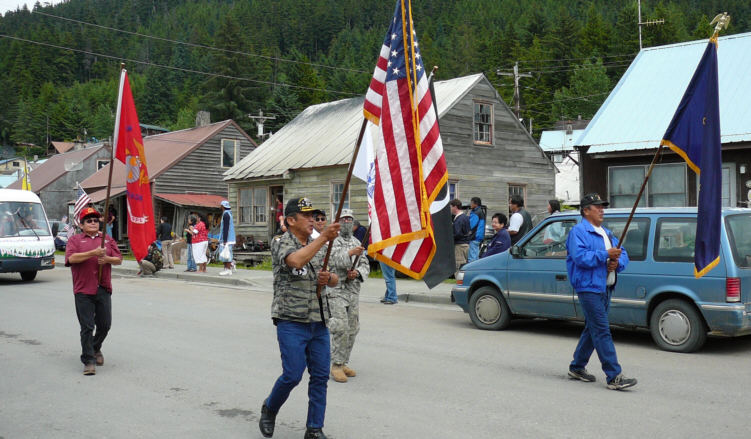
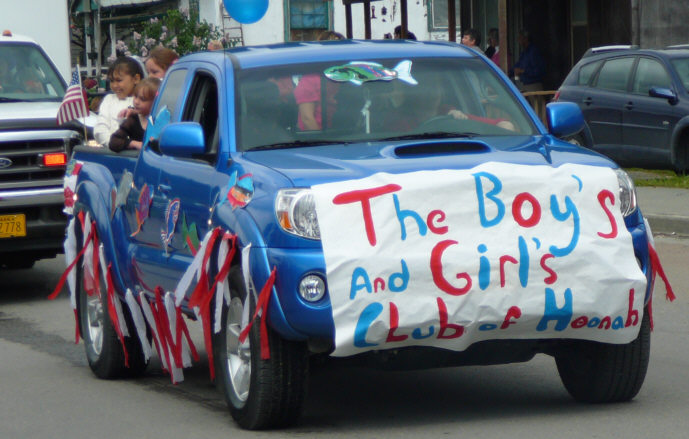
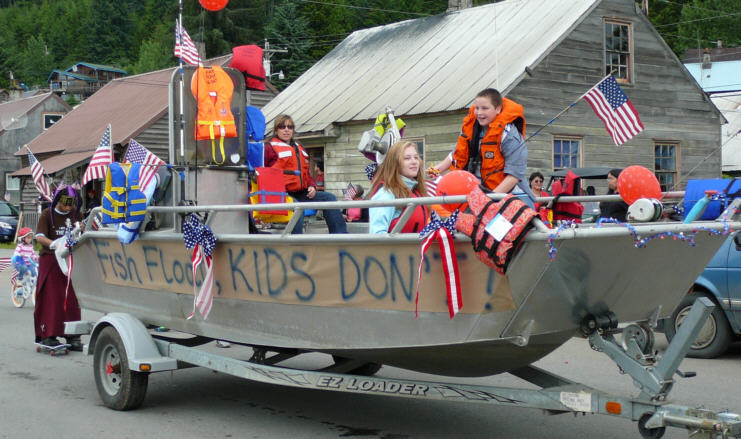
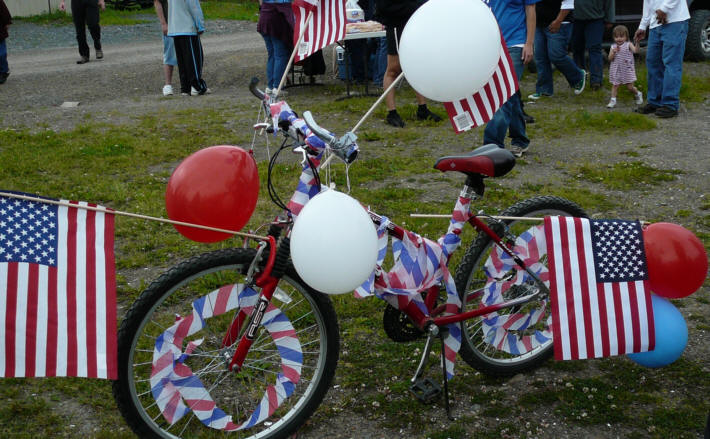
Thanks to our unplanned extension of the Hoonah stay, we had the pleasure of experiencing the 4th of July, which is the national holiday of the USA. Since we were in a village predominantly populated by natives, I was really curious how this special day would be celebrated here. As is well known and understandable to us, the relationship between the indigenous population and the immigrated white people is not exactly the best. Both ethnic groups participated in the simple street parade mixed together, and the faces of the natives also showed great pride in being citizens of the United States.
Encounter with Humpback Whales
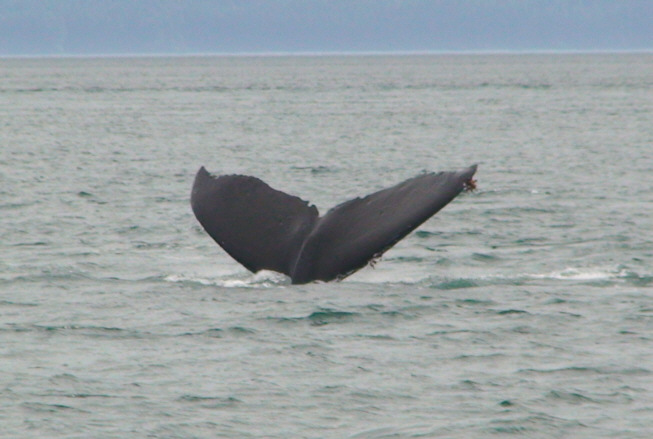
Since we involuntarily had to wait a full week for our entry into Glacier Bay National Park, we used this time to go whaling. However, we only shot digitally and not with sharp harpoons. So there was no danger for these Stone Age giants, but rather for us, because during the huge spectacle there was a danger that we could no longer close our open mouths in sheer amazement.
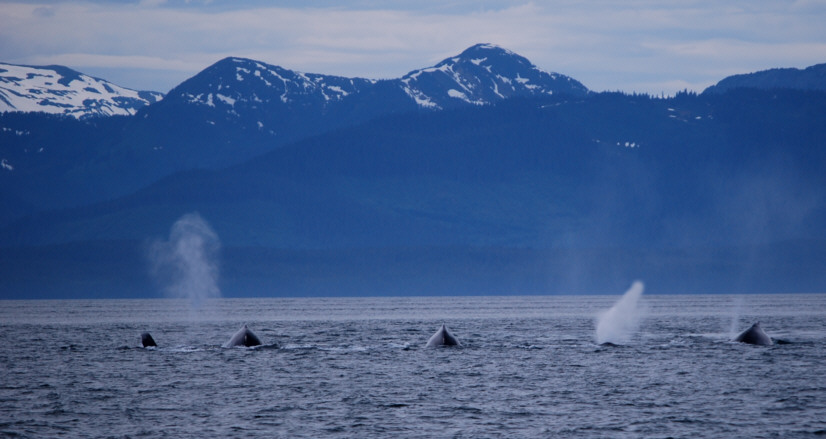
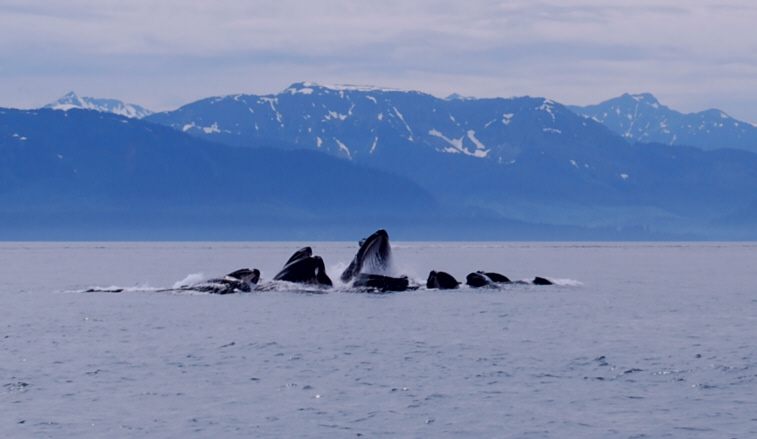
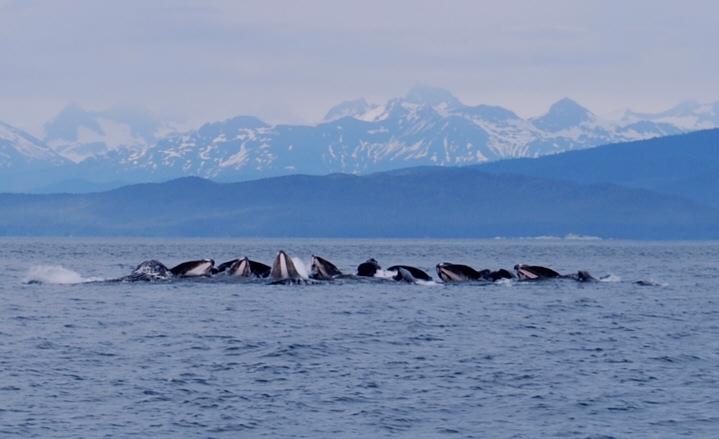
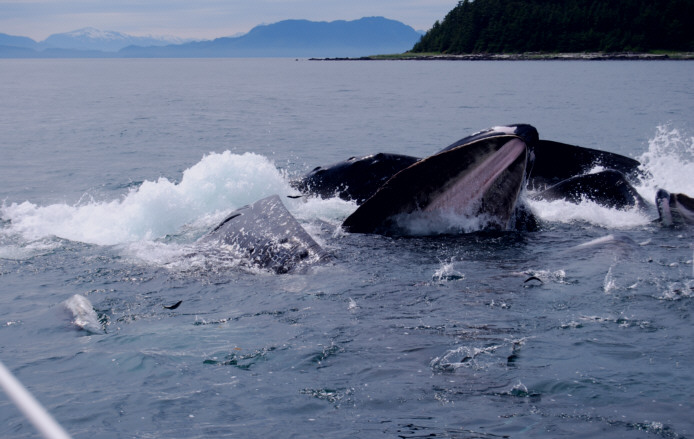
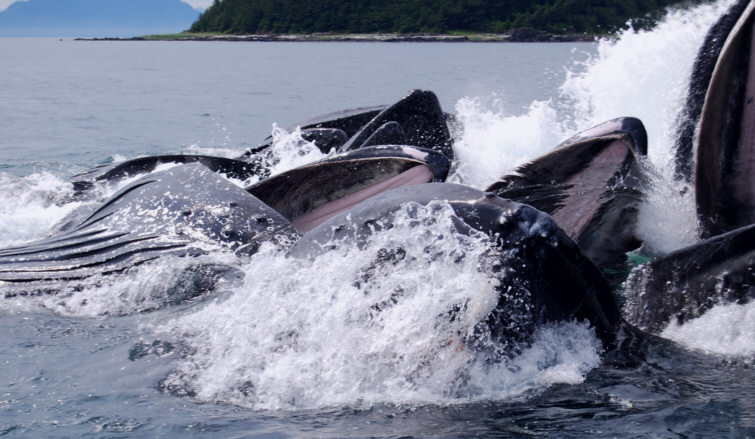
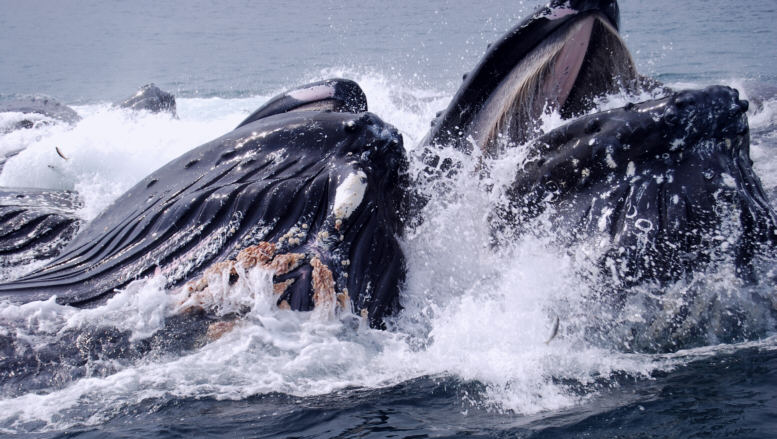
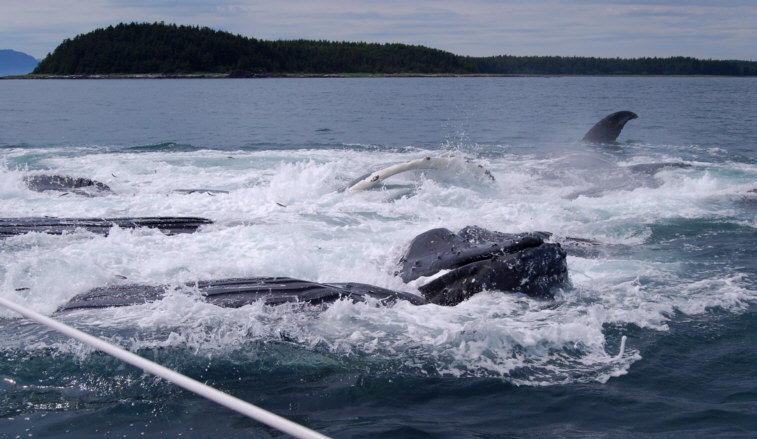
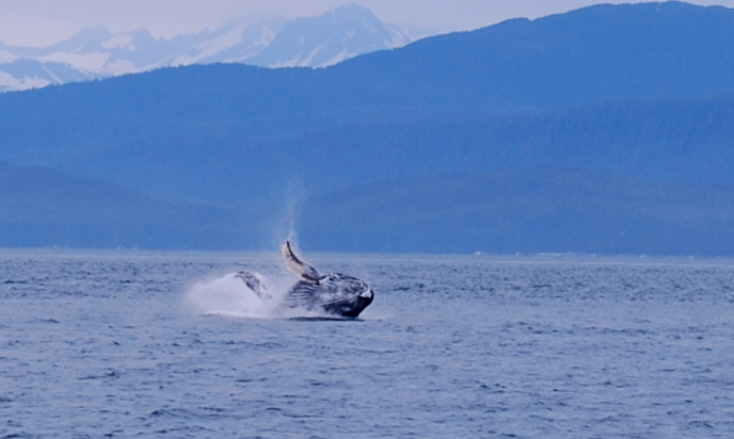
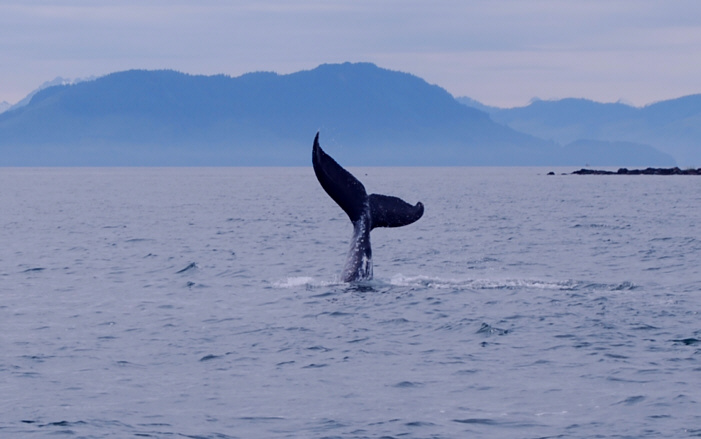
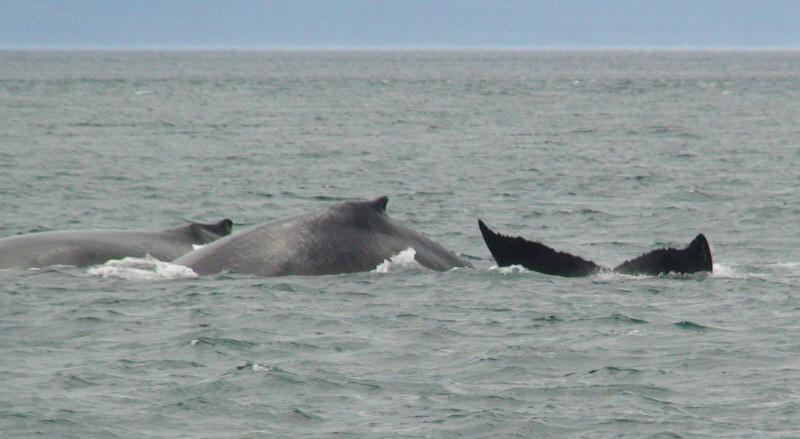
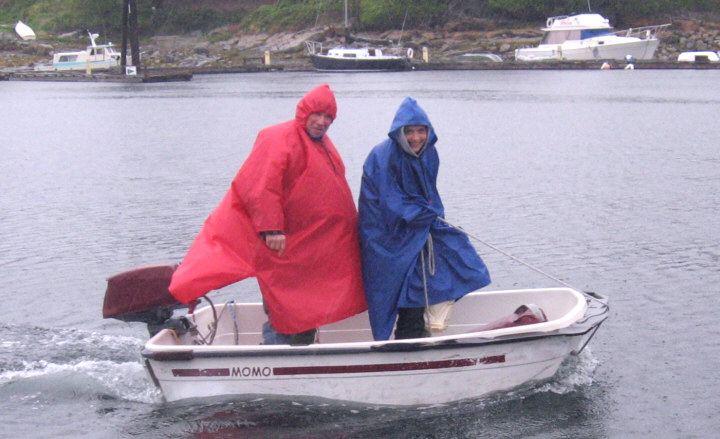
Point Adolphus in Icy Strait is an ideal place to watch humpback whales. Here, various whale families gather in the summer months to forage for food together as a group. From our MOMO we could observe how the whales glided majestically through the water, dove powerfully into the depths, or leaped out of the water with a tremendous bound. Sometimes some of these performers even put on real shows.
This reminds me of an advertising slogan from ZDF: "With us you are in the front row." But all I can say to that is: "With MOMO you are right in the middle of it."
It is really hard for me to describe what we saw, because we also caught the eerie yet friendly sounds of the whales with our ears. Sometimes it sounded all around our MOMO and we no longer knew where to listen and look. When one of these colossi jumped out of the water near the boat and landed with a loud splash, we could only marvel at all the power and energy. A mass of flesh weighing 25 to 30 tons was flying through the air. When I imagine what it would take for MOMO, and this one is "only" 18 tons heavy, to be able to sail through the air like that...
Humpback whales feed on krill and smaller fish and eat 1 to 2 tons per day during the feeding season, of course. In doing so, they have developed an amazing and unique hunting method. One or two whales dive under a school of fish and form a ring of air bubbles around it. Since smaller fish are generally known to avoid turbulent water, they do not swim through this net of air bubbles. Now all the other whales in the group swim into this school of fish, of course with their mouths wide open. Now they catch as many fish as possible before the whole procedure repeats itself. Humpback whales belong to the group of rorquals and have skin folds in the front third of their body, the so-called grooves. When feeding, these skin folds are spread apart so that a huge reservoir for food intake is created. The water taken in with the hunt is now pressed out again. However, the exit for the fish and krill is blocked by the baleen.
The population of humpback whales is considered extremely endangered. According to experts, the total number worldwide is estimated at only 5000 to 7000 animals. It was not until 1966 that a worldwide total ban on hunting was enacted, which, however, suffered a severe setback in 2007: on November 18, 2007, Japan announced that it wanted to start the first large-scale hunt for humpback whales since 1963. "How unimaginably selfish and stupid a part of humanity is!"
Glacier Bay National Park
July 8, 2008, now we had arrived at the entrance to another highlight of our blue water journey. In Bartlett Cove, the official ranger station of the national park, we had registered and learned a lot of interesting and useful information about life and our own behavior in the park in a three-quarter-hour information show. In order not to strain the fragile nature of this extraordinary nature park too much, only 25 private boats and no more than 3 cruise ships at the same time are allowed to travel through the huge area daily.
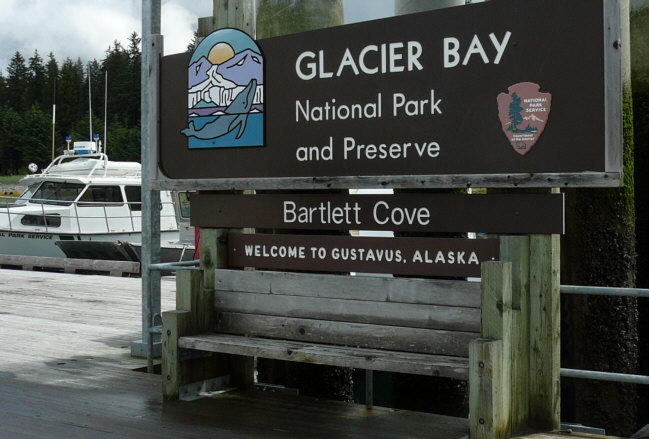
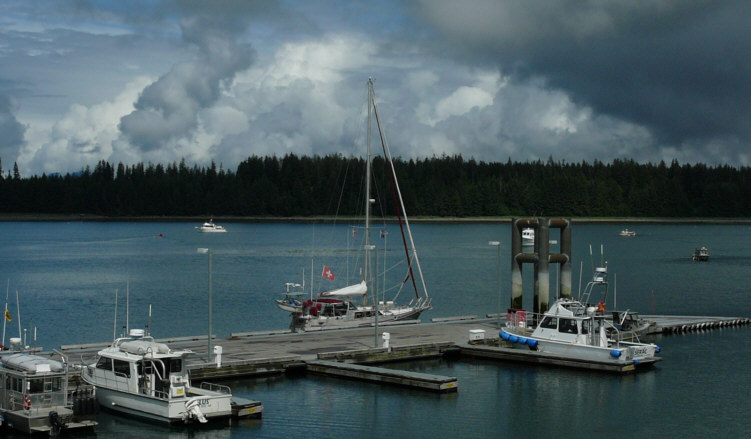
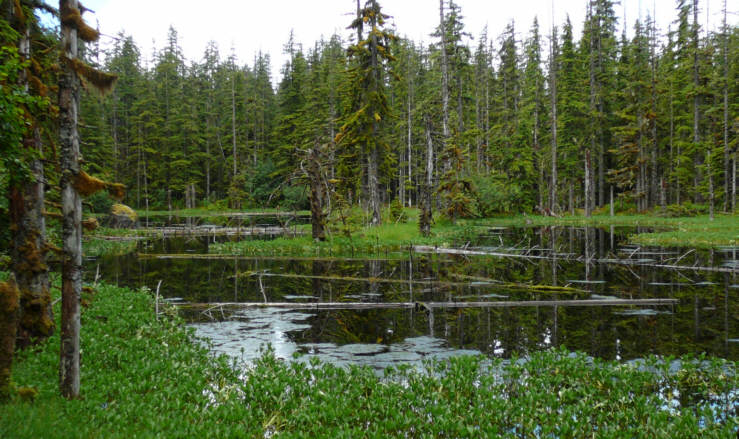
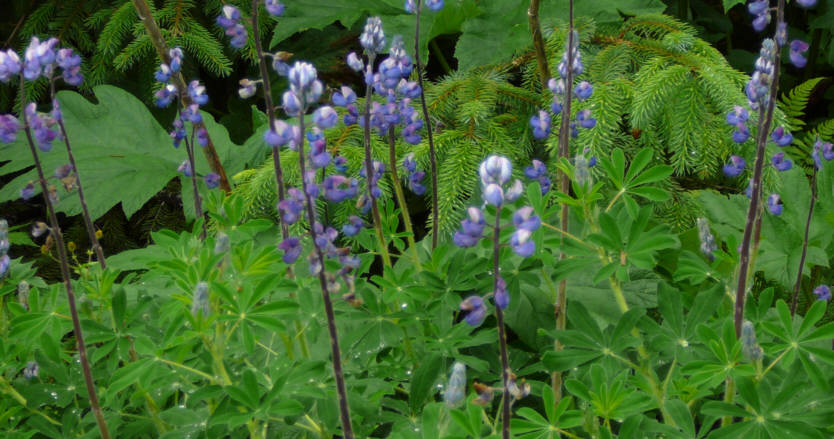
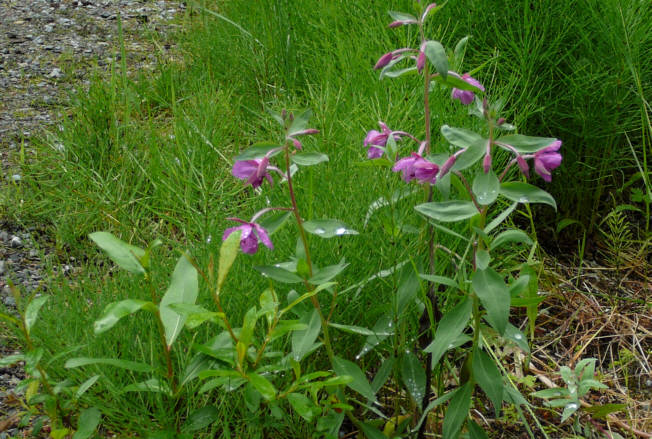
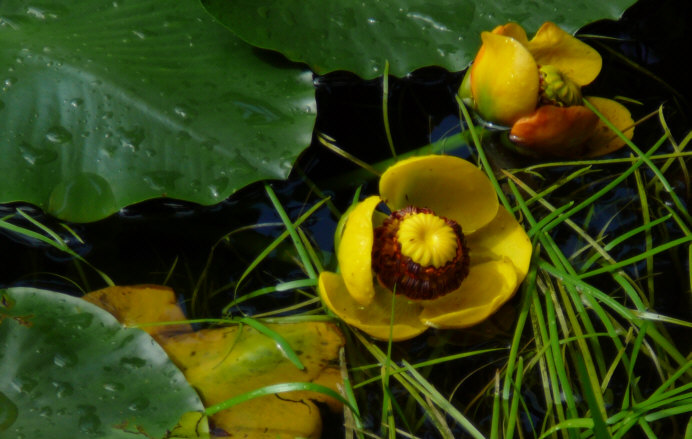
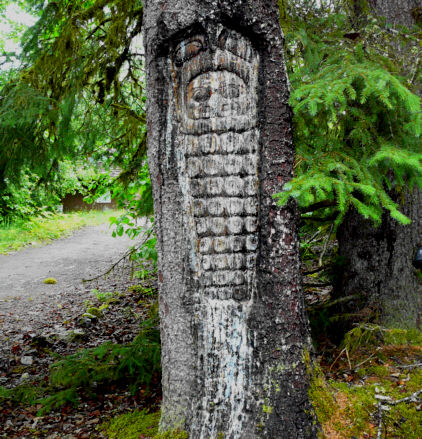
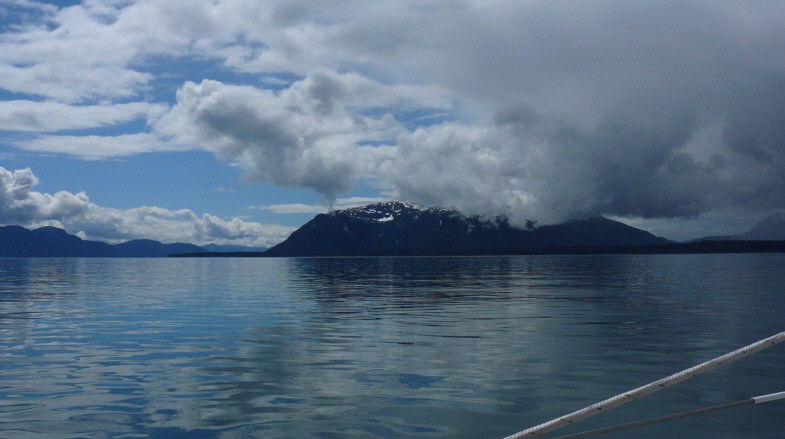
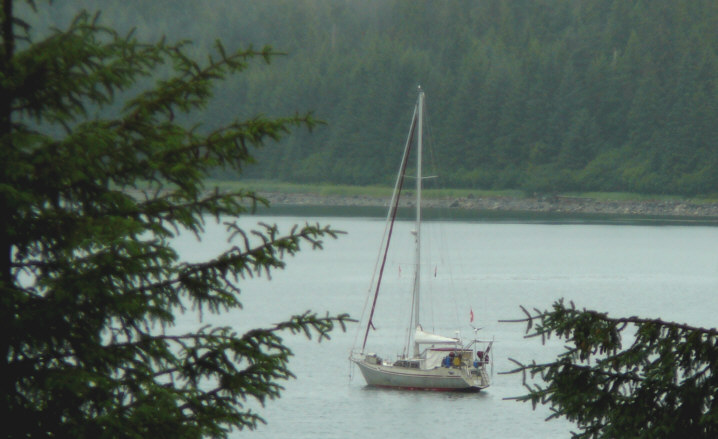
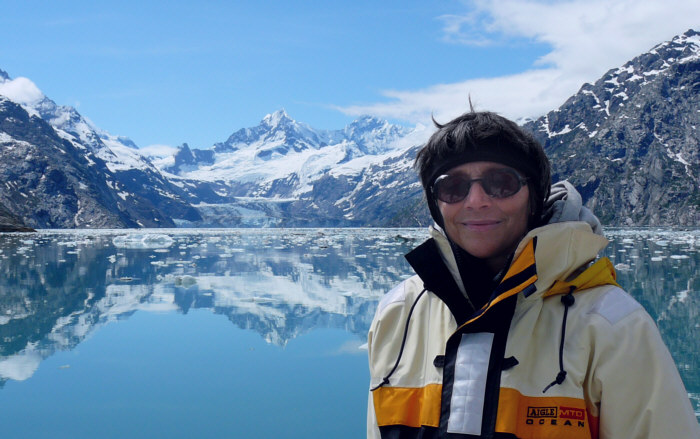
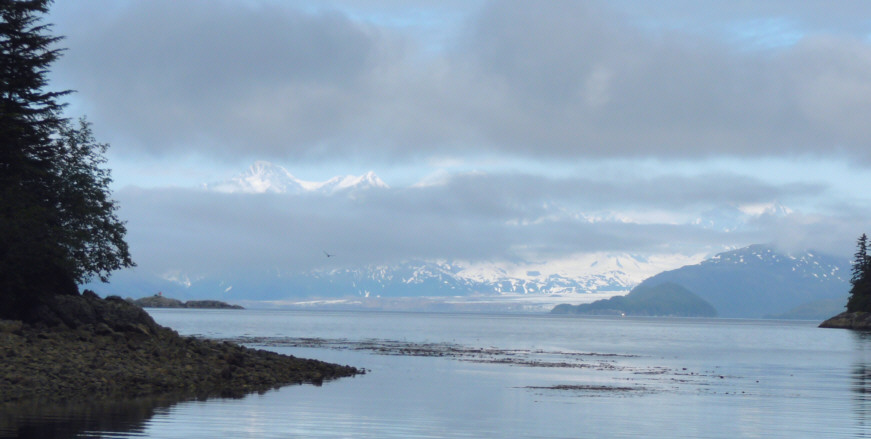
Founded only in 1980, Glacier Bay National Park has an impressive total size of more than 13,200 sq km and is located in southeast Alaska. In this paradise of ice, massive glaciers border mist-shrouded rainforests, and crystal-clear rivers flow into impressive fjords. The glaciers of the national park are of scientific importance because today they mark the retreat of a 4,000-year-old minor ice age. When Captain George Vancouver explored the region in 1794, the bay was still almost completely filled with glacier ice. At that time, the ice was several kilometers wide and over 1,000 meters high. In 1879, less than 100 years later, the naturalist John Muir noted that the glaciers had retreated significantly. The glacier known today as Muir Glacier shortened by an incredible 100 kilometers in those 85 years. Today, the retreat of the glaciers has slowed down considerably. Three continue to retreat, while eight are growing again. Scientists here are studying the influence of glacier movement on the global climate and the plant life in the virgin landscapes left behind by the glaciers. The initial colonization of flora and fauna can be observed here practically like in a large outdoor laboratory.
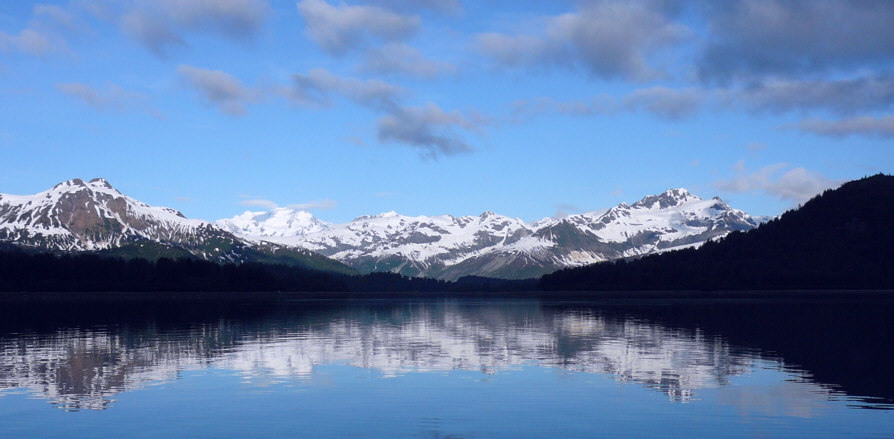
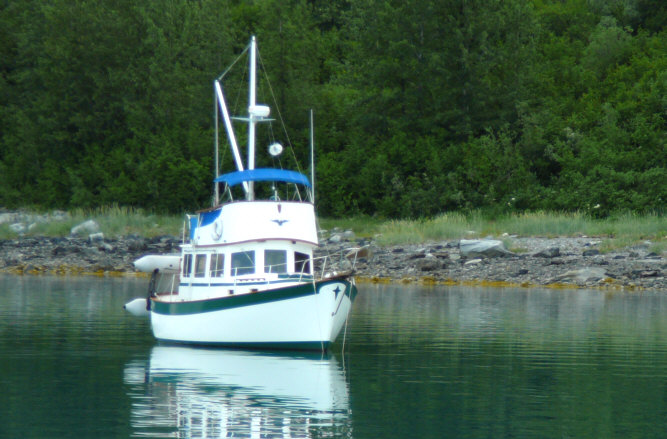
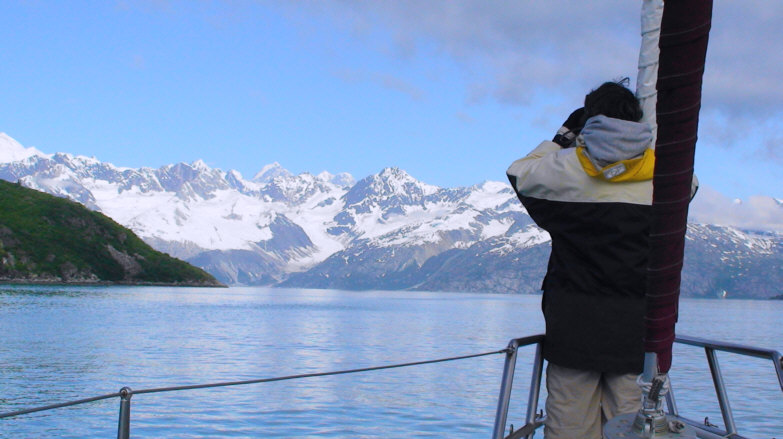
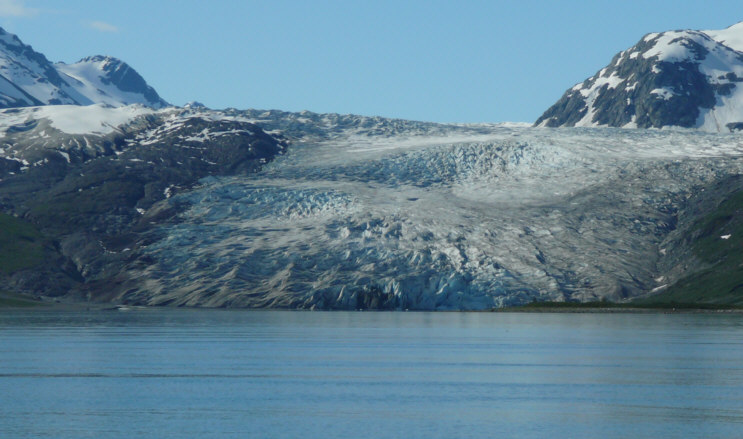
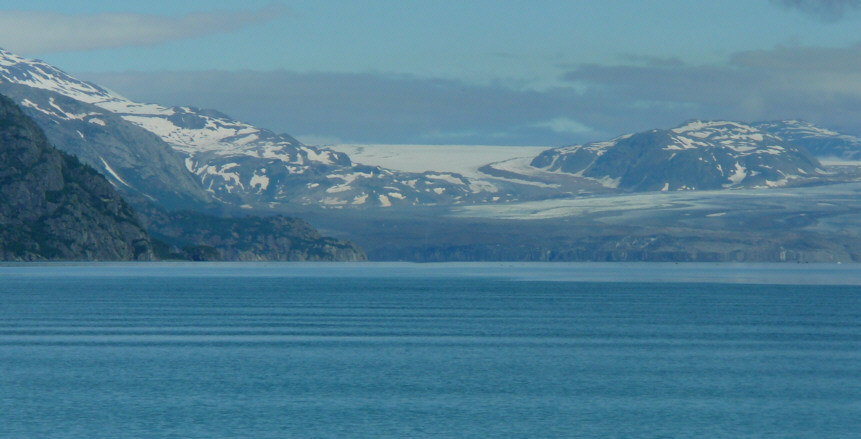
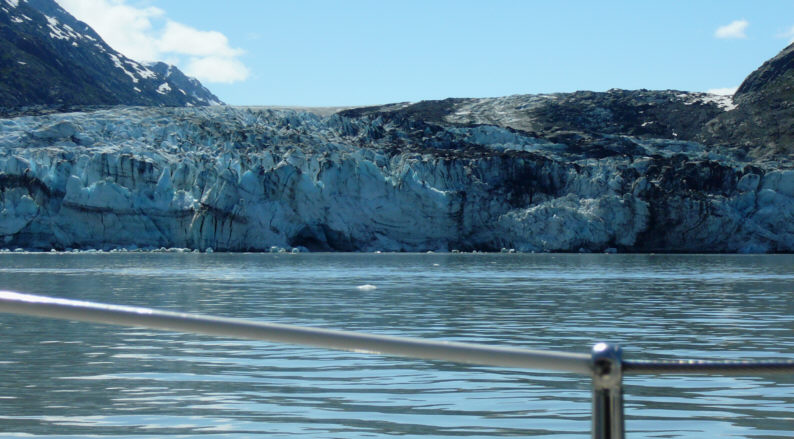
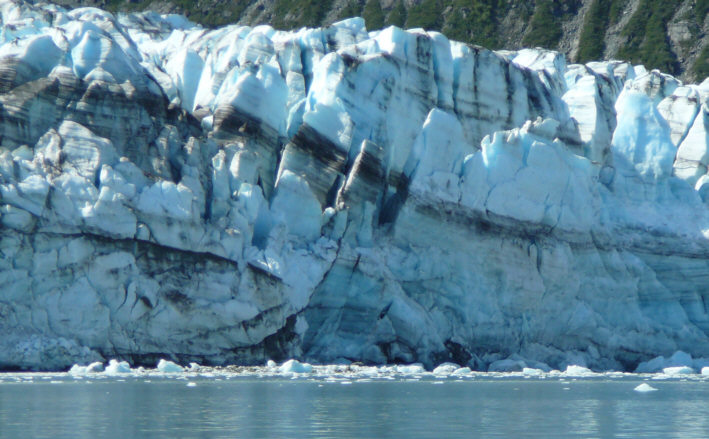
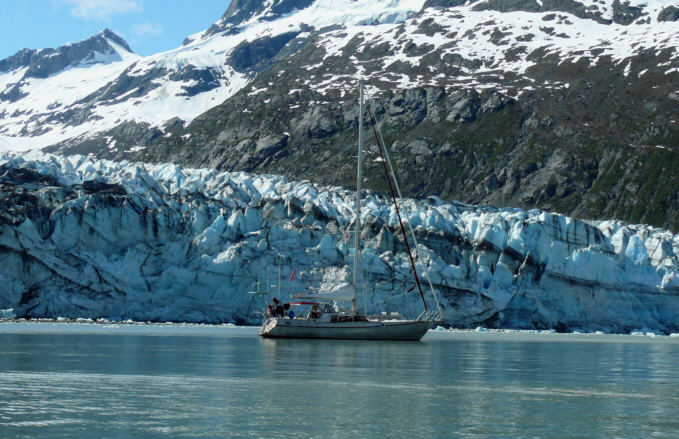
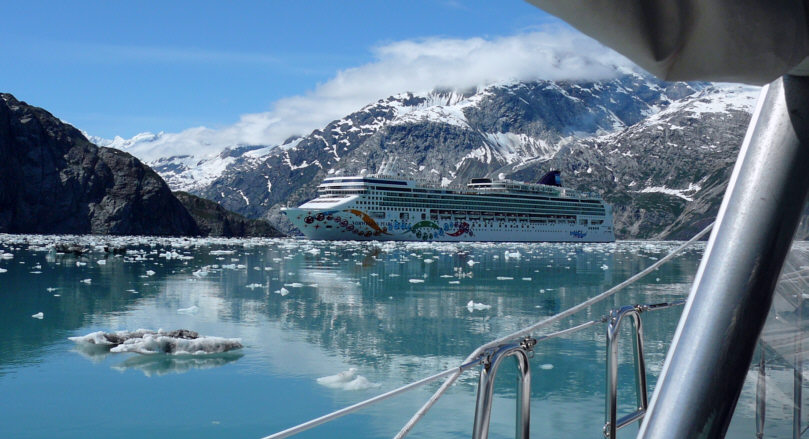
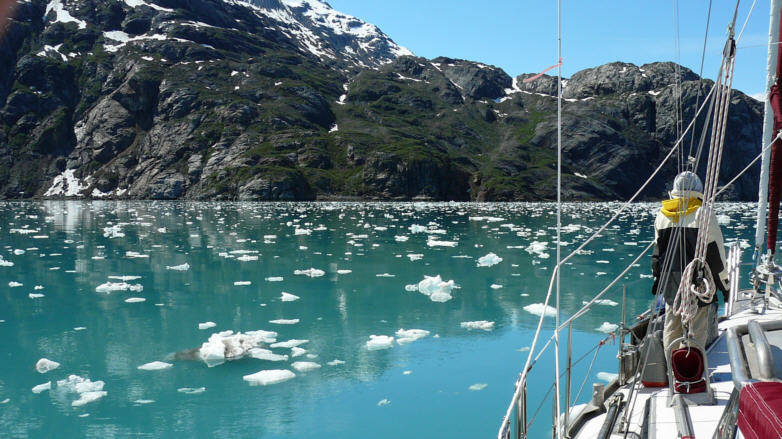
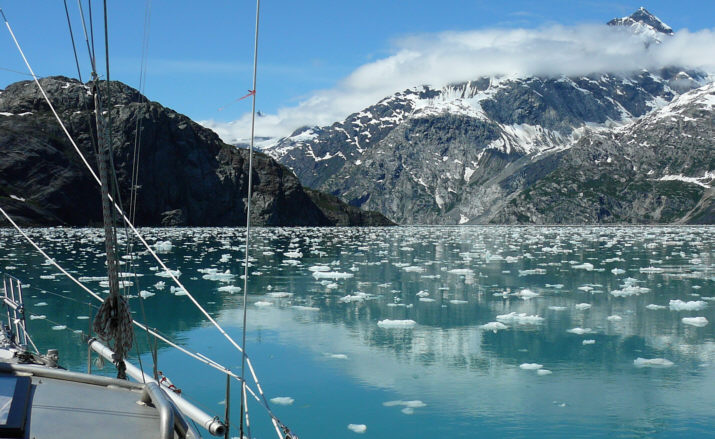
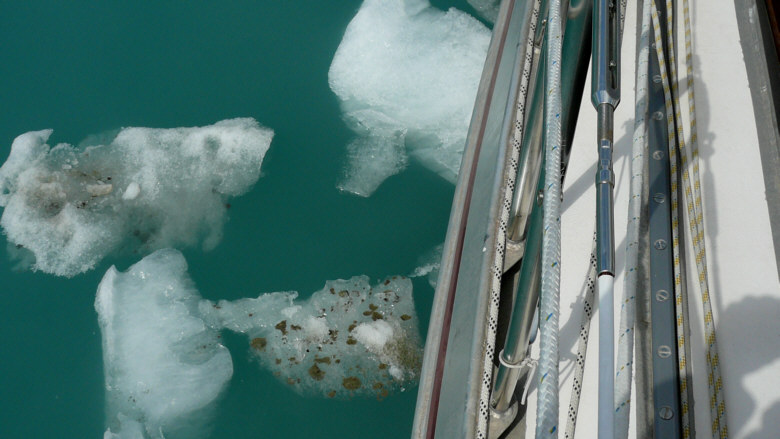
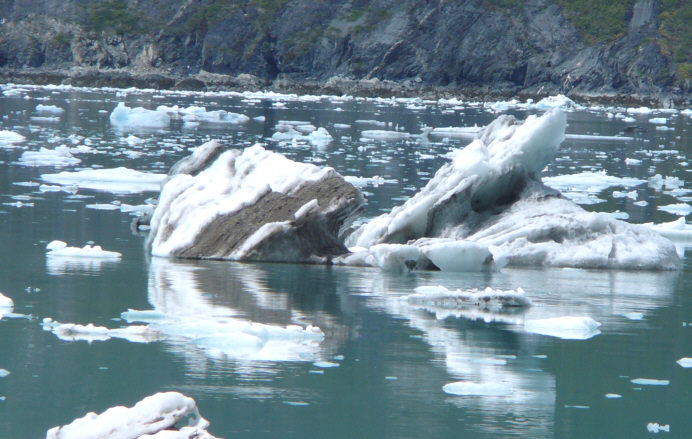
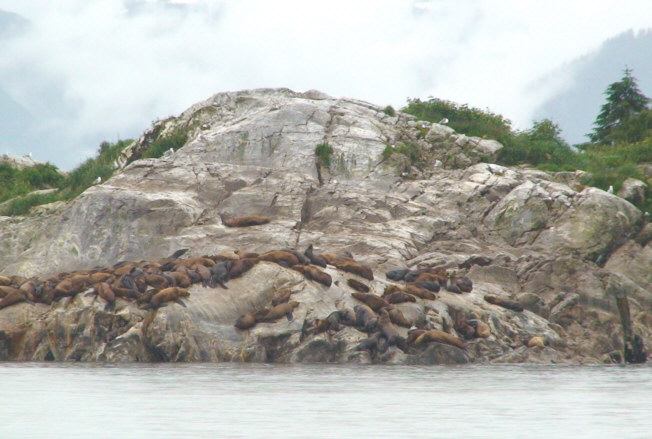
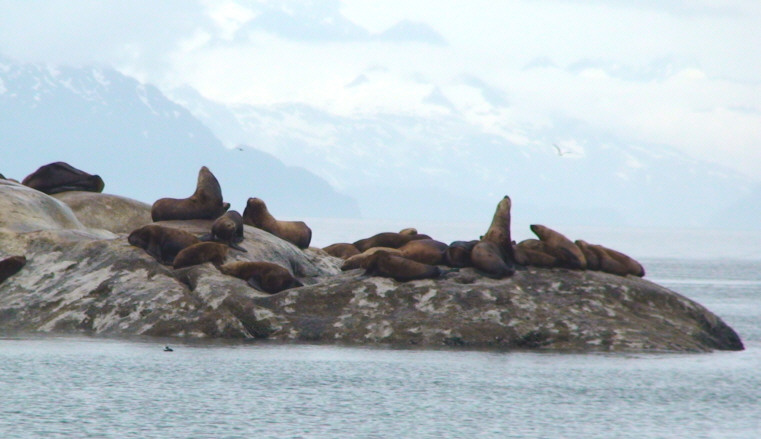
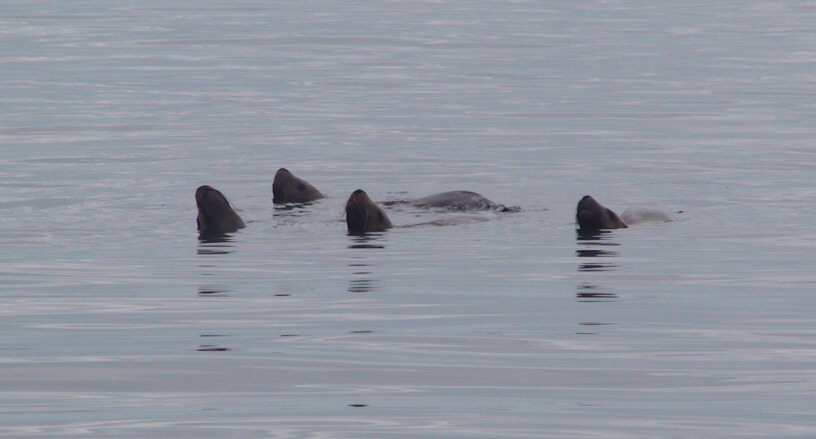
According to specialists, the colonization of the mountains and glaciers by large land mammals is far from complete. Mountain goats, black bears, and grizzly bears are said to have already advanced to the barren areas at the edge of the glaciers. We ourselves saw only a few whales, the cute sea otters, large colonies of sea lions, puffins, and of course countless majestic bald eagles from this wildlife here inside the park.
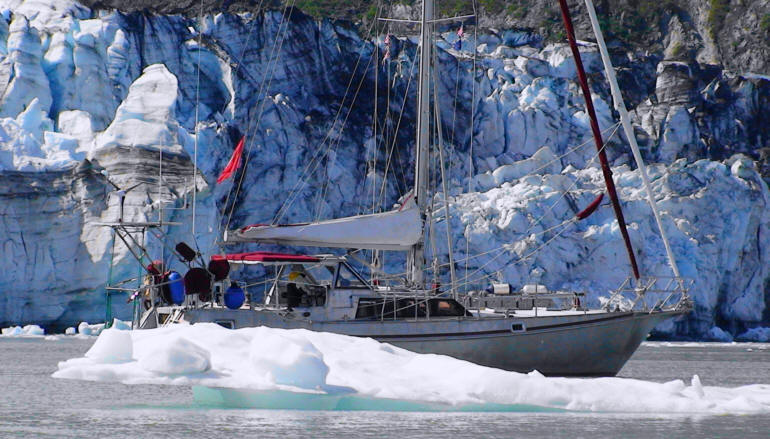
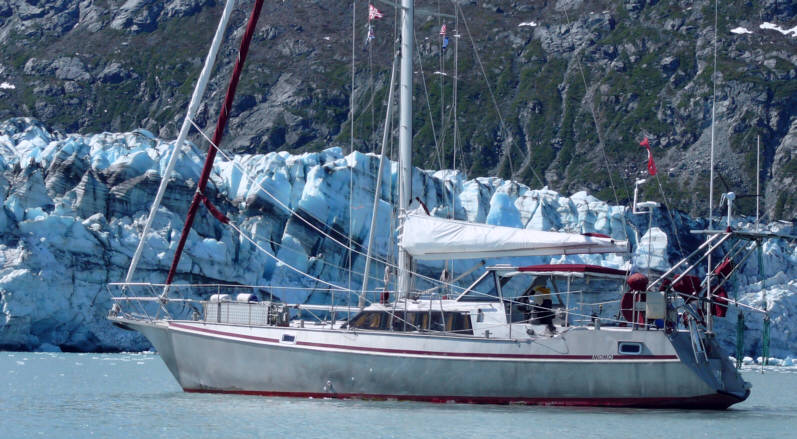
However, this wonderland of ice is not only extremely beautiful, but also very dangerous. In spring and summer, the glaciers melt and huge masses of ice plunge down into the fjords. Here we now had the opportunity to drive our MOMO very close to these glaciers, which reach right into the water. During our stay, not-too-large chunks of ice crashed into the water around us. But even the noise of the smaller ones inspired us with enough respect that we inevitably always kept a sufficiently large safety distance.
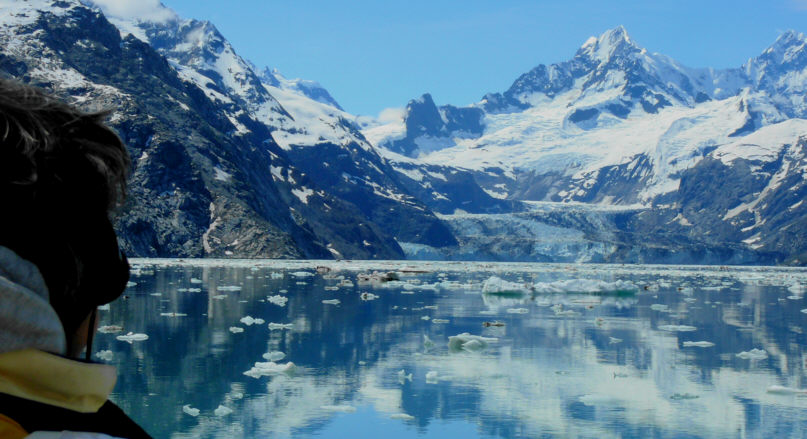
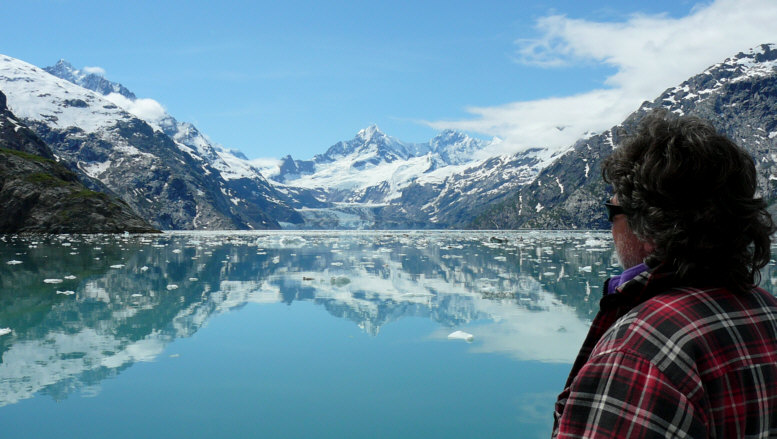
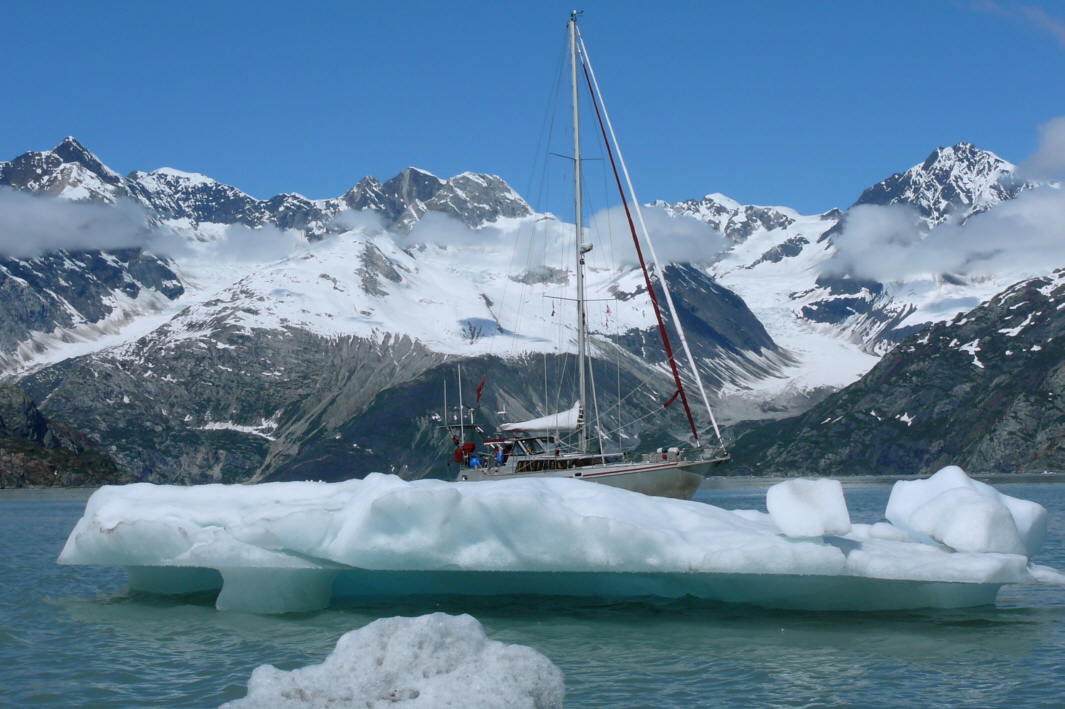
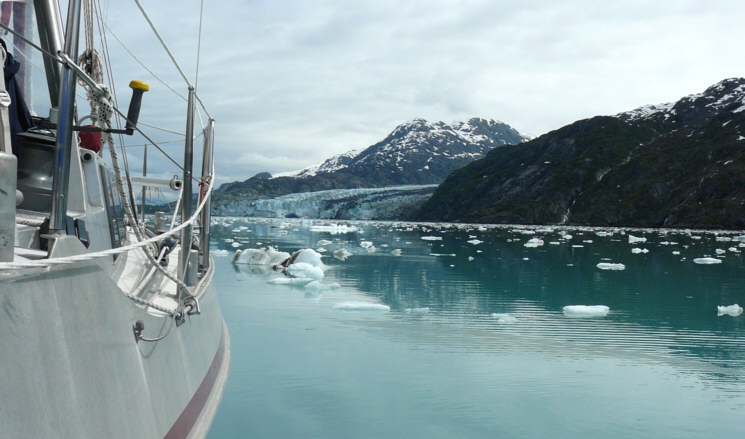
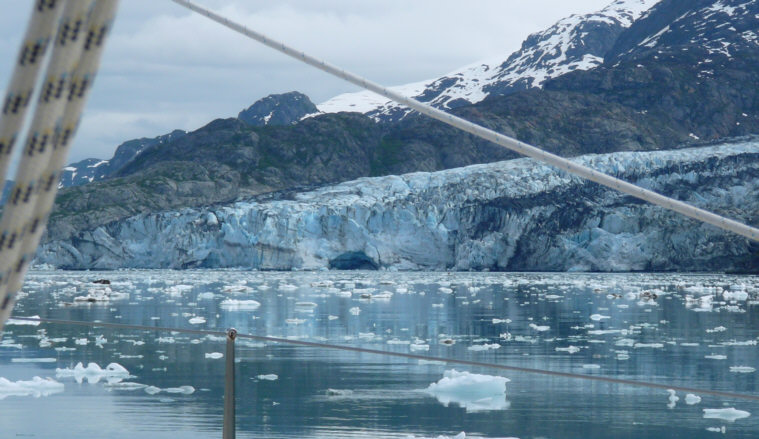
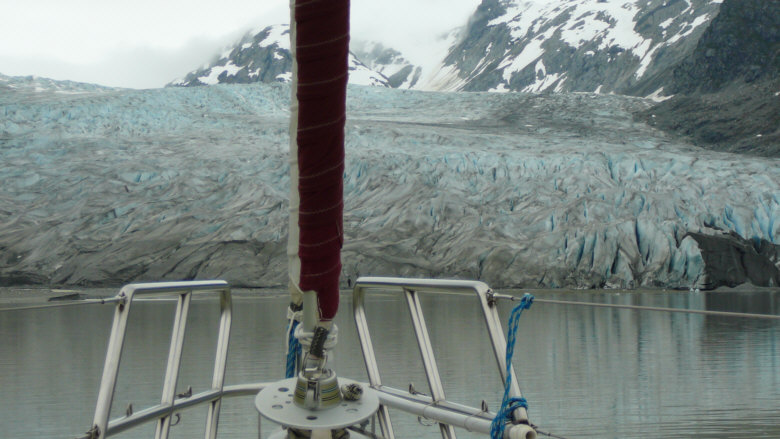
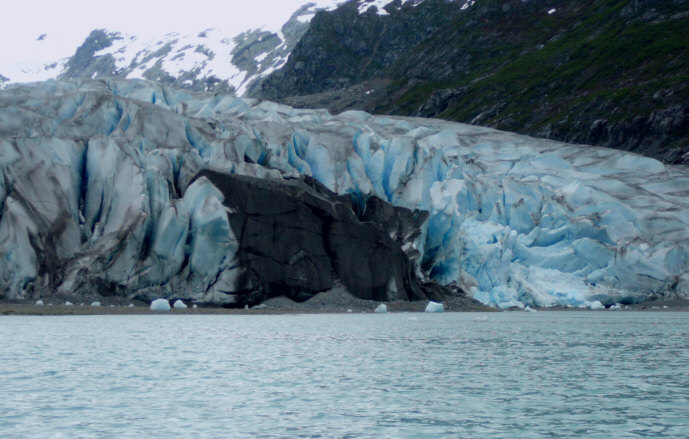
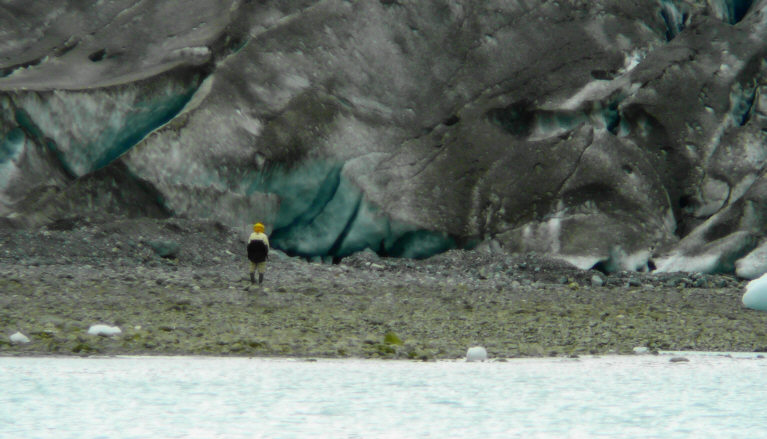
These smaller and larger chunks of ice then floated around in disarray and we had to maneuver our boat through them very carefully. Although MOMO is built very robustly, I did not want to risk a collision.
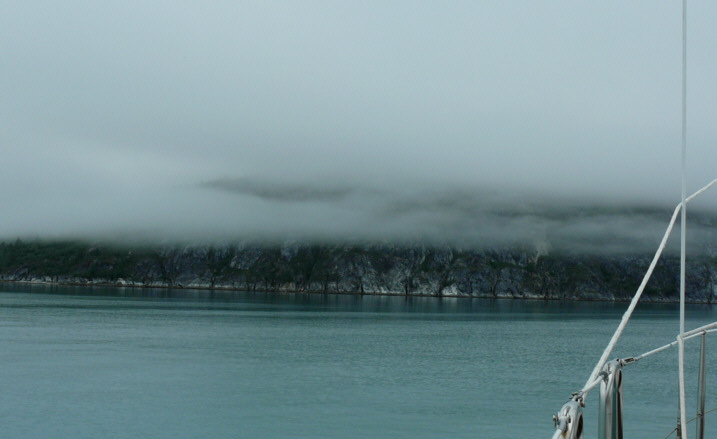
The stay here in the absolute wilderness was simply truly great, and to our great luck, the sun even showed itself for a few hours. During this time, the whole fairytale world looked even more fascinating. For one night, we also anchored directly, about 200 meters, in front of the face of the Reid Glacier. Unfortunately, for most of the time during our 7-day stay in the park, the weather did not cooperate, which is of course also reflected in the photos. Looking back, we are even more grateful for those few hours of sunshine. Along the way, we heard from many yachties that we were among the lucky ones, because these hours of sunshine in Glacier Bay are almost as rare as winning the lottery. In 1992, Glacier Bay National Park was quite rightly granted World Heritage status by UNESCO.

Elfin Cove
After our permitted stay in Glacier National Park had expired, we had to leave the park. This is the rule here unless a storm is specifically forecasted in the weather report. Normal strong winds are not a reason for park rangers to approve an additional overnight stay in Bartlett Cove. For us, only strong winds from the west were forecasted, so it was time to say goodbye to Glacier Bay.
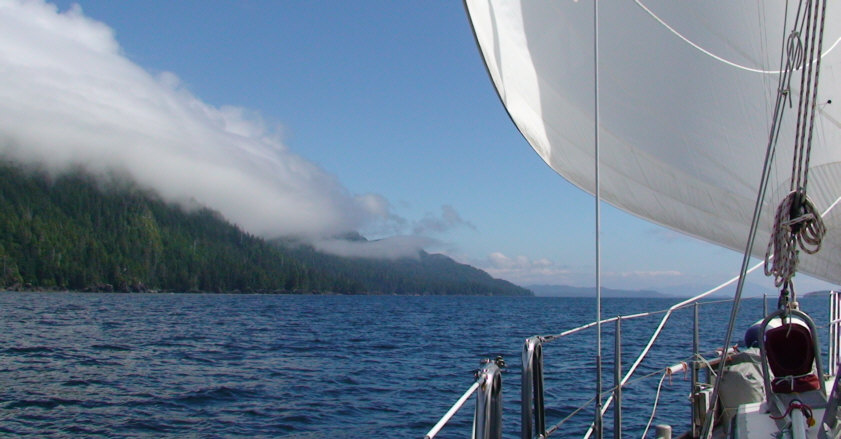
Now we started our return journey to British Columbia. This time we wanted to cover part of the route offshore, outside the sheltered Inside Passage. To do this, we first had to cover about 10 miles on a westward course. Against the 25-knot wind, that was still manageable, but I had underestimated the swell rolling in from the open Pacific ahead of us. It came back to haunt us that we had only been sailing in sheltered waters for a very long time. But everything comes to an end, as did this normally short day trip. For lack of alternatives for suitable anchorages in Icy Strait, we had to persevere all the way to Elfin Cove. 20 miles in eight hours is truly no masterpiece, even though we looked quite exhausted and beaten up afterward.
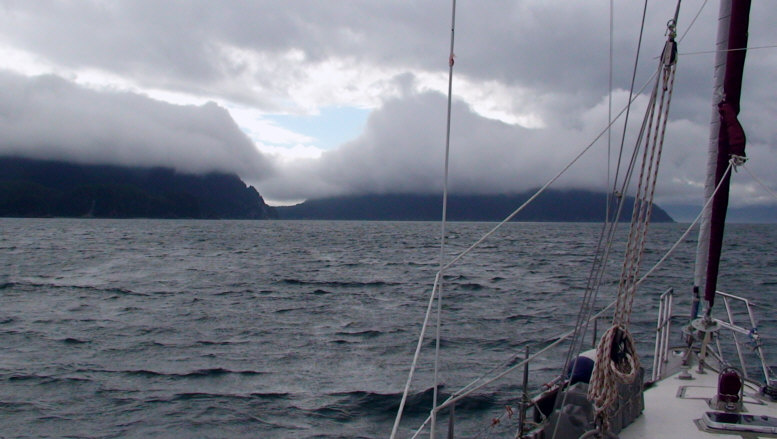
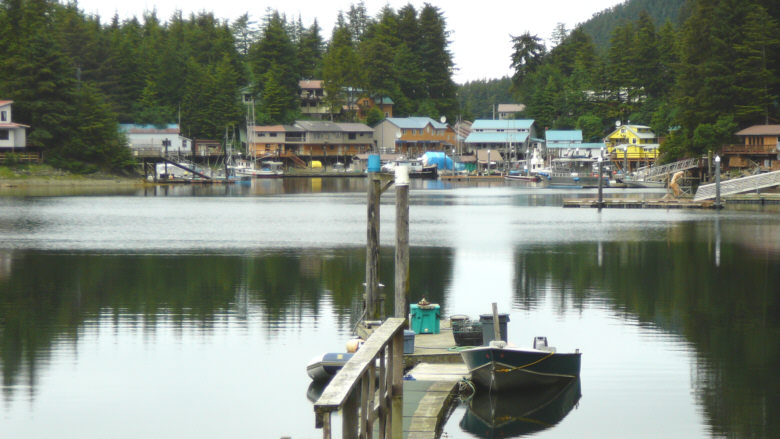
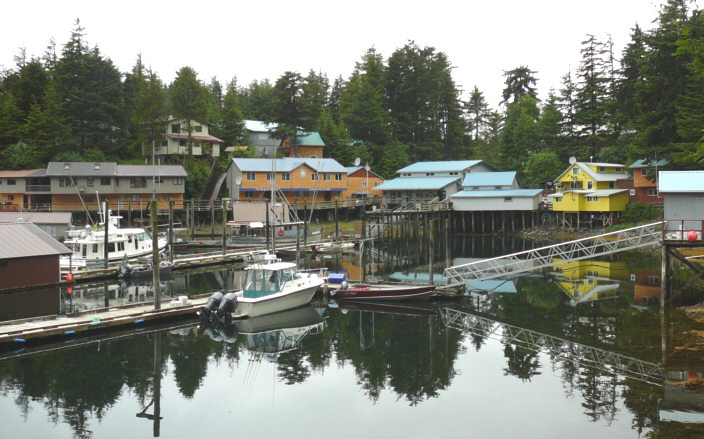
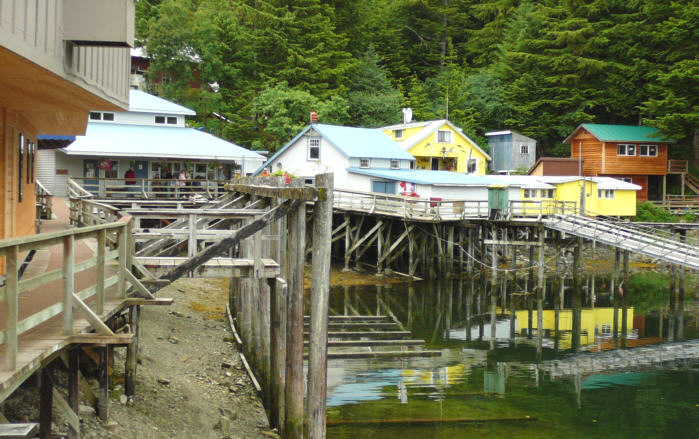
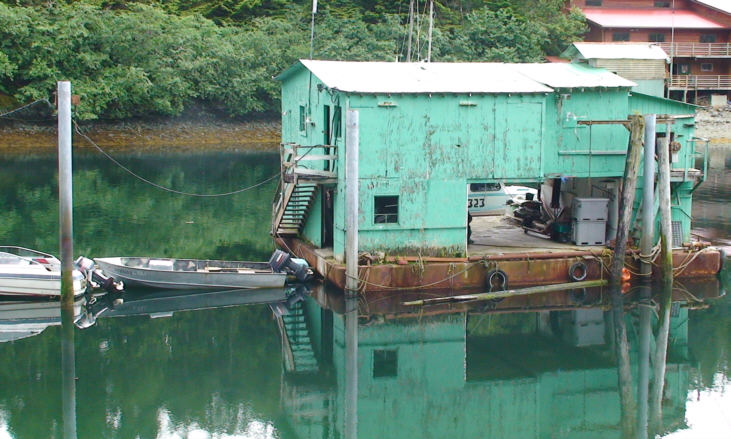
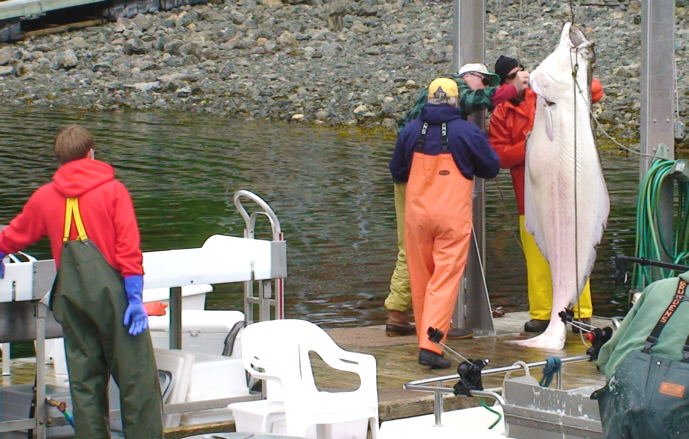
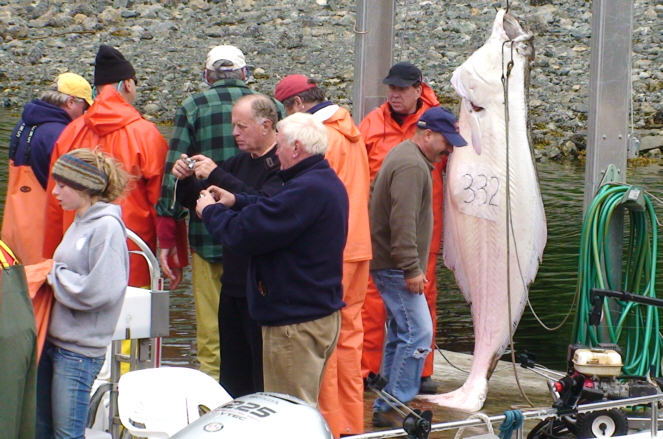
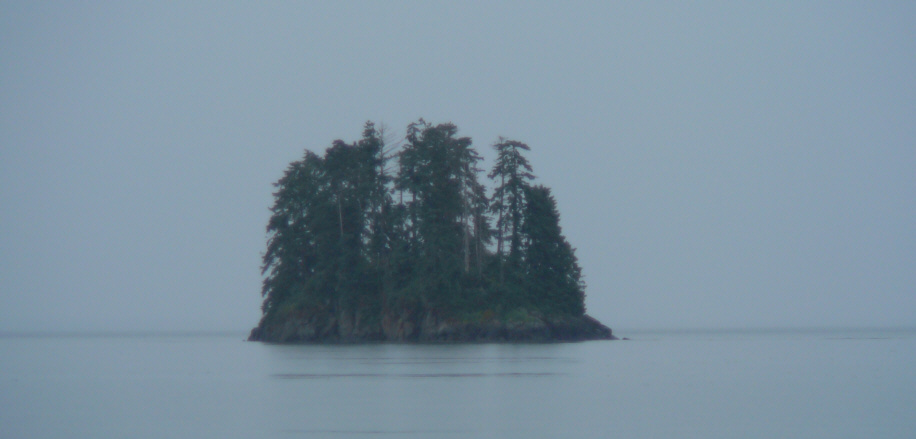
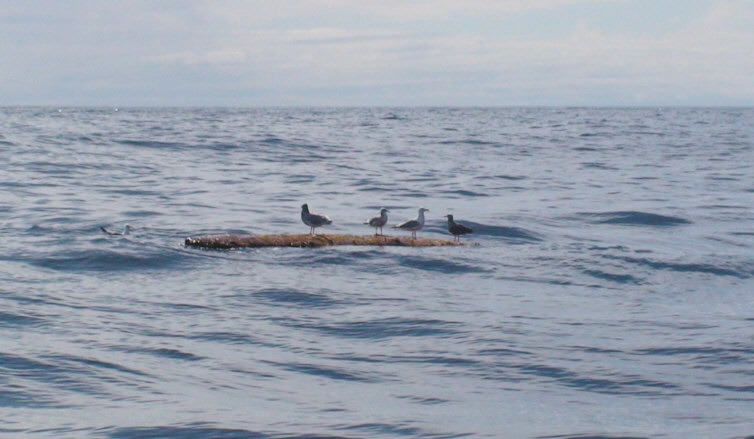
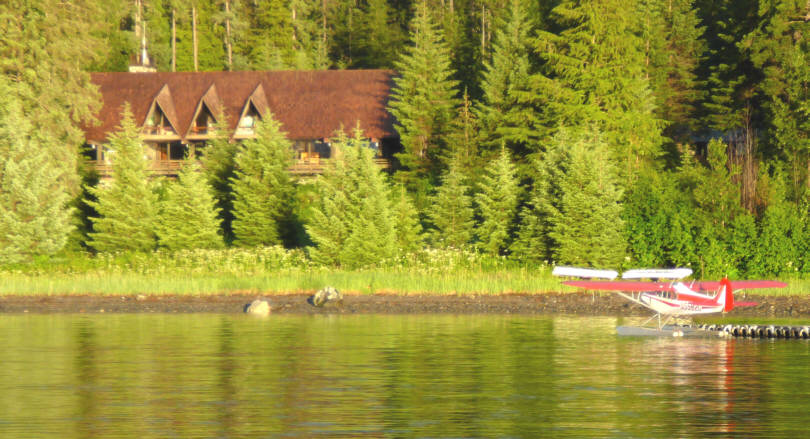
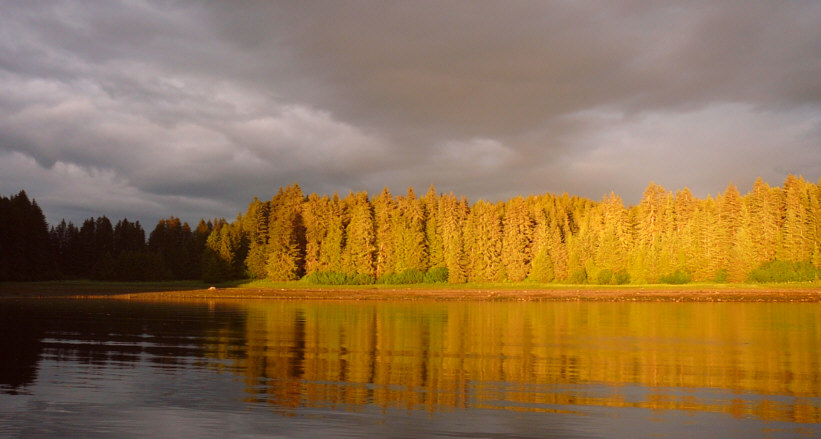
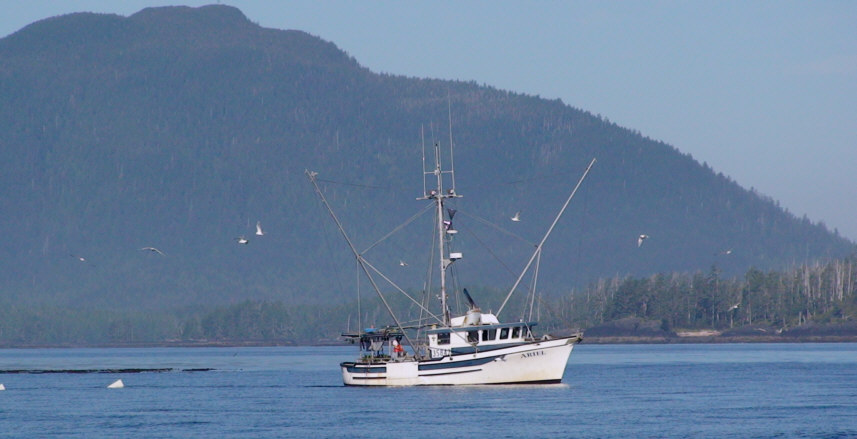
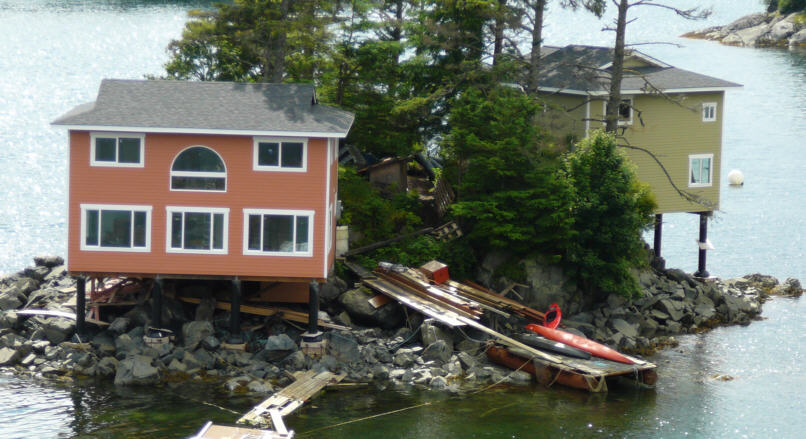
Elfin Cove is a miniature fishing village with only 32 residents, located on the northern coast of Chichagof Island. According to one resident, however, 30 of them hold a commercial fishing license. Percentage-wise, this is surely an absolute world record. The village has a safe and well-protected harbor, which is even free of charge for yachts. The entire fishing village is built on pilings, and there are no roads. The walkways mostly consist of wooden boardwalks, and since the 1920s there has been a store, a restaurant, and a dock here. A post office has also existed here since 1935. For 32 residents, an official, staffed post office. Absolutely unthinkable in Switzerland, because, as I was told, the federal government cuts corners everywhere, except when it comes to the arrogant UBS.
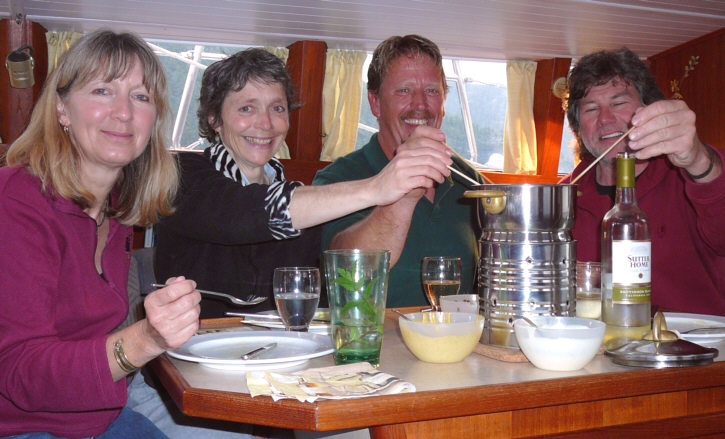
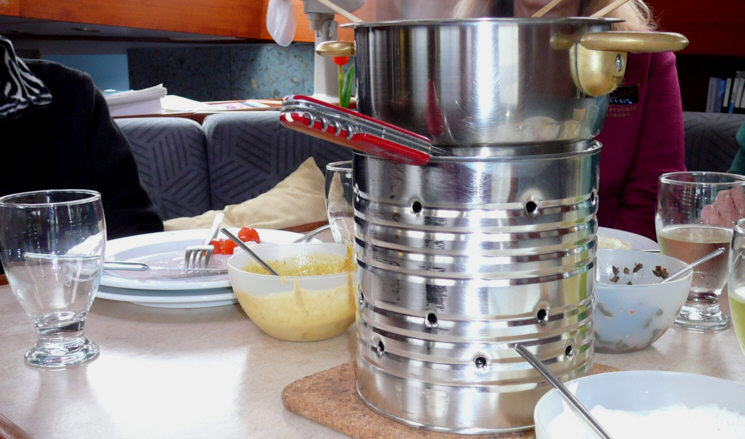
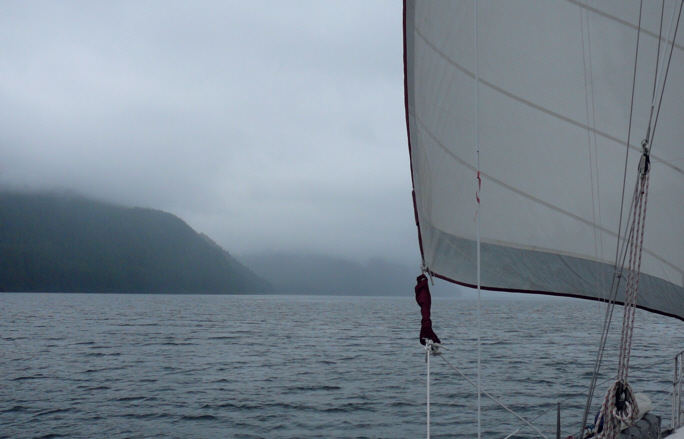
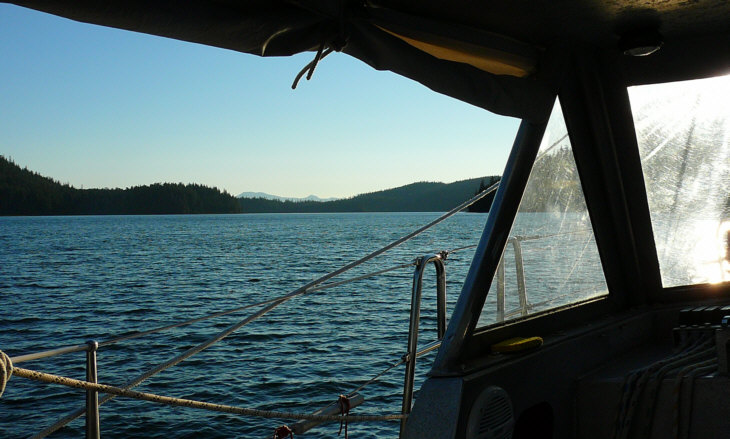
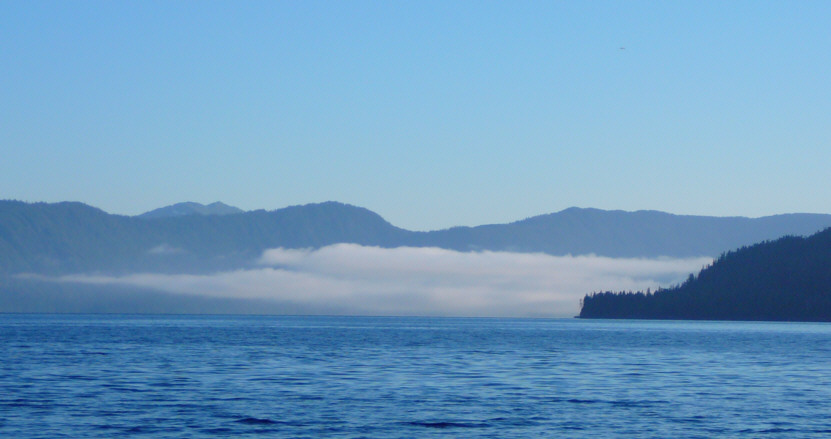
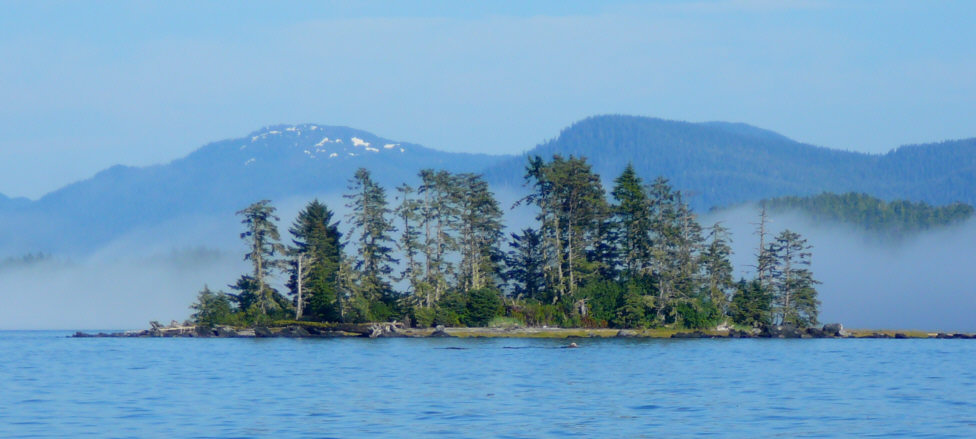
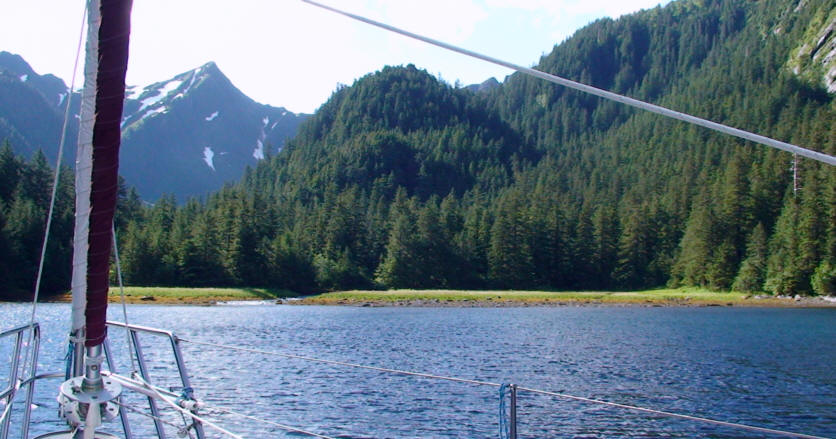
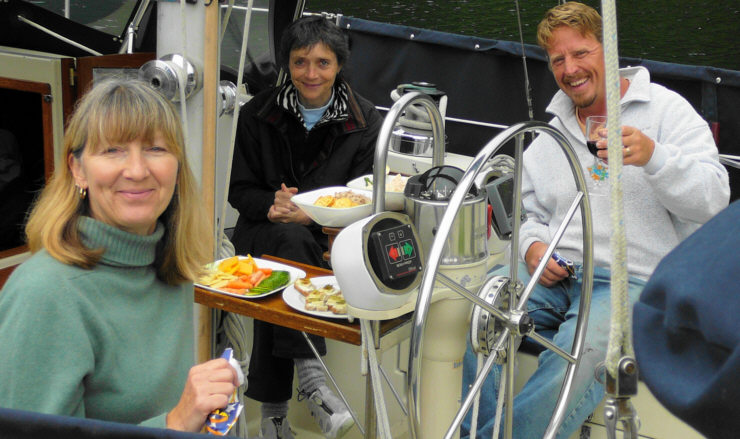
Here at the free dock, we had our first contact with Diane and Dean, an American couple who immediately clicked with us. During the first happy hour on SY Talisman, we realized that the return travel plans of both boats were very similar. Although we traveled separately from time to time, our paths crossed frequently and we shared many fun experiences together.
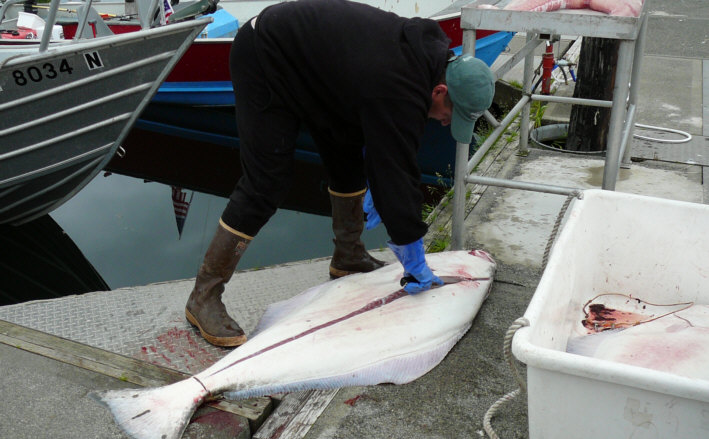
So now we were on our way back south. That meant we still had about 1000 nautical miles ahead of us, and we hoped to arrive safely before the first autumn storms. The offshore route we chose proved to be significantly less comfortable, but it showed us even more untouched nature. There were no cruise ships here, and even fewer yachties like us. Only the professional fishing boats had increased rapidly. Only the bolder sport fishermen dared venture out to the open coast, and they also helped us get through the period without a fishing license. Although I had not bought an Alaska fishing license, fresh salmon and halibut were on our menu daily. These fish are so abundant here that many hobby fishermen were glad to give us a few delicious fillets, thereby making new room in their overcrowded freezers.
Grizzlies
For our very first major bear encounter, we had to wait a long time, meaning until shortly before Sitka. Already during the anchoring maneuver in Kalinin Bay, we spotted the grizzly family. A mother with two teenagers was grazing on the shore. They were not disturbed by us in the least and quietly satisfied their hunger. Of course, we did not want to miss this special moment, so we crept up to them in the dinghy. Since the bears' enemy never comes from the water, we posed no danger to these comical animals. To avoid suddenly startling them in any way, we made our presence known by clapping, but the grizzlies at most raised their heads briefly, looked at us inquisitively, and continued eating with complete serenity.
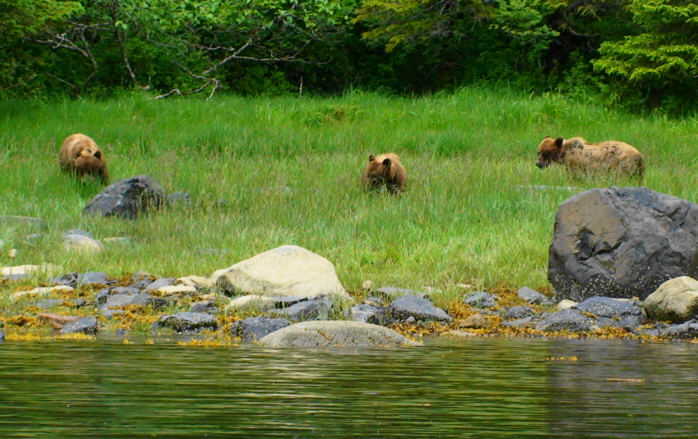
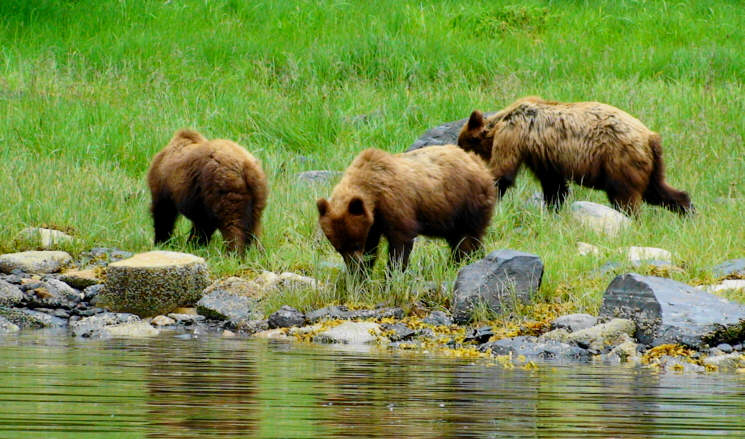
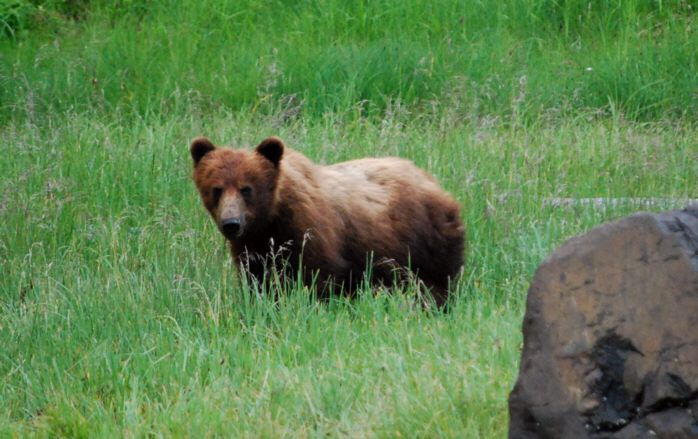
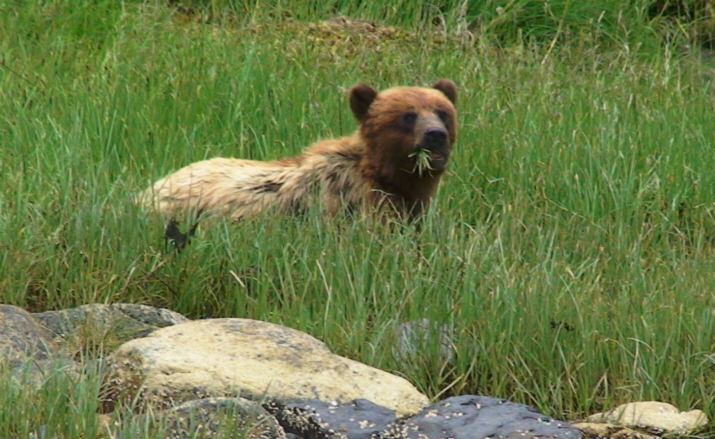
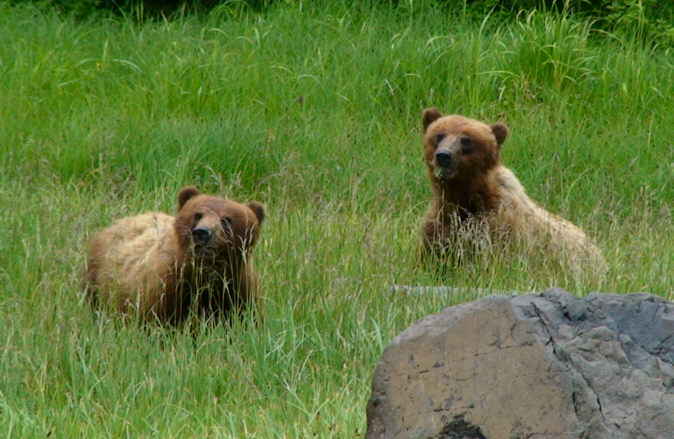
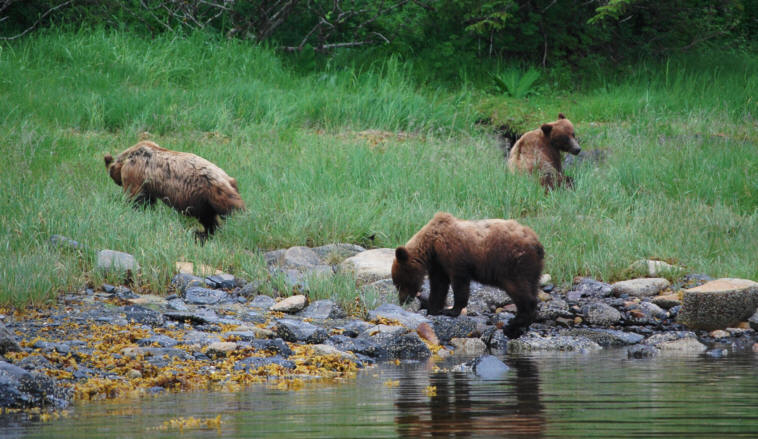
Although the whole situation always looked peaceful, we were very careful. The distance between the animals and us was at most 15 meters, but we were in the water and therefore quite well protected.
Grizzly bears, like most bear species, are true omnivores. Their plant-based diet mainly includes grasses, herbs, nuts, and mushrooms. In summer and autumn, however, berries make up an important part of their diet.
They also consume meat, actually excepting human flesh. They much prefer the genus of moose and deer, or of course salmon. For the grizzly bears here in the north of the Pacific coasts, salmon make up a significant part of their diet during their spawning migrations upstream. This protein-rich food is said to be responsible for the animals here in the northwest growing significantly larger than their relatives in the interior.
For over an hour, we were able to observe and photograph these powerful animals, weighing up to 700 kg, from an extremely short distance before they leisurely trotted back into the forest.
By the way, I had earned four hundred dollars in that hour, quite easily and without getting tired. How, you ask. Very simple: I had promised Yvonne that we would experience a special kind of bear encounter, otherwise she would get an organized bear watching tour in Prince Rupert as a gift from me. What we experienced here is certainly never offered on an organized tour.
Sitka
Next, we visited Sitka, a historic fishing town on the Pacific. Here we were able to go shopping properly once again, because our food supplies were dwindling rapidly. Despite the abundance of fresh fish, we also needed the right ingredients, fresh fruit and vegetables. Sitka is located on Baranof Island, protected by a group of smaller islands and Cape Edgecumbe. Mount Edgecumbe, a dormant, 1100 meter high volcano, provides an impressive backdrop, especially snow-covered in winter and with sunshine. However, we had neither, and so it appeared somewhat pale to us. The weather was also the only thing that bothered me a bit at times, but more on that later.
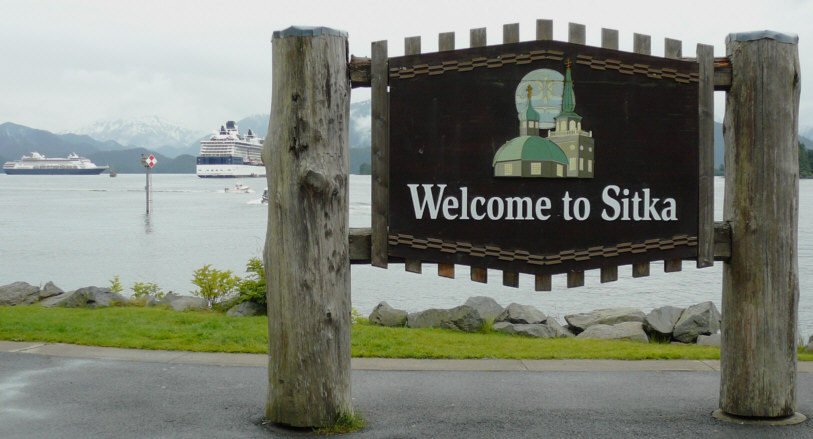
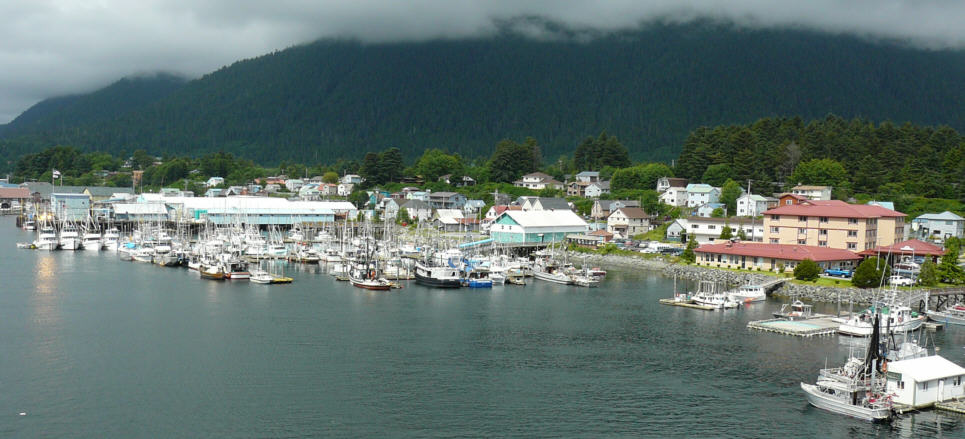
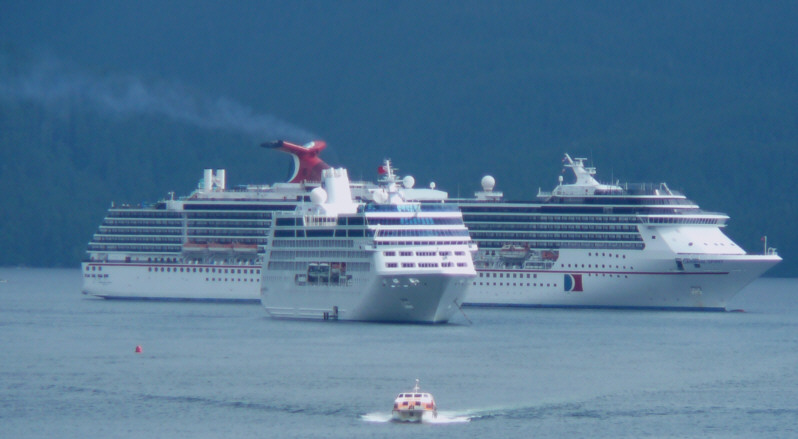
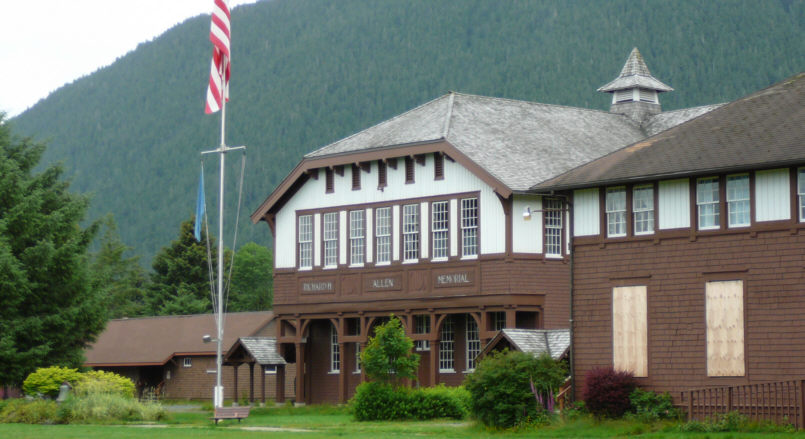
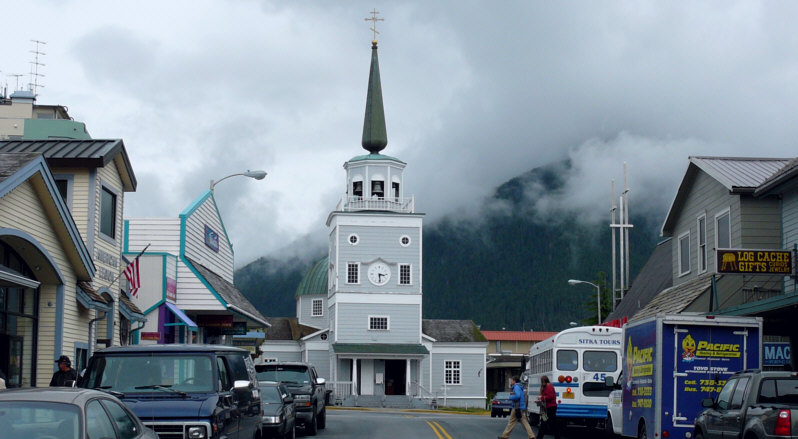
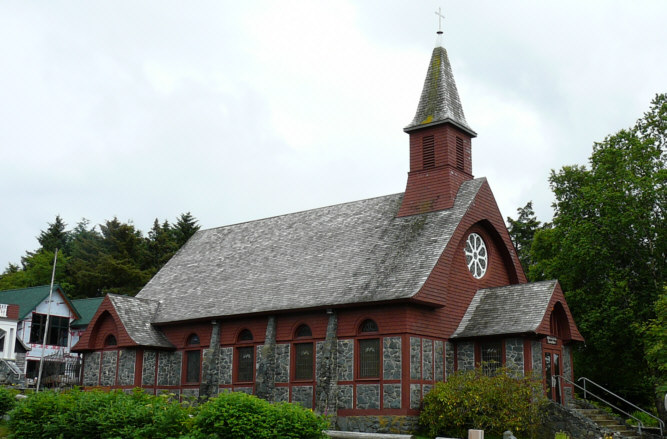
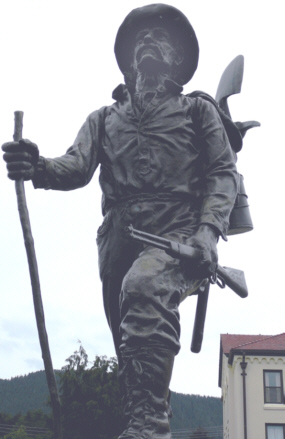
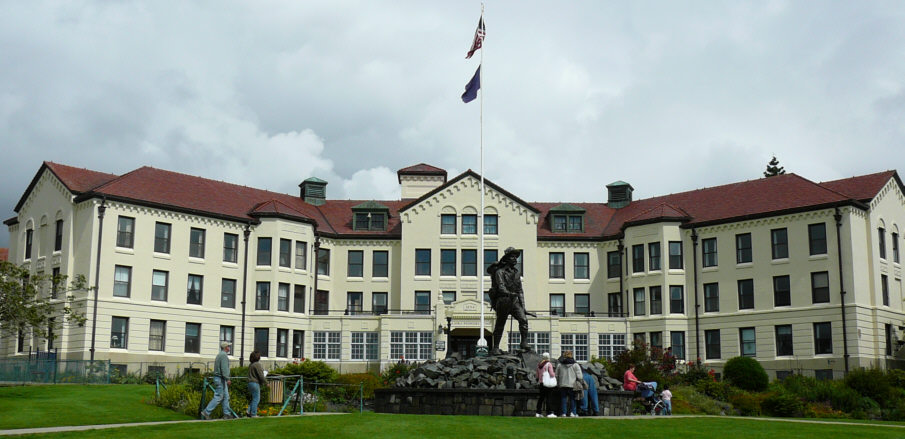
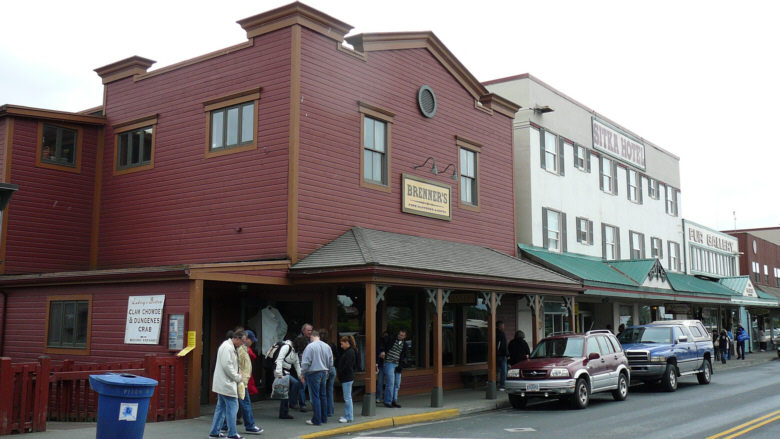
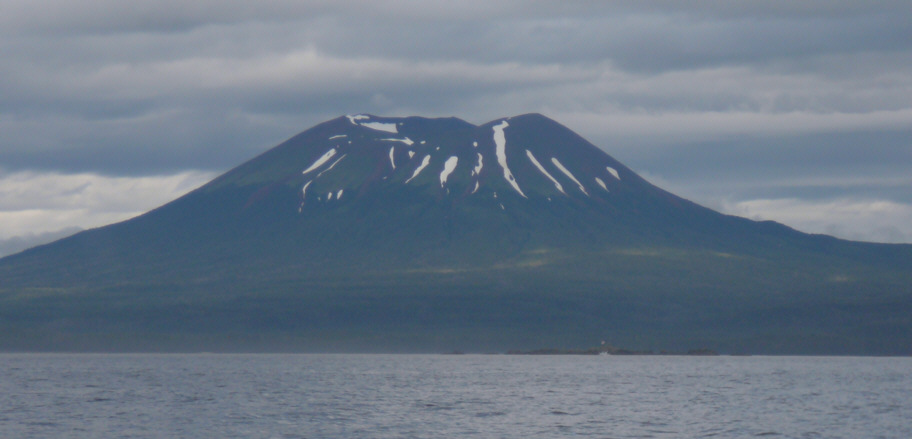
Sitka was once the capital of Russian America and the center of the Russian fur trade. Russian influence is still clearly perceptible everywhere in this area.
Visiting the Sheldon Jackson Museum was well worthwhile, as it houses one of the world's best collections of Native handicraft. It also provides highly interesting information about the country's history. At the museum, we were given detailed insights into Native culture and daily life across various historical eras in the "Great Land". This museum was the first concrete building in Alaska.
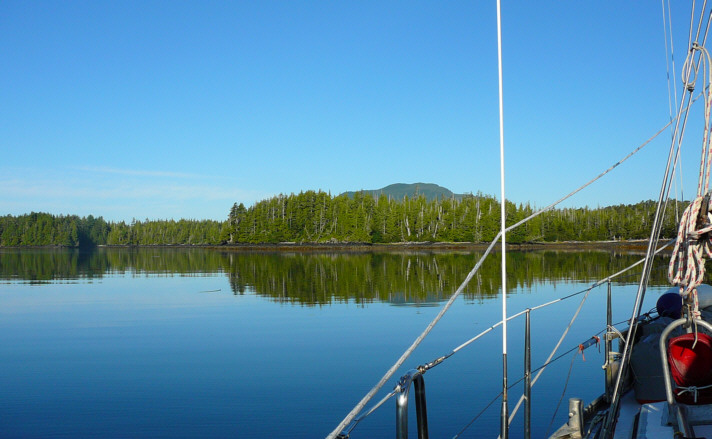
In the harbor of Sitka, we crossed paths with Richard once again. We first met him at an anchorage in Glacier Bay. By the way, this was quite a humorous affair, literally speaking. As we entered the anchorage, a motorboat was already moored at the best spot in this otherwise deserted area. Over the radio, he called us to say that we were welcome to anchor closer to him and asked if we fancied some homemade pizza. Of course, we did not pass up this offer, and so we spent an extremely amusing evening aboard MS Puffin. Richard and Robert, who was his guest for a week, tried to outdo each other telling jokes and funny anecdotes. When we said our goodbyes, it turned out that Richard was a physics professor at the University of California, Berkeley, and Robert was a physics professor at the University of Massachusetts. Once more, we were reminded of how our way of traveling brings us into contact with people we very likely never would have crossed paths with in "normal" life. We gladly accepted Richard's invitation to visit when we arrive in California in the fall of 2009, and we hope to see each other again.
Since the weather continued to show its wet side and sunshine was in short supply, our outdoor activities were quite limited. I must admit that I was now slowly but surely suffering from the lack of sunshine. It really was lousy, as even Yvonne had to admit, because the few sunny days in July could be counted on one hand. Fortunately, I know that other times (weatherwise) will come again.
Weather statistics, July 2009, Sitka/Alaska
Actually, I had to admire the local population living here year-round, because in winter you also have those very short days to deal with. If you then lack the money to travel south, the temptation to reach for the bottle is obviously extremely great, and somehow I can understand that too...
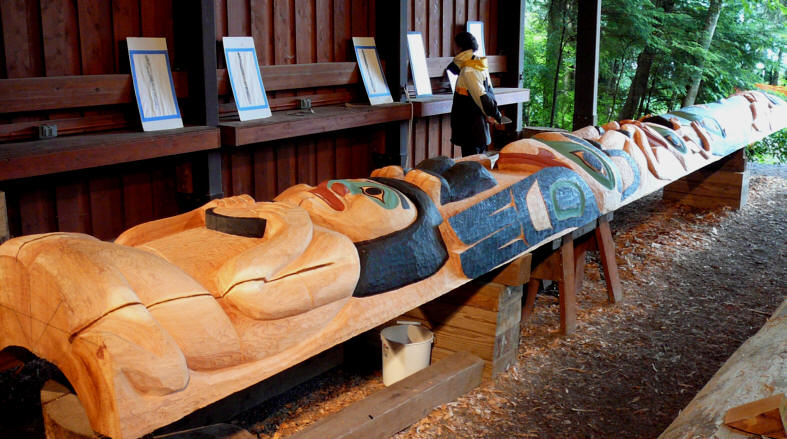
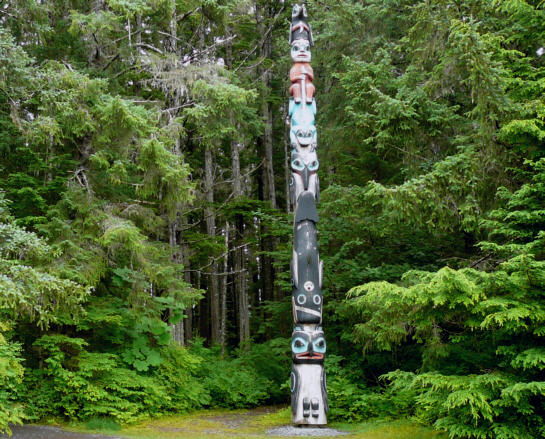
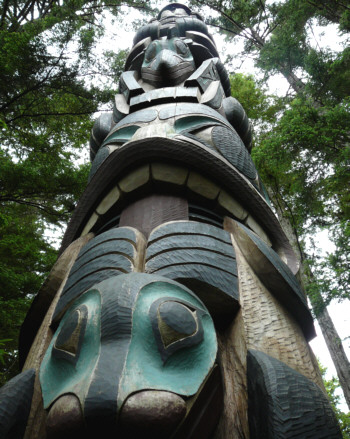
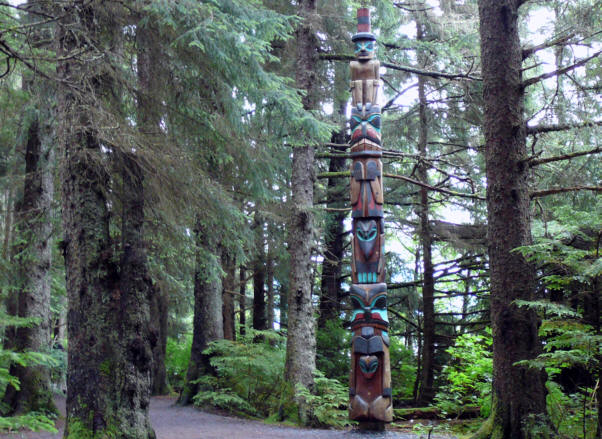
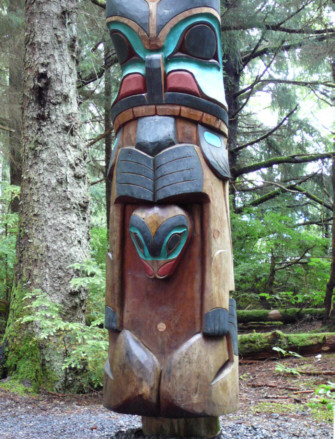
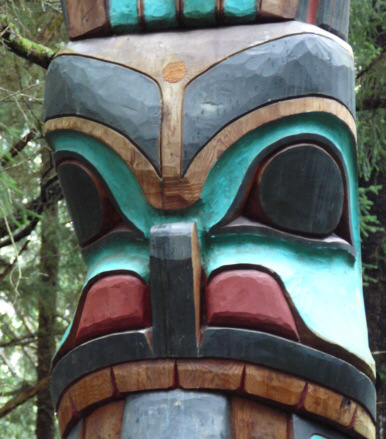
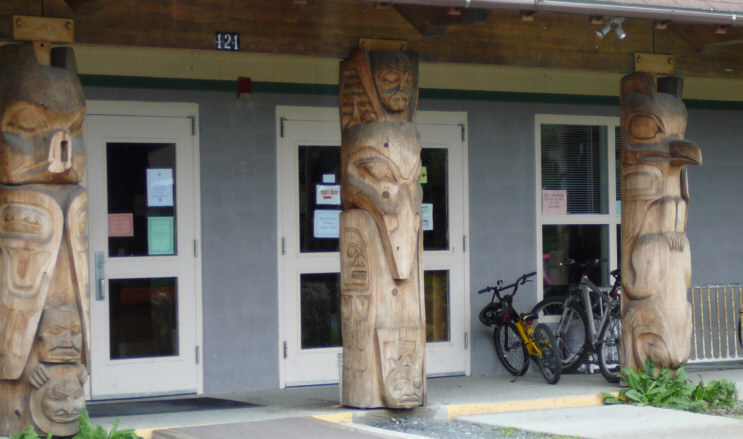
Sitka is also home to the National Historical Park. Here we could marvel at a wide variety of totem poles skillfully set up in the forest. A totem was erected for protection against evil spirits, in honor of the dead, or simply to display a family crest. Every Native family had crest animals depicted not only on the totem pole but also on everyday objects such as tableware, weapons, chests, blankets, house walls, and more. The original home of these artfully carved wooden pillars, which reach up to 20 m in height, lies in the coastal regions of British Columbia. Painted brightly with plant-based colors, they served as status symbols. Powerful chieftains and family clans had important tribal myths, specific events, and individuals immortalized in wood in encoded form. Interpreting the truly old poles is very difficult: one would need to know the myths of the tribe well, along with its history.
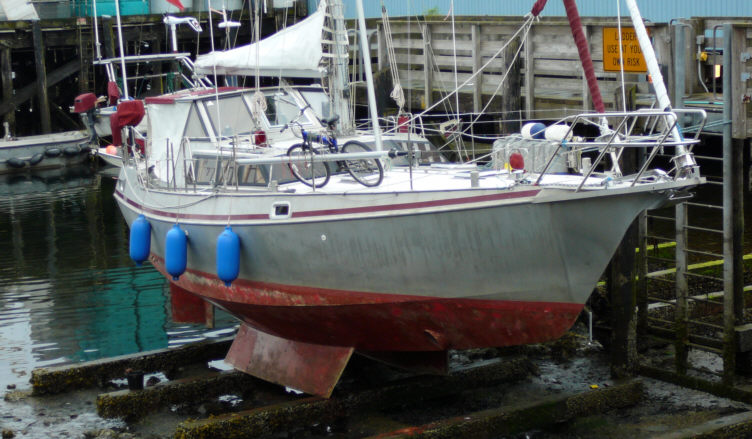
MOMO in dry dock once again
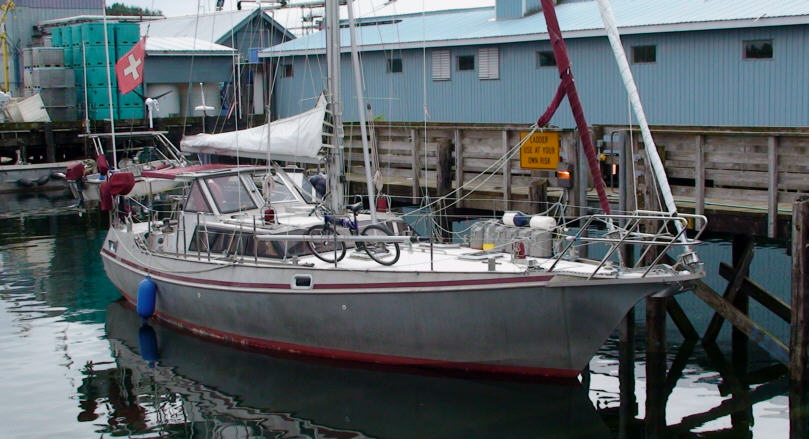
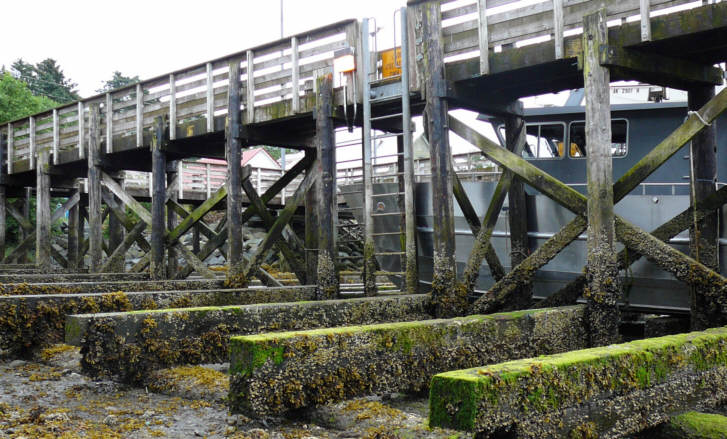
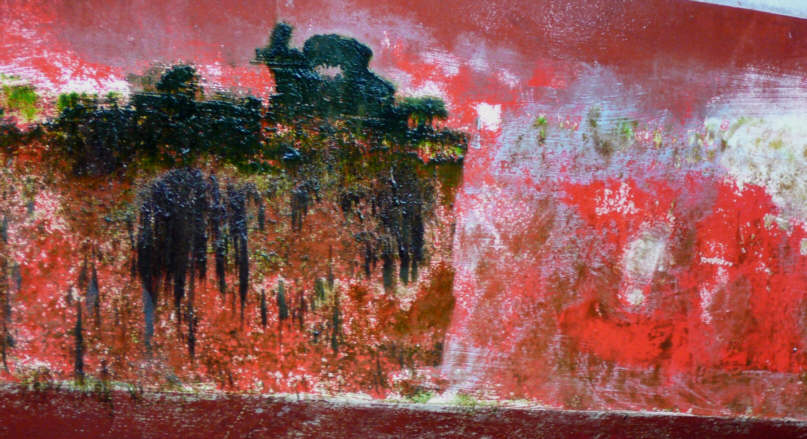
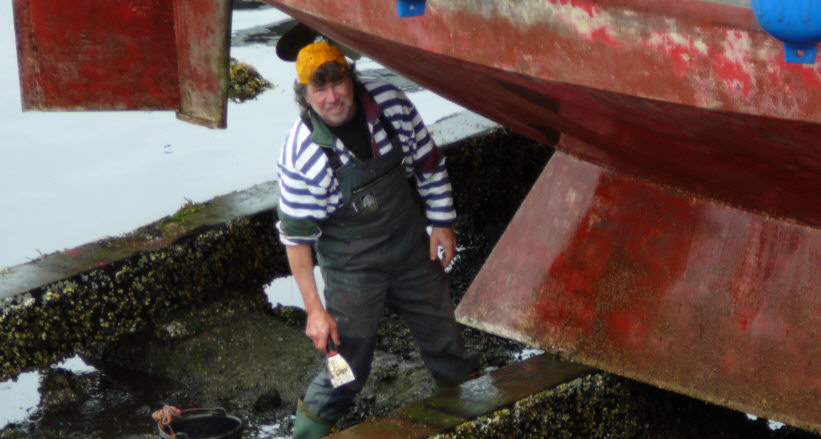
The fact that I had not renewed the antifouling last spring was now taking its toll more and more. Although I had long since realized my mistake, the barnacles did not heed my plea and began to truly fall in love with the underwater hull of MOMO. Those who make mistakes usually have to face the consequences, and in this regard, I had to scrape, scrub, scour, and freeze in the rain…