MOMObil · USA · Canada
From the boat to the MOMObil, Niagara Falls and Toronto
A very personal message to the readers of our homepage
The reason why we have had absolute silence in our travel diary for over half a year now is as follows:
At the end of October 2005, just as we were in the middle of preparations for our return trip to the Bahamas, Yvonne discovered a change in her breast. After the initial examinations by the gynecologist in the USA and a mammogram, we were told that it was 99% just a benign lump. However, we wanted absolute certainty, so a needle biopsy was performed as well. Unfortunately, the result of this biopsy was positive. A malignant tumor was diagnosed and it had to be removed immediately. We were thrown very brutally from our little paradise down to the hard ground of reality. After spending the first day after this devastating news in a trance and like in an unreal nightmare, we immediately set about organizing our near future. By phone, email, and fax, we were in touch with Yvonne's family and the doctor who then performed the operation and further treatment in Switzerland. Also, we had to find a flight at short notice and book the plane ticket. Three days later, Yvonne was with her parents in Sissach and further examinations by the doctor were carried out immediately.
I myself was now alone on our MOMO. After a longer search and with the help of the German Momo, a suitable winter berth on land was finally found. To do this, the boat had to be sailed to Cambridge, on the other side of the Chesapeake Bay. There, the task was to make the MOMO winterproof. Before Wolfgang and Barbara started their trip to the Bahamas, they lent a hand to me and the MOMO. What sounds so simple here was in reality 10 days of very intensive work.
In the middle of November, I was finally back in Switzerland as well, just in time for Yvonne's surgery appointment. The further examinations then unfortunately shattered our hopes of a speedy return to our MOMO. As a precaution, Yvonne had to undergo the entire procedure of a promising treatment. This ultimately extended until the end of June.
During this time, we lived very withdrawn in the Baselbiet, at Yvonne's sister's and her partner's home. That was when we made the decision to swap our life on the MOMO for the one in the MOMObil for a whole year. This decision was relatively easy for us because, after the intensive treatment, Yvonne would not yet have been physically strong enough for life on a sailboat. So we are simply postponing our blue-water plans by a whole year.
Our temporary switch from the MOMO to the MOMObil

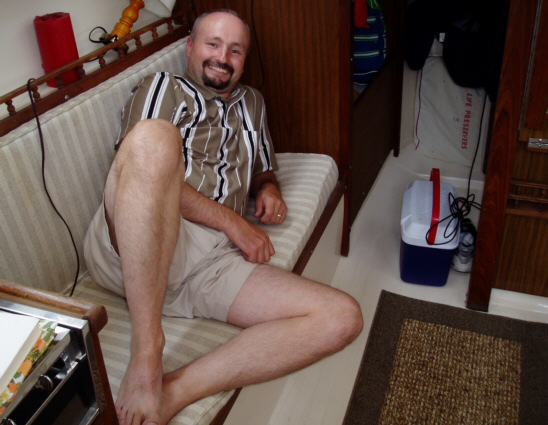
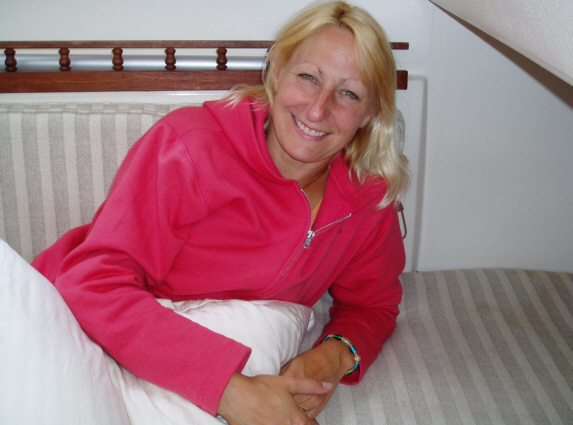
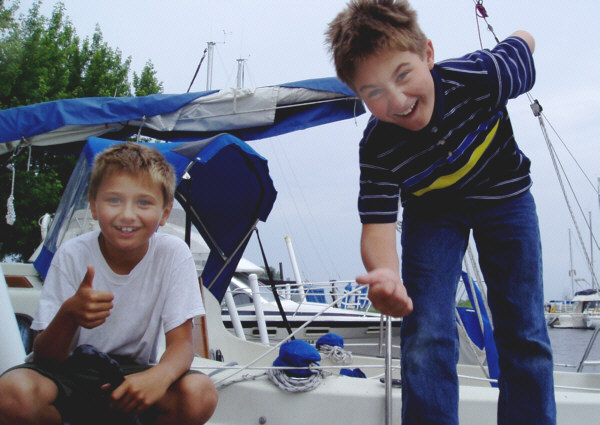
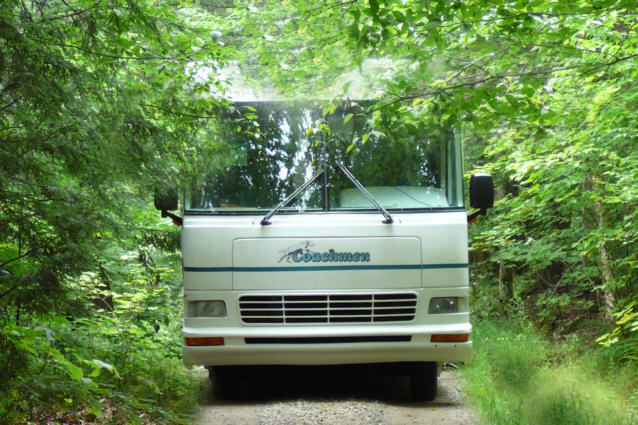
So in the middle of June, two weeks before Yvonne, I flew back to the United States. With the support of Christian, an emigrated Swiss, I went in search of a suitable motorhome. My idea was that it should be around 22 to 25 ft long and, of course, very affordable. But as things go, nothing could be found here in this size that matched my ideas. Now we call a 30 ft Coachmen Catalina motorhome our new, temporary home. Next year, at the end of our inland USA trip, we want to sell it again.
If any of you are planning a longer USA/Canada trip in 2007, this would be the suitable motorhome to take over.
When I had finally finished all the formalities for the purchase and registration of the MOMObil, I went to New York on 30 June to welcome Yvonne at JFK Airport. Yvonne's flight took half an hour less than scheduled and the US entry control took only half as much time that day as usually customary. Both of those things were slightly abnormal. As a little old country boy, I had some quite major trouble estimating US distances and the 4 to 7 lane traffic routing in New York City. Thus it happened that I finally showed up at the meeting point agreed upon with Yvonne at JFK Airport slightly delayed. But that is actually quite normal again now, my old friends will certainly think…. Thank you! Despite everything, we found each other after all, and nothing stood in the way of our inland USA adventure anymore.
At our MOMO in Cambridge
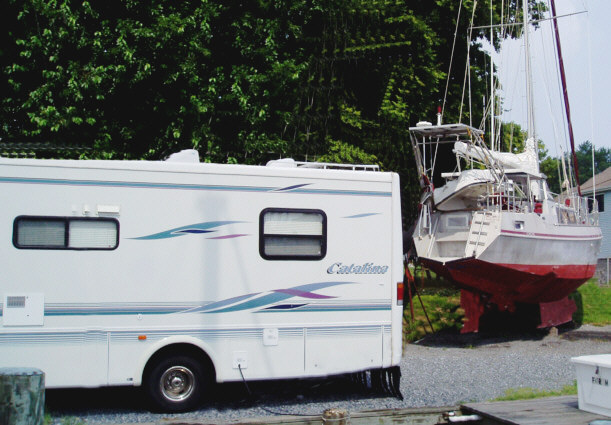
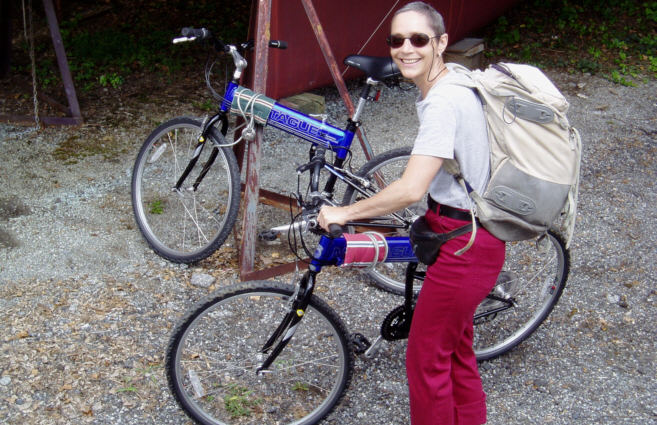
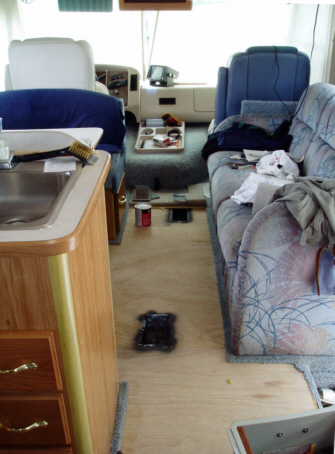
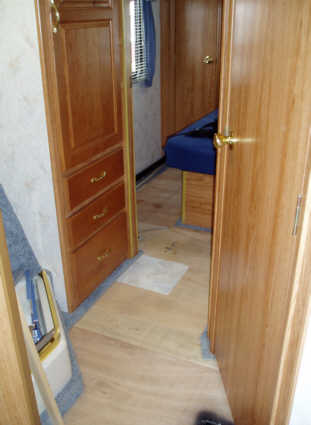
After warmly greeting our MOMO and noting with relief that she had survived the last half-year ashore unscathed, we enthusiastically set to work on our upcoming tasks. We cleared MOMO of the worst of the dirt and transferred many boxes full of supplies, clothing, tools, and food into the MOMObil. The door lock that Küre had repaired in Switzerland was reinstalled, and the rather dingy carpet in the MOMObil was replaced with a new, easier-to-clean PVC flooring. There were also several other improvements made to our new home, designed to make our upcoming camper life a little easier.
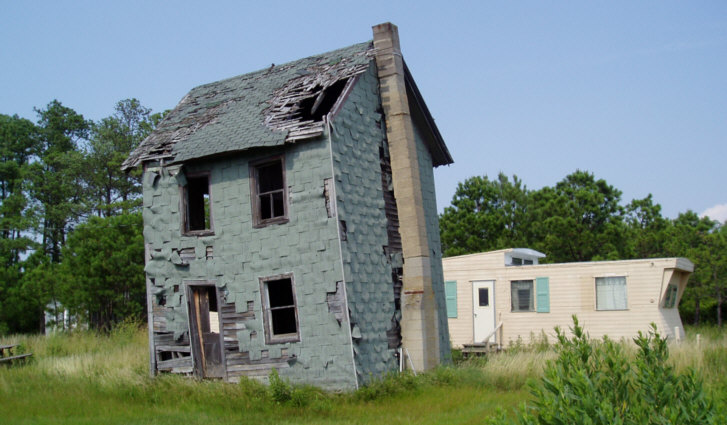
Nancy and Henry, who had always kept a watchful eye on our MOMO during our absence and faithfully promised to continue doing so, invited us along the way on various trips to the surrounding area. Among many other things, this is how we got to know the American "End of the World".
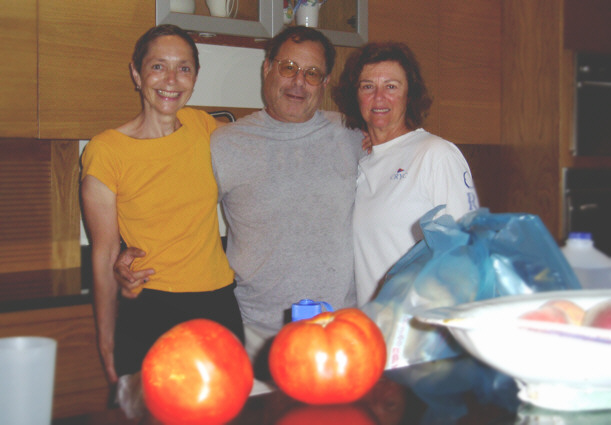
After 10 days, however, the time had finally come. A final, rather nostalgic look back at our MOMO and the hope that she would continue to wait patiently for us until next April at Generation III Marina. With a detour to Annapolis, where we visited our friends Ellen and Hank from Harness Creek, we now finally set off on our inland US road trip.
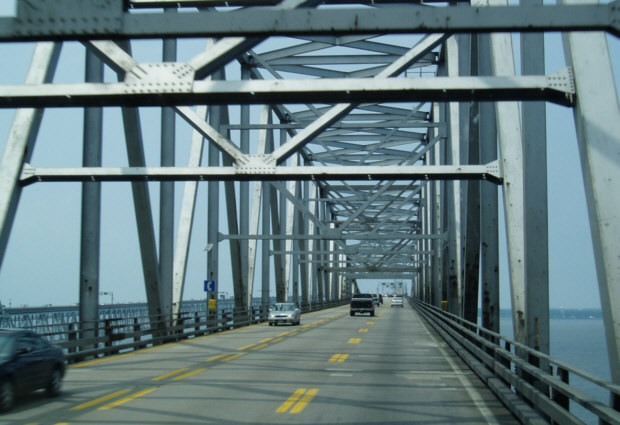
Drive through Pennsylvania and then to Niagara Falls
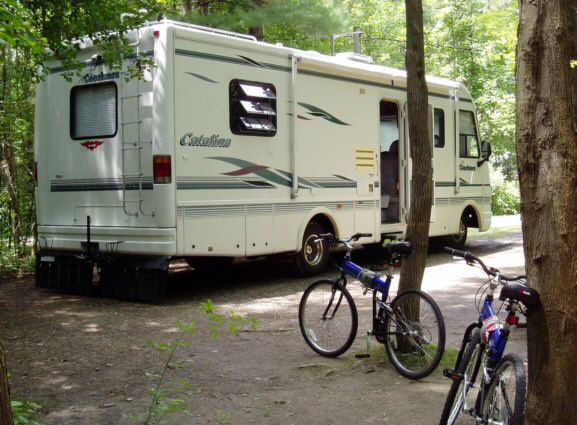
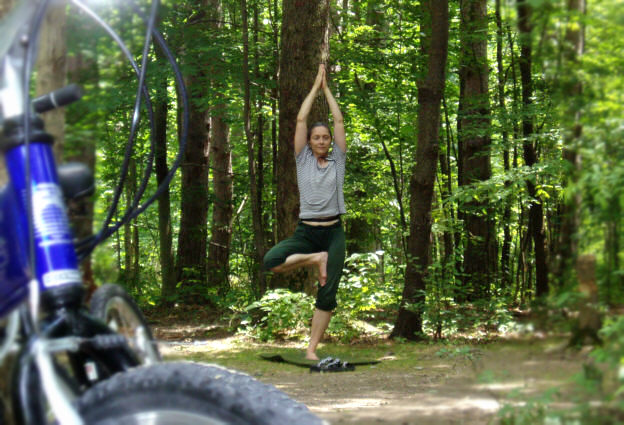
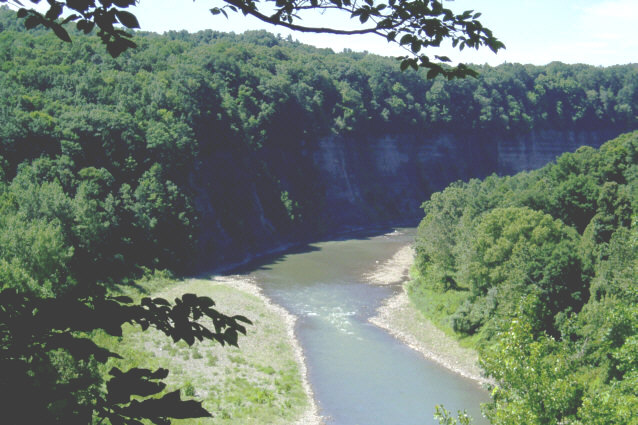
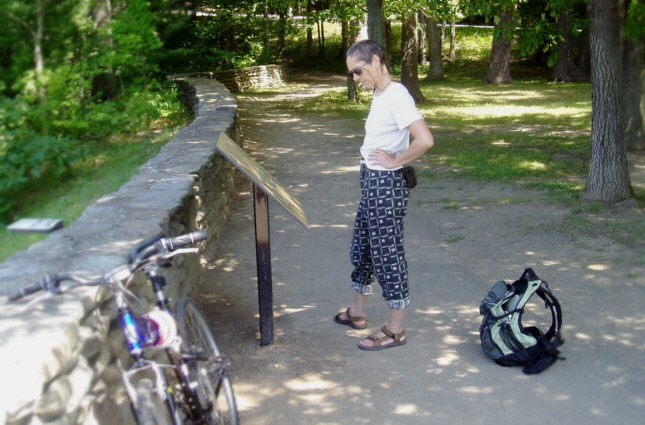
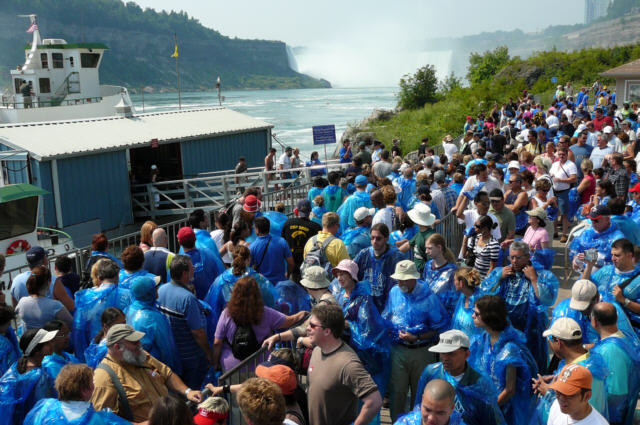
After leaving the state of Maryland, we travelled through densely wooded Pennsylvania at a relatively leisurely pace. With a few stops in various US state parks, we were able to slowly get used to this new camper life. Our first highlight of the trip, however, was to be Niagara Falls. This natural spectacle was truly worth the visit, but unfortunately the crowds of tourists came with it. Still, what could we do, there was no use complaining or lamenting. Camera strapped to our belly, just like a proper tourist, and standing in line like everyone else…
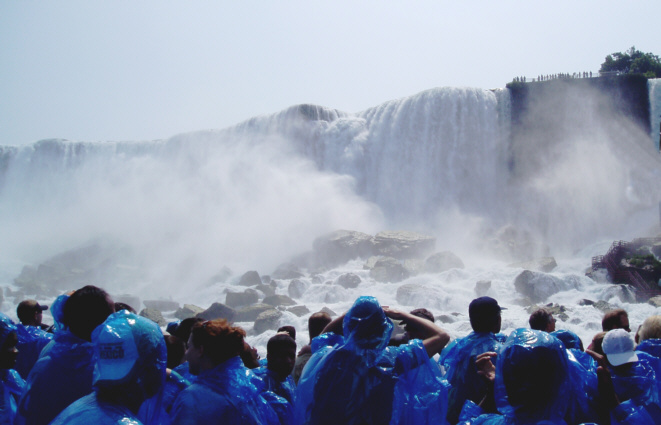
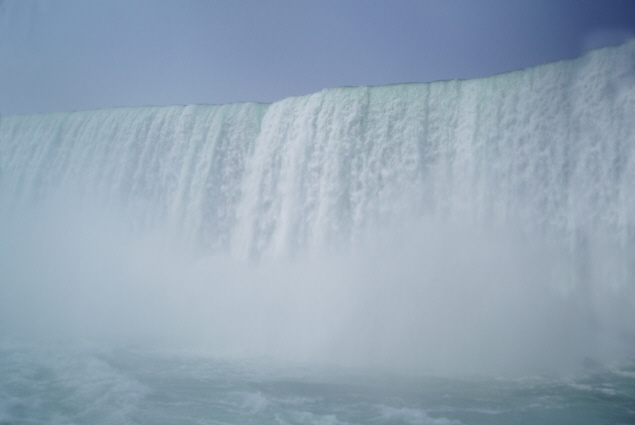
Niagara Falls are among the most famous natural wonders on Earth. They consist of two waterfalls: the 49-meter-high Canadian Falls, also known as the Horseshoe Falls, on the Canadian side of the river, and the 51-meter-high American Falls on the American side. The waterfalls are separated by Goat Island (America). The crest of the crescent-shaped Canadian waterfall is about 790 meters long. The almost straight crest of the American waterfall measures approx. 305 meters. About nine times as much water flows through the Canadian waterfall as through the American one.
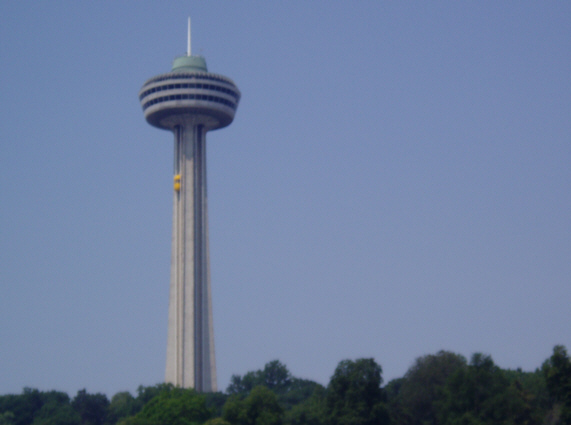
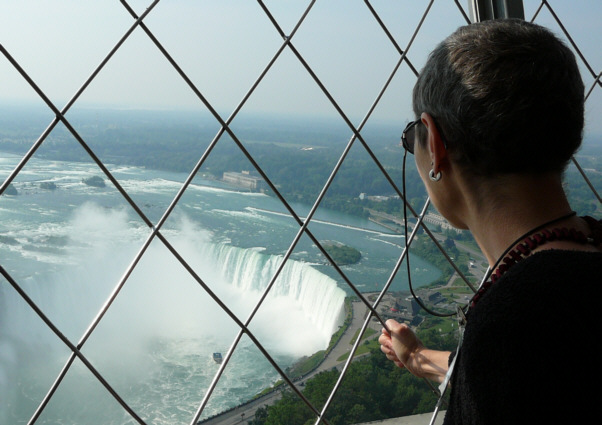
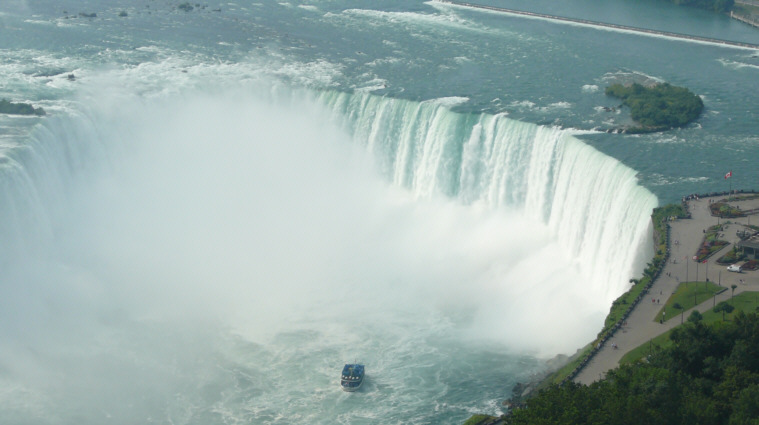
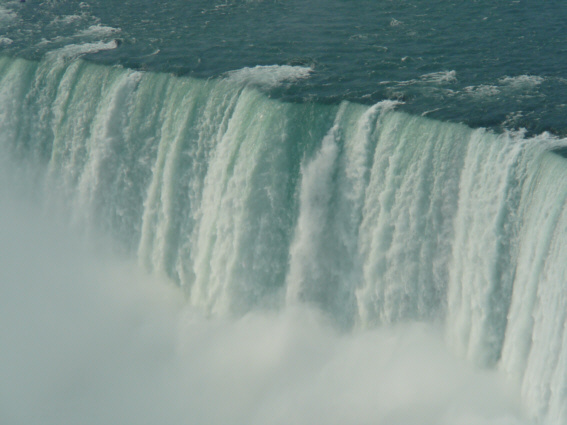
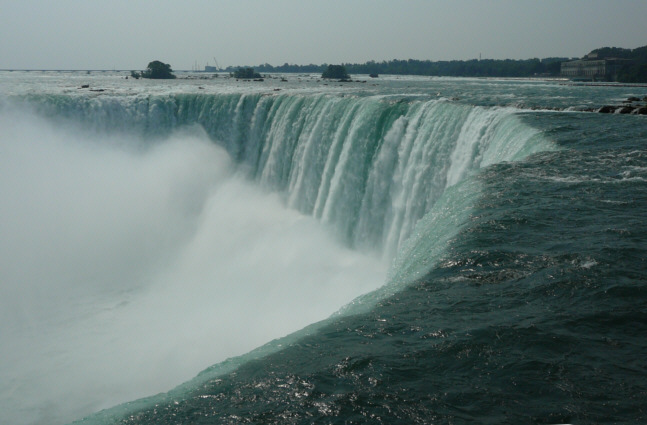
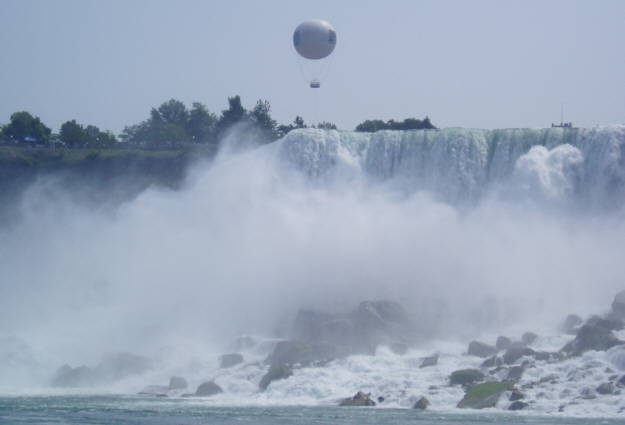
Niagara Falls formed nearly 12 000 years ago as the glaciers retreated north. As a result, the water of Lake Erie flowed through the Niagara Escarpment. This extends from southern Ontario to Rochester (USA). Since that time, erosion has moved the waterfall back about eleven kilometers, creating the Niagara Gorge. Currently, the Canadian falls are receding at a rate of approx. 1,5 meters per year and the American falls at a rate of about 15 centimeters per year. The faster erosion of the Canadian falls is due to their larger water volume. In 1954, a considerable part of the American Falls broke off and now forms a huge pile of rubble at the base of the falls. Today, Niagara Falls are a major tourist attraction, drawing millions of visitors every year. You can view the waterfalls from the parks on both sides of the river and, of course, from the two observation towers, the Skylon (223 meters) and the Minolta (200 meters).
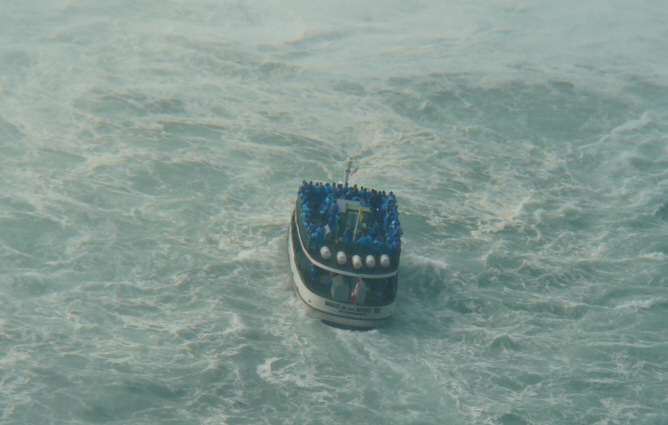
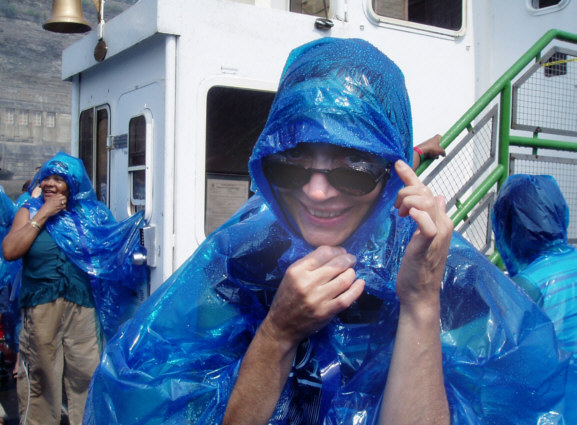
Numerous tourist boats operate between the Horseshoe Falls and the American Falls. This is a rather wet affair, but experiencing this mass of water up close is truly impressive.
Toronto
On your way north, you simply must stop in Toronto. That, at least, is what we kept hearing beforehand from all sorts of people.
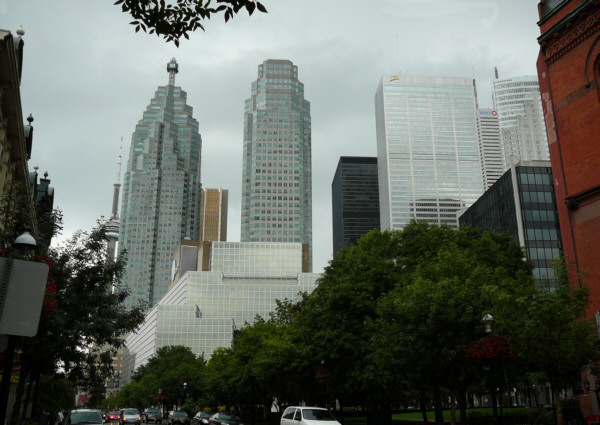
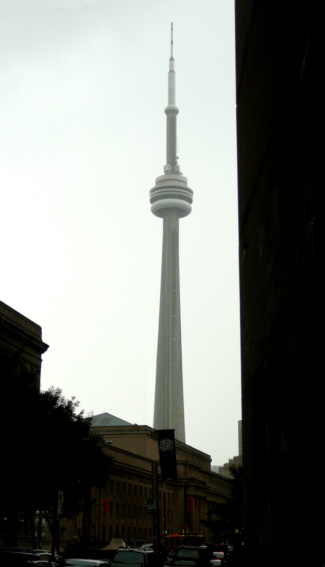
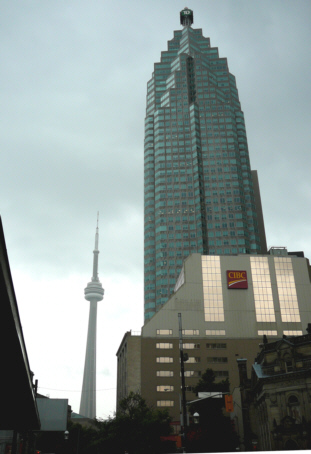
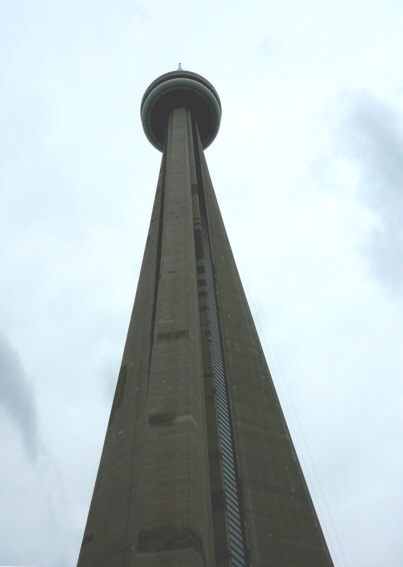
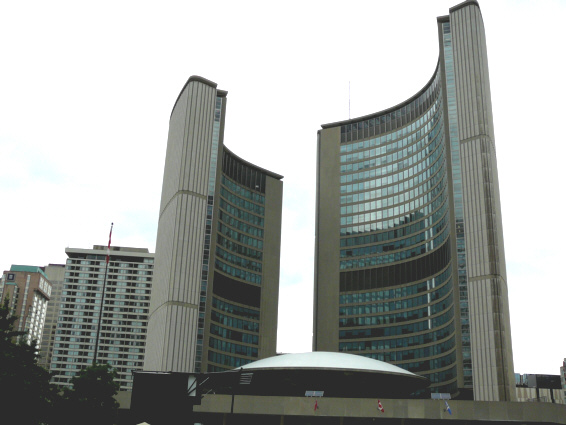
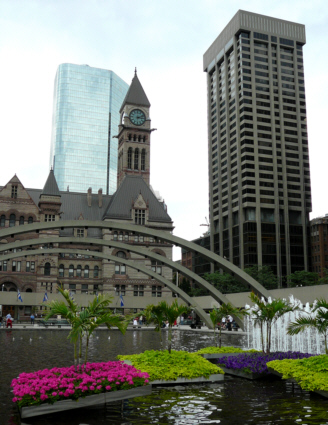
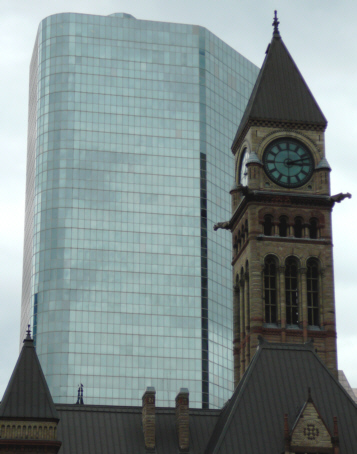
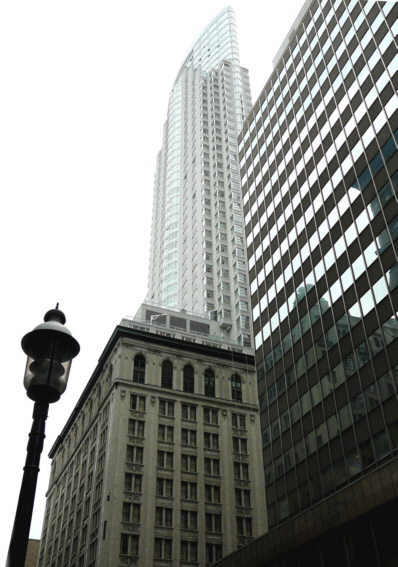
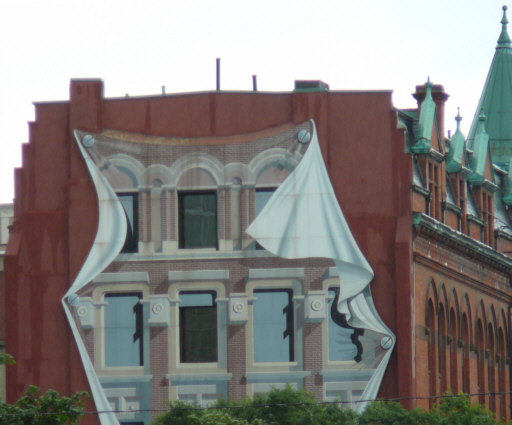
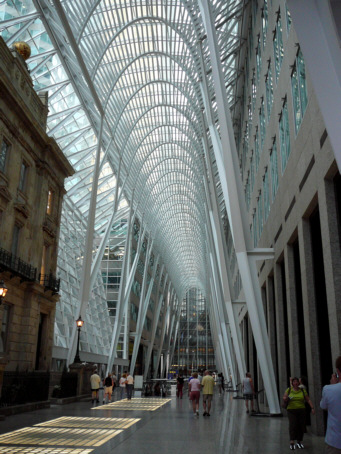

Toronto is the capital of the Canadian province of Ontario, located on Lake Ontario. Over the past 50 years, the city has taken on a completely new look. Today, it is unquestionably Canada's financial and cultural center, and the city features a port on the Saint Lawrence Seaway. An underground railway was put into operation in 1954. It is part of one of the busiest transportation networks in the world today. The city center is dominated by City Hall, a striking 1965 complex comprising two tall, curved office towers. This is also where the CN Tower (built 1976) is located, and at 553 meters, it is still the tallest freestanding building in the world today. Today, this tower is naturally also the landmark of the city. Unfortunately, for our visit to the city, we happened to catch somewhat worse weather, namely rain and fog. Therefore, we skipped climbing this tower, which seems rather intimidating to me. Since I am not great with heights, I still get a queasy feeling in my stomach today and am grateful to the weather gods that, due to the lack of visibility, I had a good reason back then not to have to climb the tower.
Hockey Hall of Fame
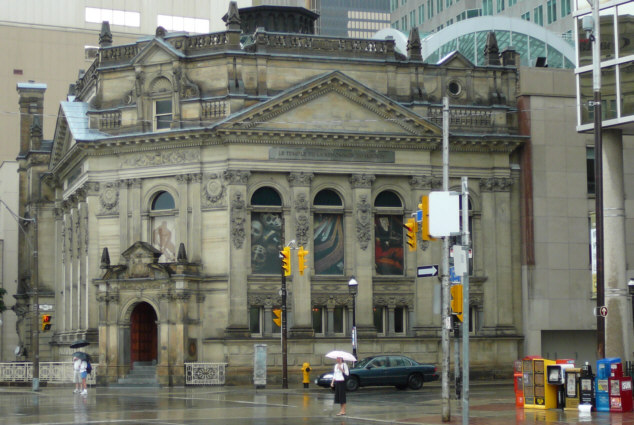
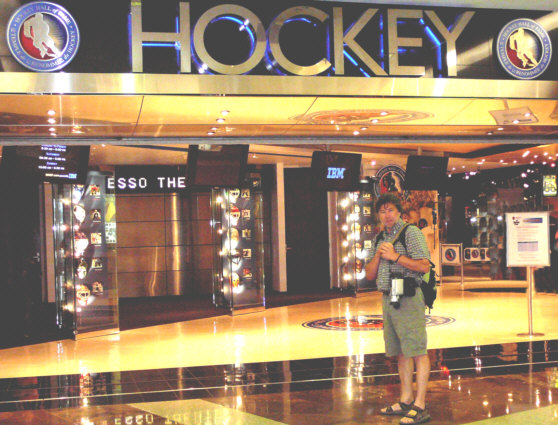
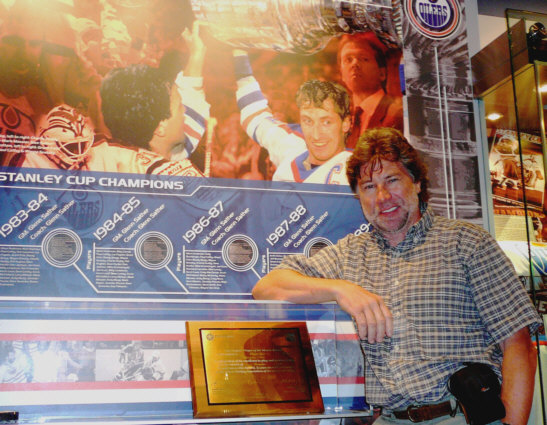
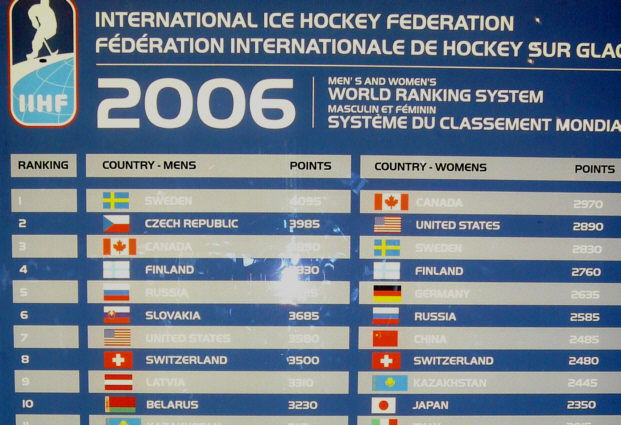
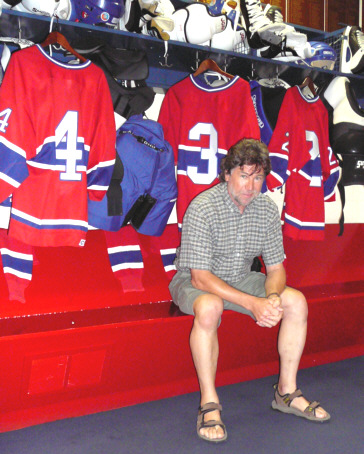
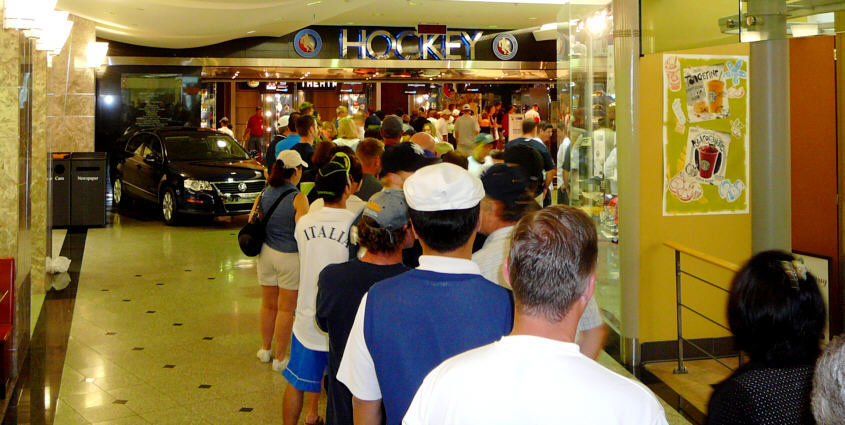
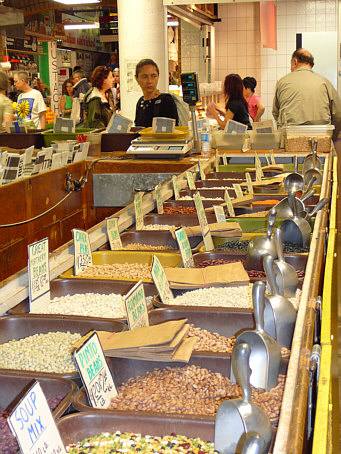
When we took the subway from our campground into the city in the morning, we first wanted to visit the large market hall. However, instead of standing in front of the market, we suddenly found ourselves in front of the Hockey Hall of Fame. So we quickly changed our plans and went inside the museum. Since it was still relatively early in the morning, we were practically the only visitors. In my thoughts, I was transported back to my childhood and my active hockey-playing days. While looking at Gordie Howe, Wayne Gretzky and co., time flew by and the space in front of the countless display cases, trophies, photos, and items of equipment became scarcer and scarcer. Within a short time, the Hockey Hall of Fame had filled to bursting. It became an indescribable crush, worse than back in the Allmendstadion ... oh, sorry, today it's called Bern Arena, I think anyway. When leaving this hockey museum, we were even more astonished, as we had to fight our way through a queue at least 30 meters long, still demanding admission to the Hall of Fame. What an ice hockey crazy Canada!
Ontario

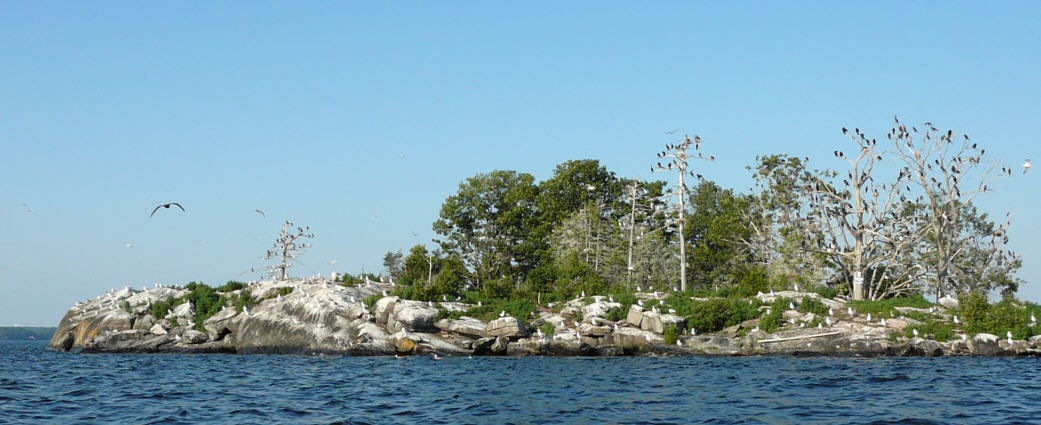
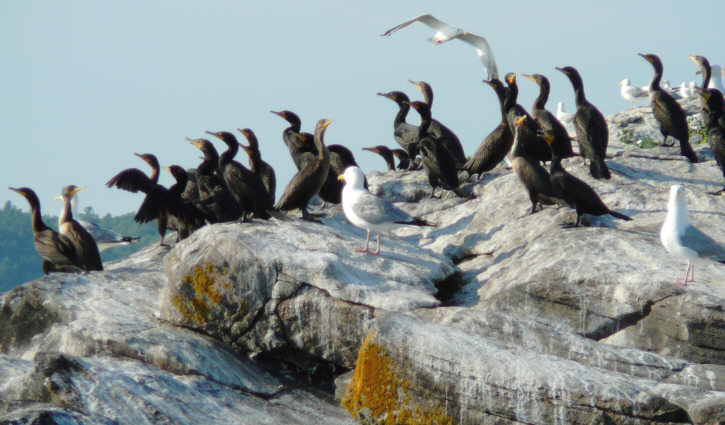
Ontario is Canada's second largest province after Quebec. Its area is 1 068 580 square kilometers. Of that, 177 390 square kilometers are covered by inland waters. The linear extent is 1 610 kilometers from east to west and about 1 690 kilometers from north to south. Only about 10 people live on every 1 km2. For comparison, 177 people live on 1 km2 in Switzerland.
After leaving the densely populated region around Toronto behind us, we slowly reached the Canada we had imagined. Vast expanses of land without a single house, an endless forest on the left and a romantic lake on the right, or vice versa. The road was also no longer heavily traveled and we enjoyed the elevated view from our MOMObil. We eagerly kept our eyes peeled for the announced bears, but they only existed in the brochure.
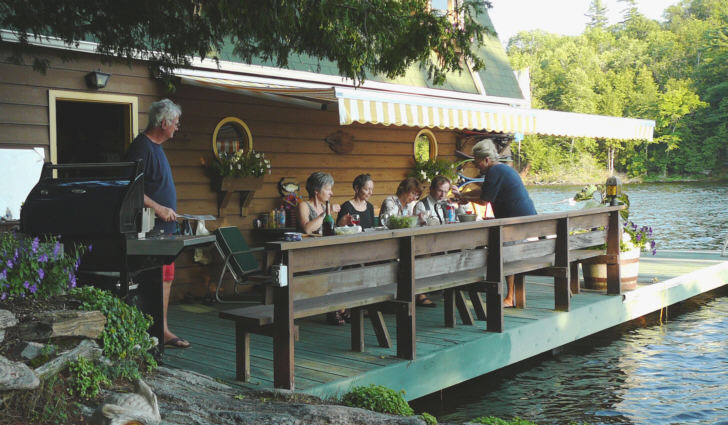
After a short detour to Lake Muskoka, where Karin and Klaus from SY Lucky Touch, whom we had already visited in the spring of 2005 in Hilton Head (South Carolina), have their dream summer house, our journey continued further north. Our first, slightly longer break in our journey was planned for Manitoulin Island. There we wanted to finally see our friends, Barbara and Wolfgang from the German SY Momo, again.
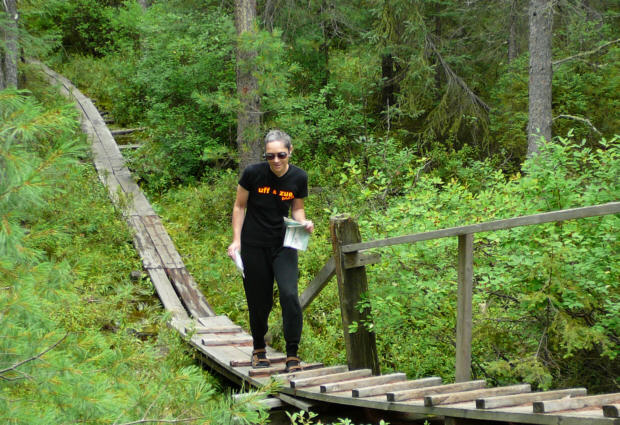
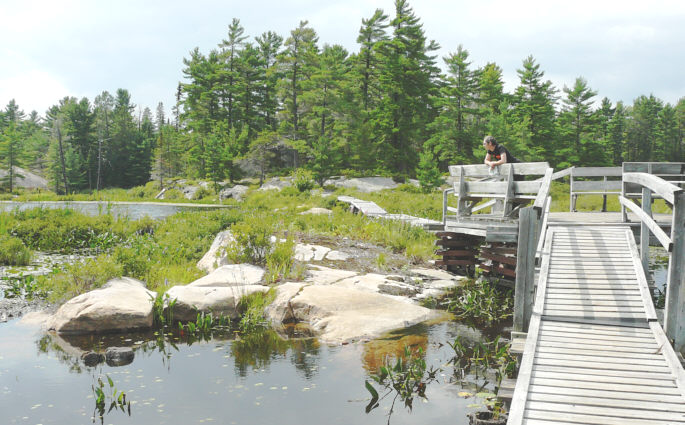
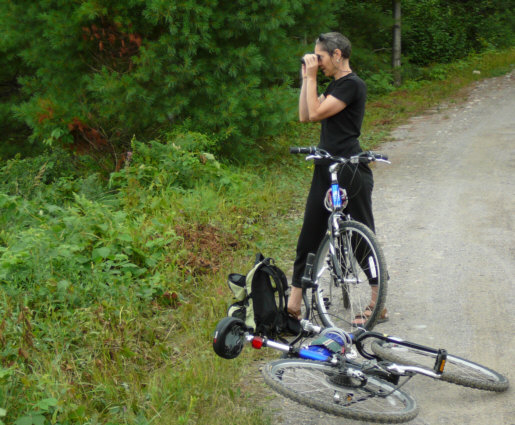
Since we arrived in Manitoulin Island a few days earlier than planned (which is almost a minor miracle for us), we enjoyed the Canadian late summer in pleasant temperatures and with plenty of biking and hiking, sorry, of course with cycling and walking.