
USA · Chesapeake Bay
Washington D.C. and its museums
So now we are moored at the secure private dock of Ellen and Hank Libby. We have already received our first invitations to their wonderful home. Since Hank, and Ellen to a slightly lesser extent, is an absolute passionate sailor, our first conversations naturally revolved around long-distance sailing. Hank had only returned from the Caribbean with his sailboat two months ago. During the winter there, he had experienced a little bit of the "real" onboard life of us exotic long-distance sailors. Completely enthusiastic about it, he is now forging new plans on how to further realize his sailing dreams. However, that will not be so easy for him, because his wife Ellen unfortunately loves blue-water sailing far less than her profession as a psychologist.
After our initial scouting trips to Annapolis and smaller bike tours in the immediate vicinity, we had also equipped ourselves with the latest information about Washington D.C.. We had known for a long time that the capital of the United States was worth a visit. But that we would be so taken with it, indeed almost become "addicted to visiting" it, surprised us quite a bit. The two to three planned visits ultimately turned into a full dozen, and if we had had even more time available, there would have been many more.
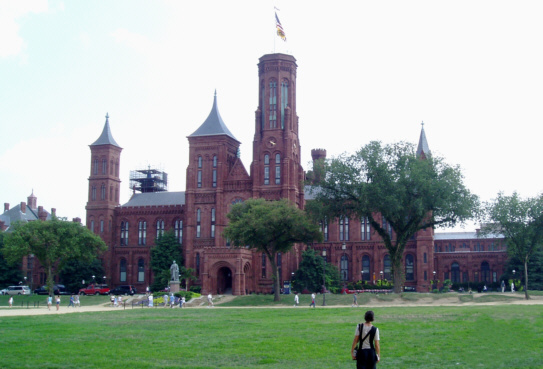
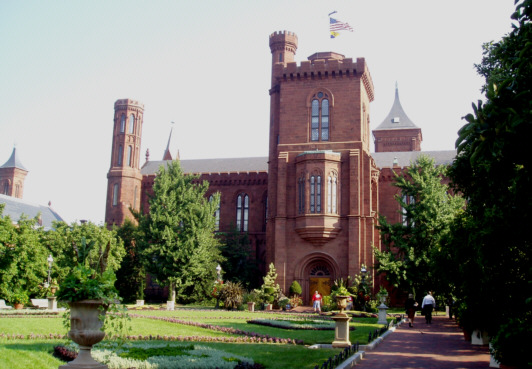
In Washington D.C., there is the Smithsonian Institution. This Institution was founded in 1846 with funds from the estate of the English scientist James Smithson for the benefit of the United States of America, with the mandate "for the increase and diffusion of knowledge".
With 18 museums, galleries, and the National Zoo, the Smithsonian is the largest museum complex in the world. The Smithsonian Institution manages over 142 million artifacts of human or natural origin for the American people. The institute, which is also a significant research center, sees its mission in public education, service to the nation, and the awarding of fellowships in the fields of art, science, and history. The Smithsonian Institution supports expeditions and excavations, and promotes research, particularly in the fields of astronomy, astrophysics, ethnology, and environmental research. It features its own observatory, the Smithsonian Astrophysical Observatory (together with the Harvard College Observatory it forms the Harvard-Smithsonian Center for Astrophysics), the Smithsonian Biopark, and the Archives of American Art. It operates the National Museums of American History, American Art, and the National Air and Space Museum. The Smithsonian Institution is also the publisher of the standard work on North American Indians, the Handbook of North American Indians.
Nine of the Smithsonian's museums and galleries are located on either side of the National Mall, a long, elongated green space between the Washington Monument and the Capitol. A three-story underground complex houses two museums and the S. Dillon Ripley Center, which includes the International Gallery, office spaces, and lecture halls or seminar rooms. Five other museums and the National Zoo are located elsewhere in Washington.
A brief word about James Smithson. James Smithson was born in France in 1765 and died in Genoa on June 27, 1829. He was a British mineralogist and chemist and became known because of his legacy to the USA, which was used to fund the Smithsonian Institution.
When his mother died in 1800, he and his half-brother inherited a fairly large estate. In his will, he bequeathed his fortune to his nephew, the son of his half-brother. However, he stipulated that in the event that this nephew should die without children, legitimate or not, the money should go to the USA to establish an institution in Washington under the name Smithsonian Institution "for the increase and diffusion of knowledge among men". His nephew, Henry Hungerford Dickinson, died in 1835 without heirs. In 1836, Smithson's estate was accepted by the United States Congress. A legal dispute in Great Britain challenging the will was decided by a court in 1838 in favor of the USA. The remaining sum amounted to approximately half a million dollars. There were quite a few disagreements about how the legacy should be fulfilled, and it was not until 1846 that the Smithsonian Institution was finally founded.
What is absolutely incomprehensible to me about this story, however, is: James Smithson had never been to the United States. The motive for his special bequest remains unknown to this day.
The National Air and Space Museum
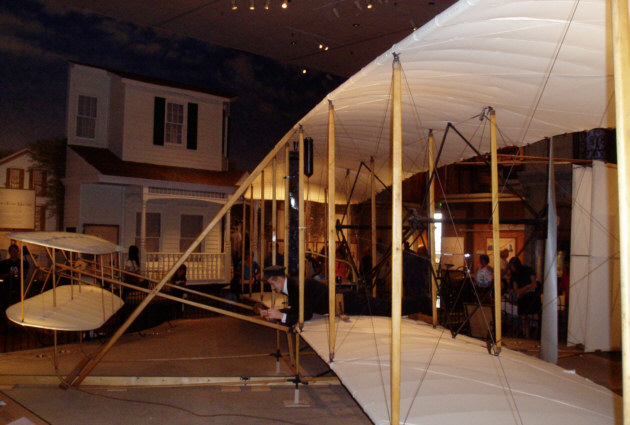
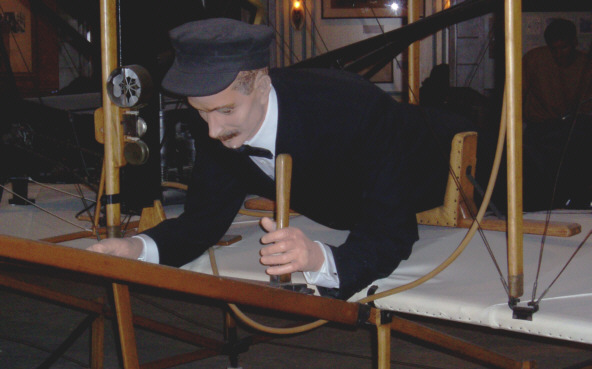
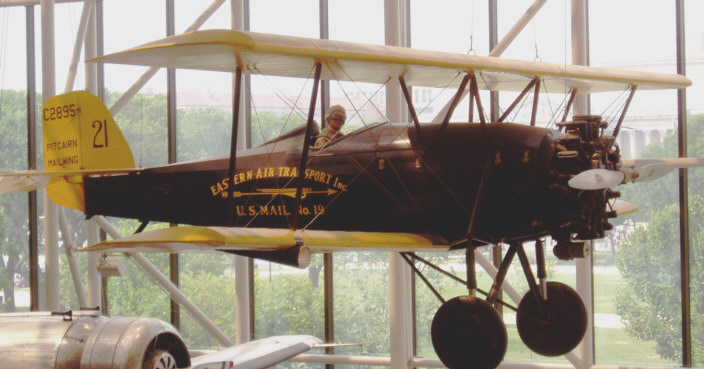
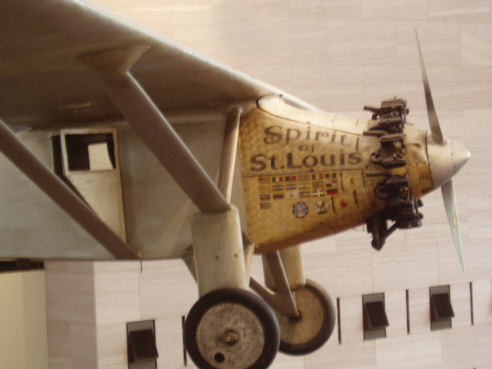
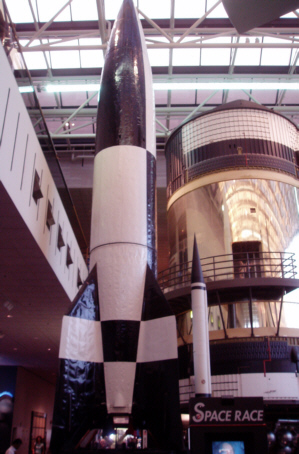
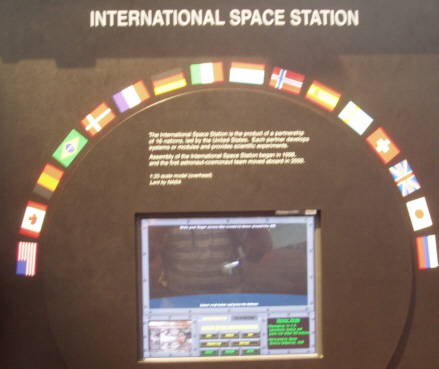
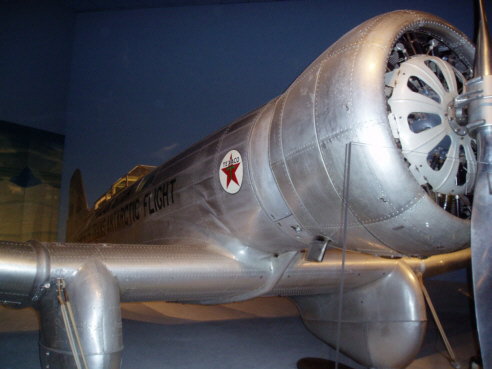
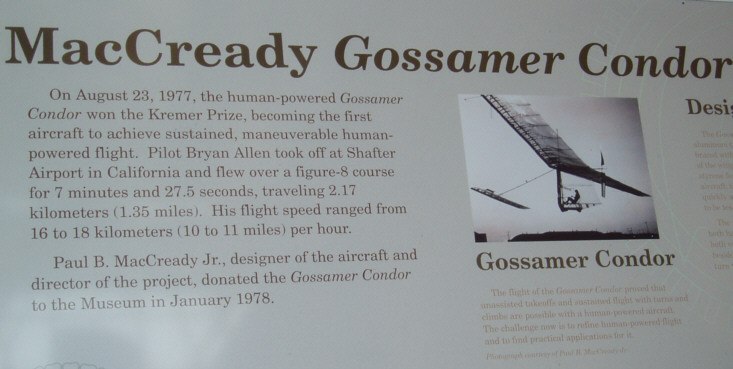
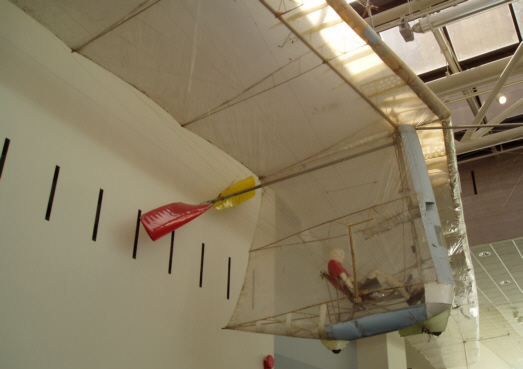
The National Air and Space Museum is affiliated with the Smithsonian Institution complex.
For years, the building has housed many aerospace exhibits, such as the original Spirit of St. Louis by Charles Lindbergh.
Of course, we did not miss the extraordinary, once-in-a-lifetime opportunity to touch a 4 billion-year-old piece of genuine moon rock. To be honest, though, touching it was nothing out of the ordinary. The stone did not feel any different than if I had stroked a smooth river pebble.
In the entrance hall, a red flying object bearing a white Swiss cross lit up before us. Filled with national pride, we admired Piccard's original Breitling Orbiter.
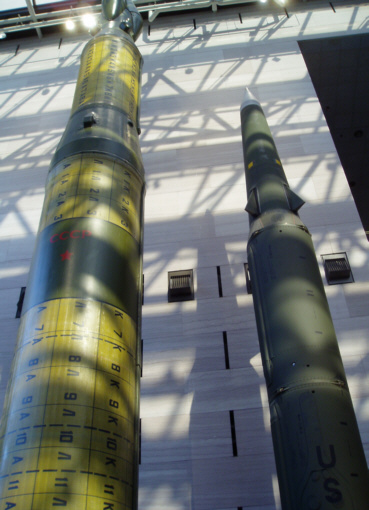
Many well-known original aircraft from World War I and World War II, as well as retired ballistic missiles from the Soviet Union and the USA, stand alongside a replica of the Wright brothers' first wooden airplane.
Although I am normally not an airplane enthusiast, I was totally thrilled. My three visits to this museum confirm that.
This museum is designed to be very interactive and, with its many different exhibits that invite you to touch and participate, is also very interesting for children or those who are not very enthusiastic about technology.
Since spatial expansion was no longer possible at this prominent location, the decision was made to establish a second site.
This new location, named the Steven F. Udvar-Hazy Center, was only opened in December 2003. The building is named after Steven F. Udvar-Hazy, a patron of the museum and well-known figure heavily connected to aviation through his company, ILFC. The new complex is located just south of Washington Dulles International Airport in Chantilly, Virginia, and offers much larger areas and buildings. Therefore, exhibits such as the SR-71 or the Space Shuttle Enterprise, the famous B-29 Superfortress Enola Gay, or a Concorde can now be displayed there.
Unfortunately, we then lacked the time to visit this even larger exhibition.
Our visits to the various museums of the Smithsonian Institution
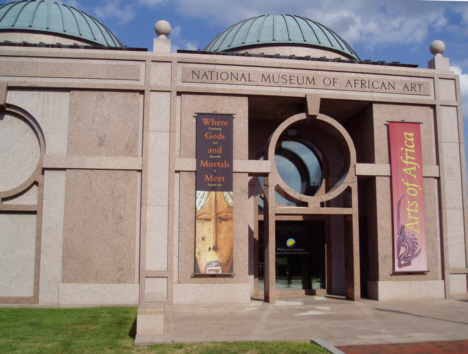
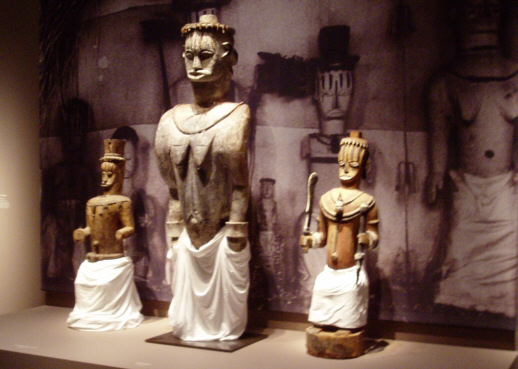
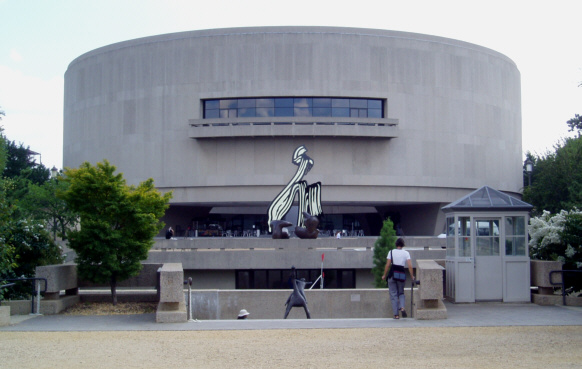
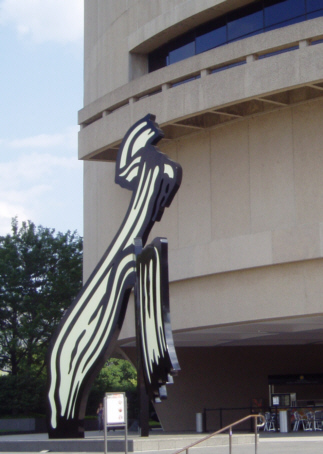
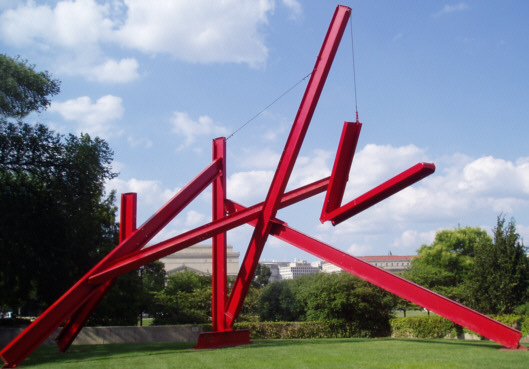
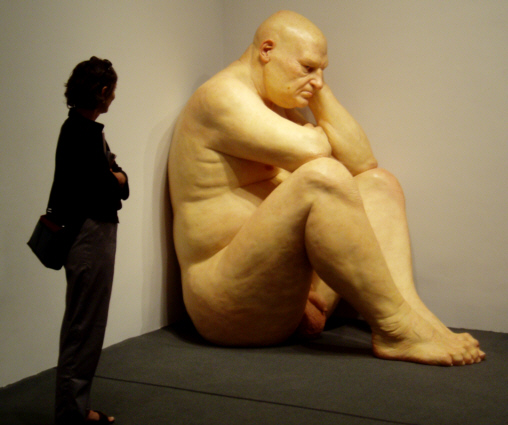
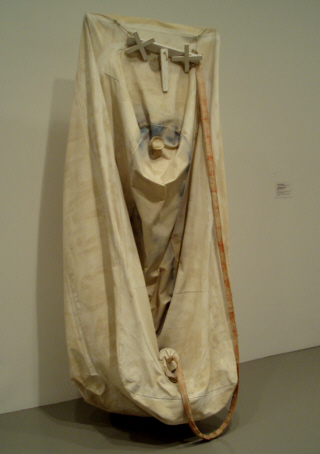
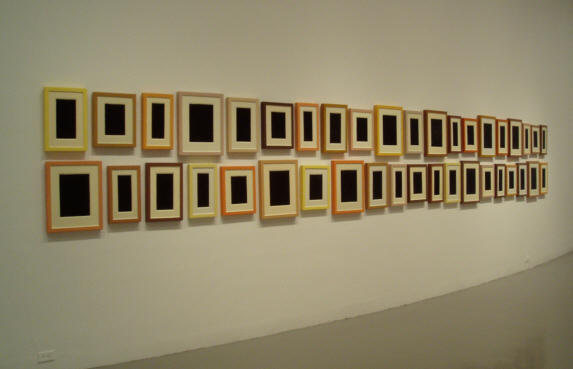
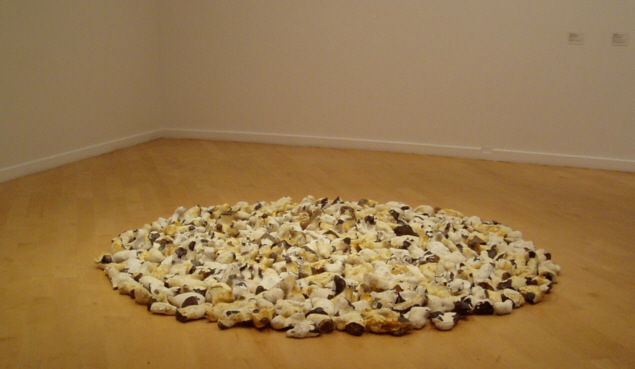
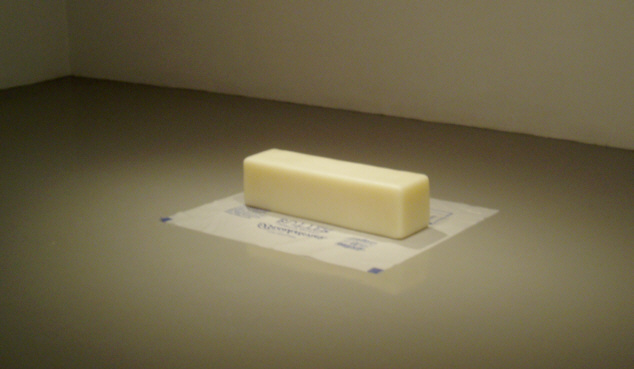
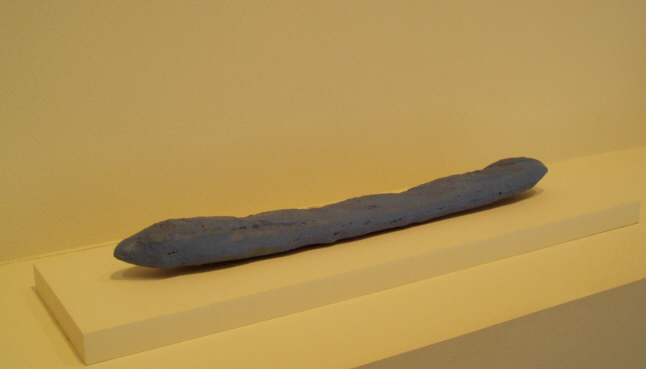
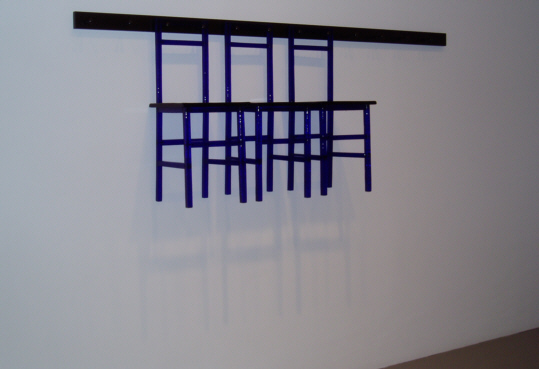
Writing about this is actually somewhat pointless. The various travel guidebooks can do that much better. Whether it was the African Art Museum, the American History Museum, the American National Gallery, the Hirshhorn Museum, or another, each one was fascinating in its own way. Only with the Hirshhorn Museum did I struggle a little bit. The type of art shown there is apparently beyond my understanding. Three chairs hung on a coat rack, an old deflated rubber dinghy, 40 empty picture frames on the wall, a baguette painted entirely blue, and so on and so forth, far exceeds my comprehension of art.
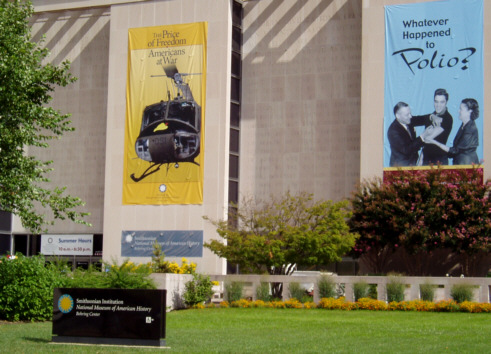
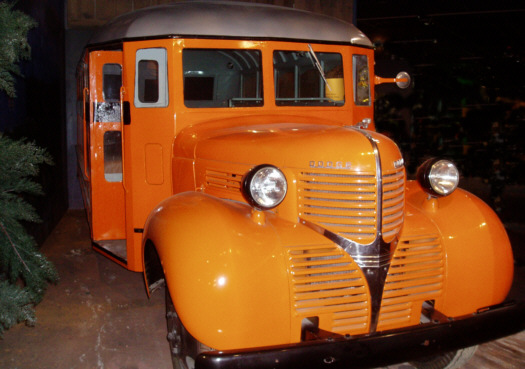
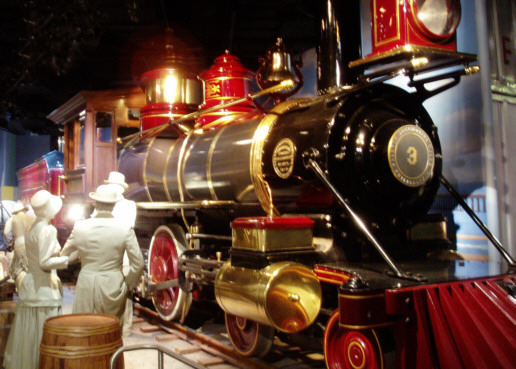
Of course, I should not fail to mention that these museum visits had yet another pleasant side effect for us. The temperatures in the Washington area at that time were always around 35 degrees. As certainly everyone knows, practically every museum in the USA is equipped with air conditioning ….. American History Museum

Hirshhorn Museum
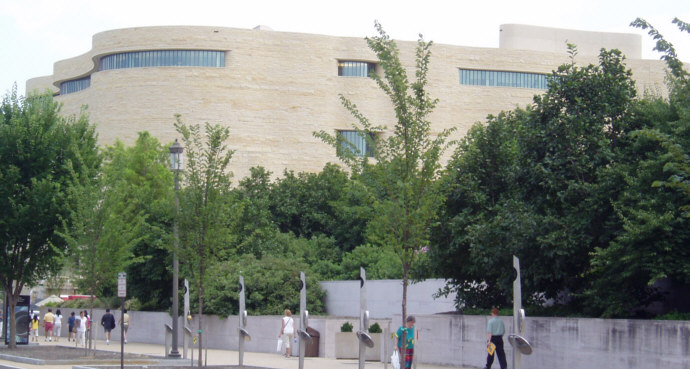
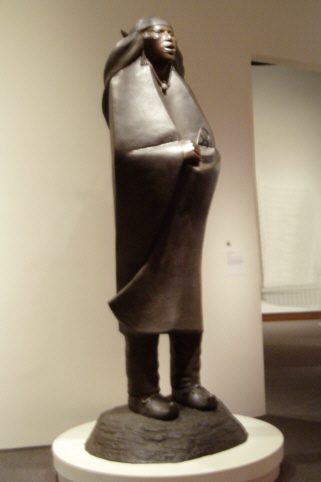
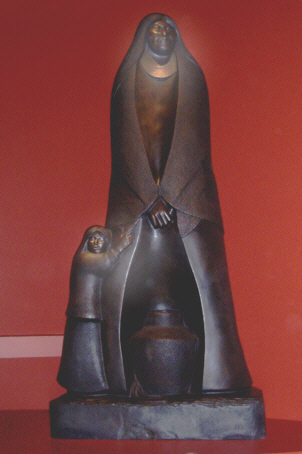
The National Museum of the American Indian (NMAI) was launched in 1989 by a resolution of the US Congress, with the mission to protect, study, and exhibit the life, language, literature, history, and art of Native Americans. The museum is operated under the auspices of the Smithsonian Institution and is located near the Capitol on the National Mall.
Native American planners such as architects Douglas Cardinal from the Blackfeet nation, Johnpaul Jones (Cherokee), Ramona Sakiestewa (Hopi), and Donna House (Diné/Oneida) influenced the architecture of the building. This resulted in an extraordinary museum structure with a facade made of natural sandstone. It has neither corners nor edges. Instead, curved lines emphasize harmony with nature. The entrance faces east, toward the rising sun. A welcome wall greets visitors in 150 Native American languages. The open space in front of the museum creates a mood reflecting the nature-bound character of the museum with 33,000 trees and bushes, 30 unhewn rocks (Grandfather Rocks), meadows, cornfields, streams, and ponds. This is complemented by an open-air theater. The five-story museum offers plenty of space for gatherings, Native American performances, theater, mystical fire pits, storytelling areas, and works of art from various tribes. A cafe offers traditional Native American food.
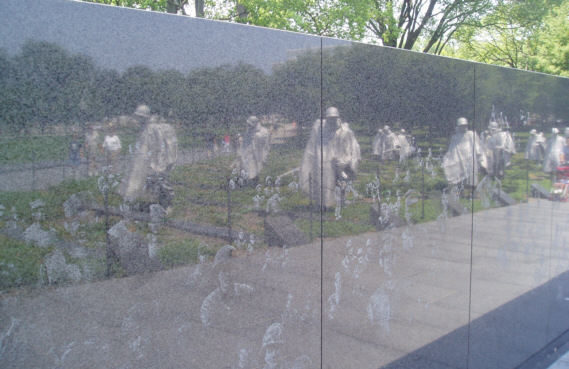
Arlington National Cemetery, the Korean War Veterans Memorial, and the Vietnam Veterans Memorial
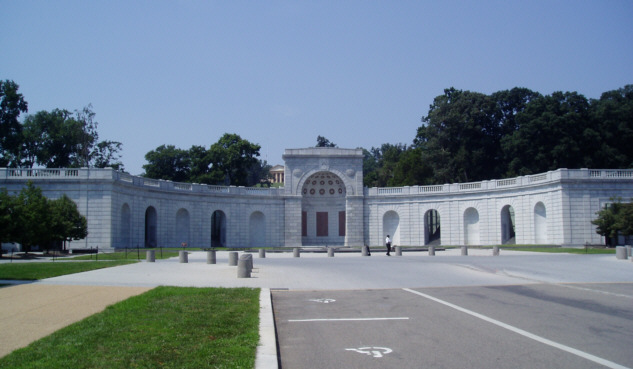
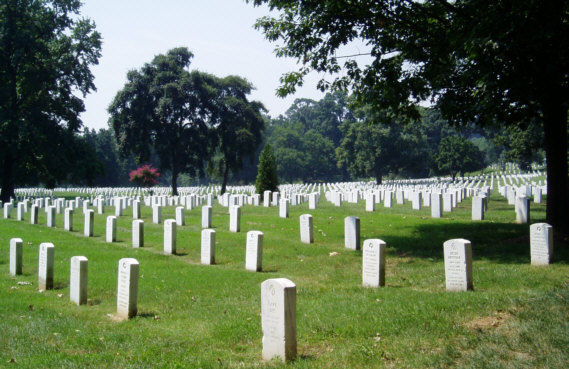
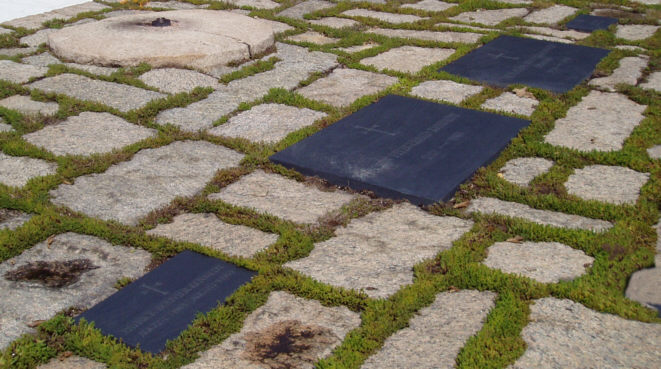
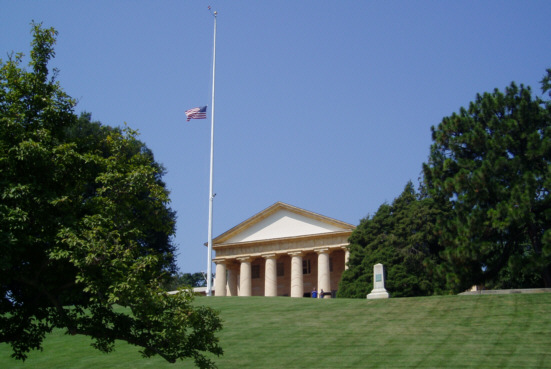
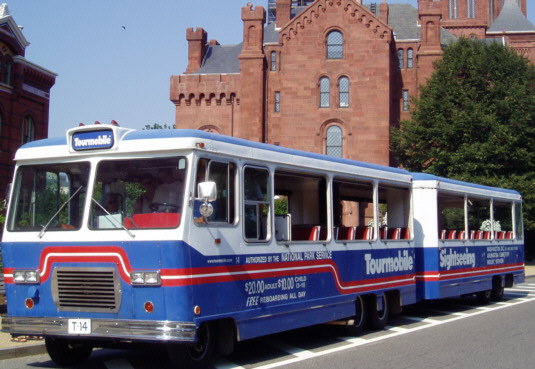
The tourmobile comfortably chauffeured us to these historic memorials. At the sight of the tens of thousands of gravestones, the question involuntarily arose in us: Did the dying of these people really pay off?
Arlington National Cemetery was established during the American Civil War in Arlington, Virginia, on the grounds of General Robert E. Lee. It is separated from the capital Washington, D.C. by the Potomac River and borders the Pentagon. It is the national veterans cemetery and is exclusively reserved for former military personnel and their families. Nearly 5400 funerals take place here annually. With over 260.000 burials since its inception, the National Cemetery in Arlington is the second-largest cemetery in the USA, following Calverton National Cemetery in New York.
Following the expropriation of General Lee, who fought for the opposing Confederacy, the land was officially designated as a cemetery by Secretary of War Edwin M. Stanton on June 15, 1864. In 1882, after lengthy proceedings, the question of ownership was brought before the Supreme Court. The court ruled in favor of the Lee family, and the United States Congress subsequently passed a resolution to pay compensation of $150.000.
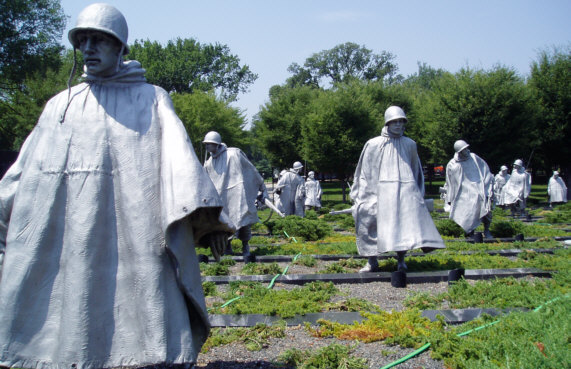
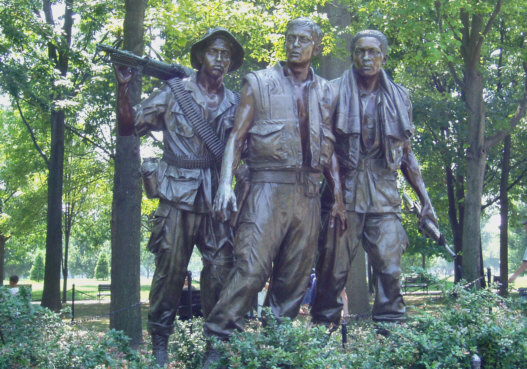
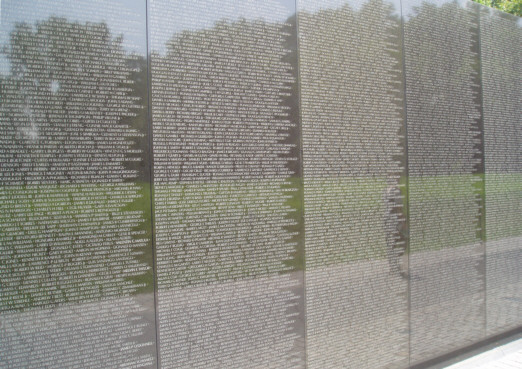
The Vietnam Veterans Memorial is a national memorial of the United States of America in Washington, D.C., honoring the members of the U.S. armed forces who served in Vietnam. Initiated by Vietnam War veterans and funded entirely by donations through the Vietnam Veterans Memorial Fund, it was intended to help reconcile the divided American population. The Memorial Wall is the oldest part of the memorial. The groundbreaking ceremony for the wall made of black polished granite took place on March 26, 1982, and it was dedicated on November 13, 1982. It is built into the terrain and consists of two 75 m long arms that meet at a 125° angle, with one arm pointing toward the Washington Monument and the other toward the Lincoln Memorial. Inscribed in the wall are the names of the 58.245 (as of late 2004) killed and missing service members from the Vietnam War. They are arranged chronologically, from 1959 at the top edge to 1975 at the base of the wall. They carry only a single symbol: a diamond for killed soldiers, a cross for missing soldiers. If the remains of missing personnel are identified, a diamond is engraved over the cross, with the cross still extending beyond the corners. If it turns out that a missing person survived, a circle is inserted around the cross, although there is no circle on the walls.
A Few Words on the History of the Vietnam Veterans Memorial
As the Vietnam War progressed, resistance among the American public grew stronger, leaving behind a deeply divided nation after the war ended. In 1979, several Vietnam veterans founded the Vietnam Veterans Memorial Fund (VVMF) to build a memorial financed entirely by donations. Although this initiative was initially ridiculed, more than 8.4 million dollars were raised from over 275.000 people within a few months. On April 30, 1980, following a debate lasting only 7 minutes, the U.S. Senate provided the VVMF with a site northeast of the Lincoln Memorial measuring approximately 8100 m², and on July 1, 1980, President Jimmy Carter signed the corresponding legislation. In October 1980, the VVMF announced an America-wide competition for the memorial. By the end of the competition on March 31, 1981, 1421 designs had been submitted, which were reviewed by a jury consisting of architects and sculptors. On May 1, 1981, the unanimously chosen design was presented to the public, created by Maya Ying Lin, a 21-year-old architecture student. Following the groundbreaking on March 26, 1982, the memorial was dedicated on November 13, 1982.
Library of Congress
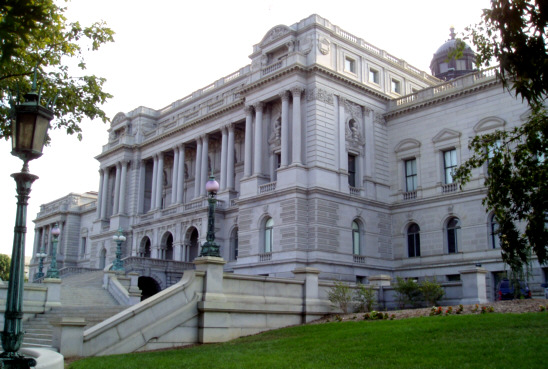
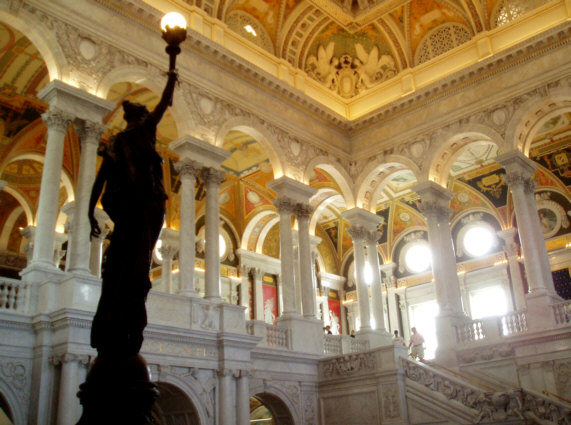
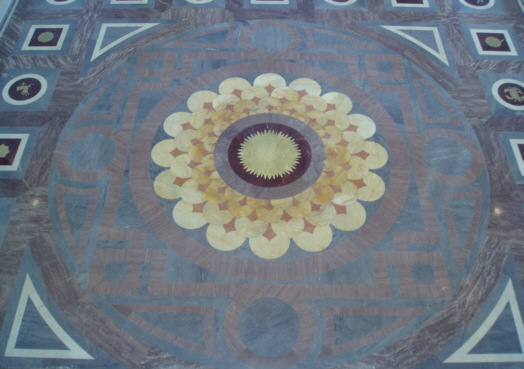
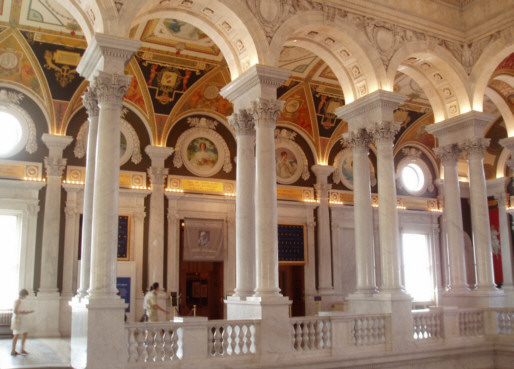
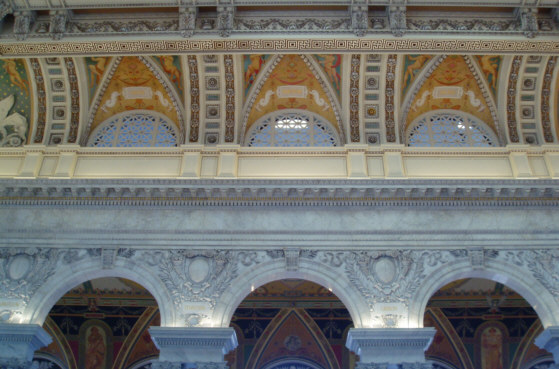
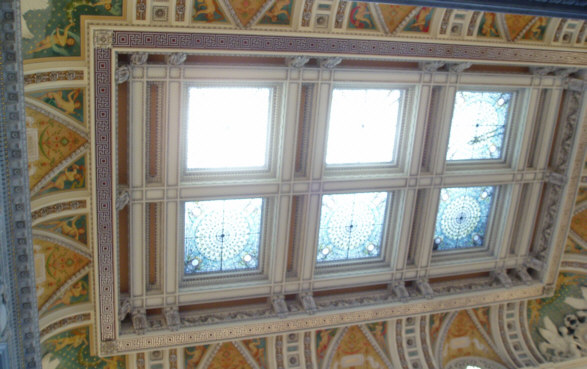
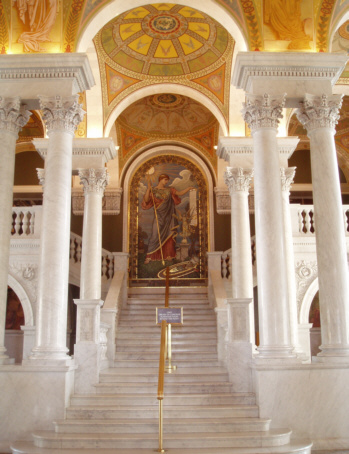
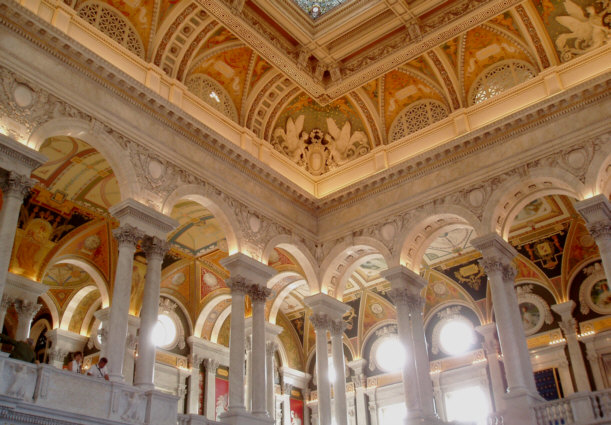
With its 130 million books and items, the Library of Congress is the largest in the world. It was built around 1800 to serve as an information source and reference work for all members of Congress. Today, the library is theoretically accessible to every U.S. citizen, but obtaining a user permit requires a lengthy and complex procedure. The entire complex comprises three buildings, with the Jefferson Building, beautifully renovated a few years ago and housing the main reading room and various exhibitions, being particularly attractive to visitors.