
Dominican Republic · Bahamas
Our first reef passage, Rum Cay
Farewell to Santa Barbara de Samana, Doris and Andreas
After enjoying New Year's Eve at the restaurant "Mato Grosso", supposedly the best in town, together with Caroline and Pascal, the New Year began just as the old one had ended. It rained extremely heavily. Even the locals slowly, and then increasingly, began to complain loudly about the impossibly wet weather. For us, there was practically no longer any way to get ashore and back onto the boat without getting wet. Our dinghy route thus repeatedly became a lottery and usually a rather wet affair.
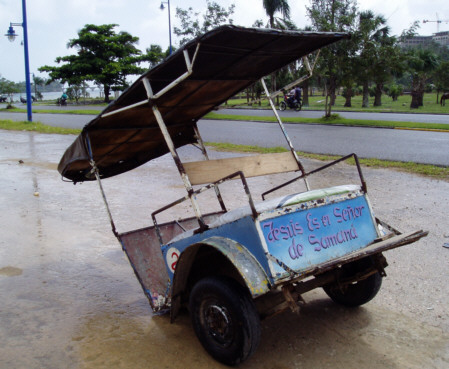
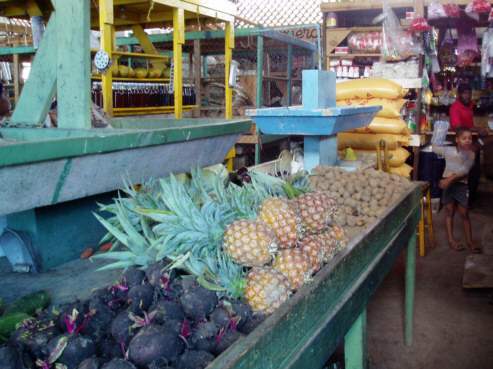
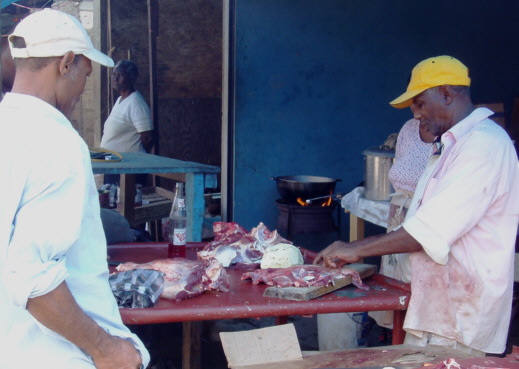
Meanwhile, after we had taken various day trips to the surrounding area together with Caroline and Pascal, January 6th, their departure day, had already arrived. Everyday life returned to MOMO. After we had prepared the boat once again for a longer journey on the high seas, a little bit of disillusionment set in for us. The weather was really acting a bit crazy and one cold front followed another. The strong winds simply would not weaken, and the quite high swell posed the even bigger problem for us. We could actually still outsmart the wind with very reefed sails. Against the swell of over 4 meters in height, however, there was simply no remedy. For over 14 days, we still had to wait in the bay of Samana for the long-awaited weather window that was favorable for us. Waiting is actually not the right word, because not a day, or strictly speaking not an hour, passed now without something being taken care of that had been pending for a long time.
We also still had an open invitation from the Swiss-Dominican dual citizens Doris and Andreas. They have been at home in Santa Barbara for eight years and run their Samana Computer Center here. They give computer courses there, sell computer accessories, provide the internet to us globetrotters, and write letters for the local population and the authorities. Yes, even letters for official bodies, such as the court and the police department. The court might already have a computer, but it also needs electricity and that is very scarce in Samana. This usually failed around eleven in the morning and then not much else happened in the city. Where they could not start a noisy petrol generator, only simple manual labor was the order of the day. In this situation, Andreas's Swiss spirit showed. He has installed a larger battery system in his shop as an energy storage for the power outage times. Thus, these power outages no longer bother him at all and he can also carry out various office assignments for public bodies.
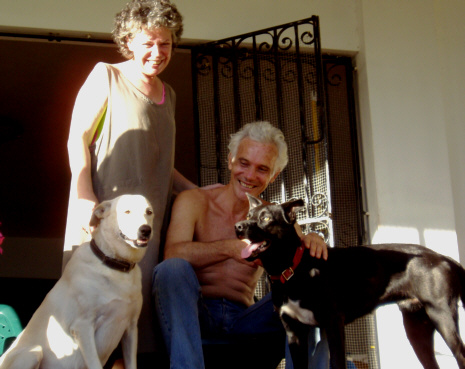
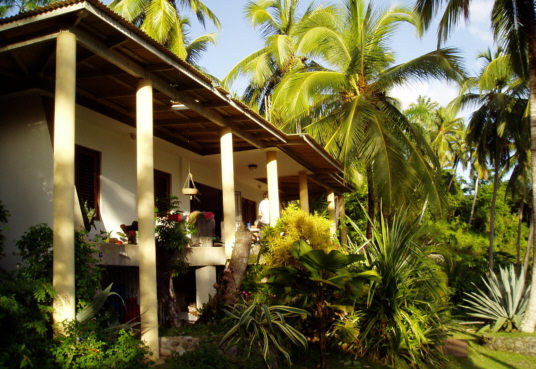
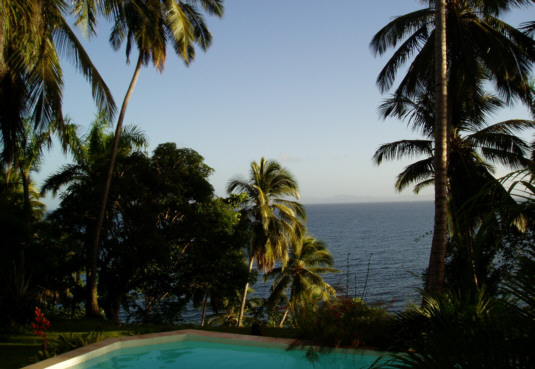
Doris and Andreas live directly by the sea, about 50 meters elevated. The view from their large terrace is fantastically beautiful. A diverse, exotic vegetation thrives on the large property. When we also made the acquaintance of their pets, our hearts felt a little wistful once again. That made us realize once more very strongly that we miss direct contact with animals quite a bit. Dogs, cats, and even two clever little donkeys came to curiously sniff us, but we must continue to remain absolutely steadfast in this regard. An animal on board with us simply cannot be an issue.
A word about our homepage statistics
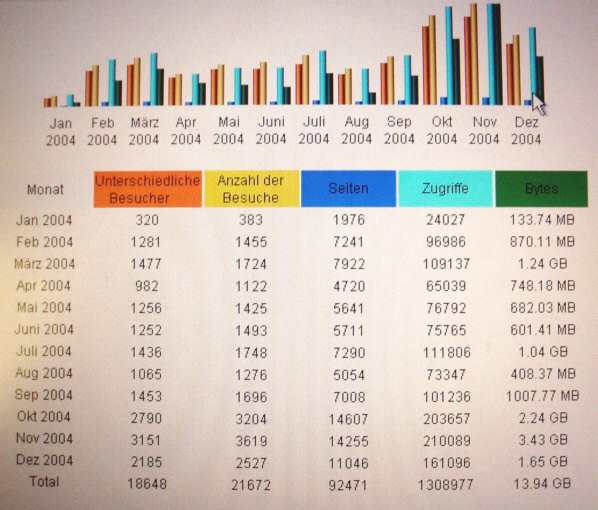
Since we were now anchored in Samana for a longer period, I finally had the chance to take a closer, relaxed look at the visitor statistics of our homepage. At first, I could hardly believe it. Over 21'000 people had accessed our pages last year. This is truly a great encouragement to continue making my personal travel diary accessible to all our friends and the public. Sometimes, when there was total radio silence from Switzerland, meaning no emails arriving for us, I did have slight doubts about the purpose of my site. Anyone who knows a little bit about IT certainly also knows the effort behind continually updating this site from distant lands. Finding internet cafes with laptop connections, for example here in the Bahamas, is just the smallest problem. Internet connection prices also vary greatly from country to country. Starting from the cheapest country so far, Venezuela with only 0.40 US $ per hour, it goes all the way up to the Bahamas, the most expensive internet country on our trip so far. How expensive is the internet connection price there, you ask? Well, 0.40 US $ per minute, which makes exactly 24.-- US $ per hour. A nice little sum can accumulate per update when you also consider how slow the transmission speeds can sometimes be here.
So, actually, I just wanted to tell you one thing with these lines:
Many thanks to everyone who opens our page, takes part in our journey, and I very much hope that I can alleviate the apparent wanderlust a little! Our smooth crossing to Mayaguana, an island in the Bahamas
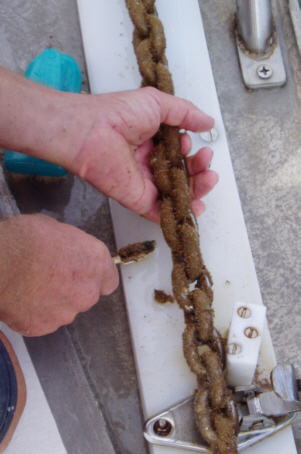
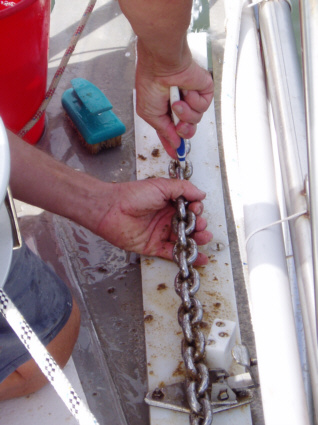
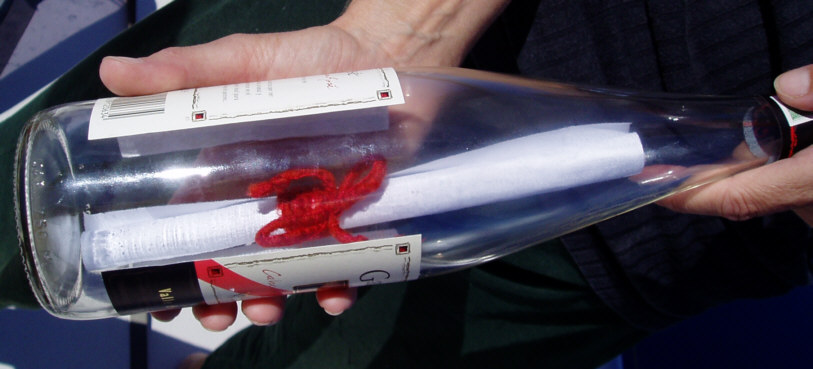
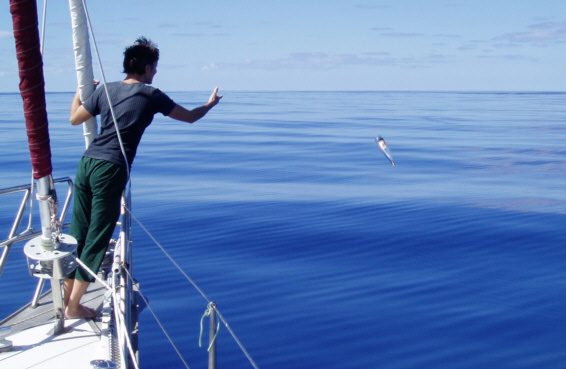
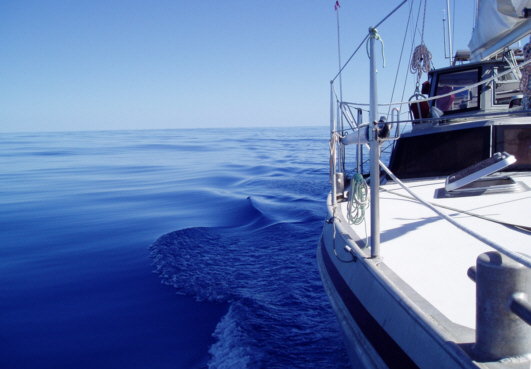
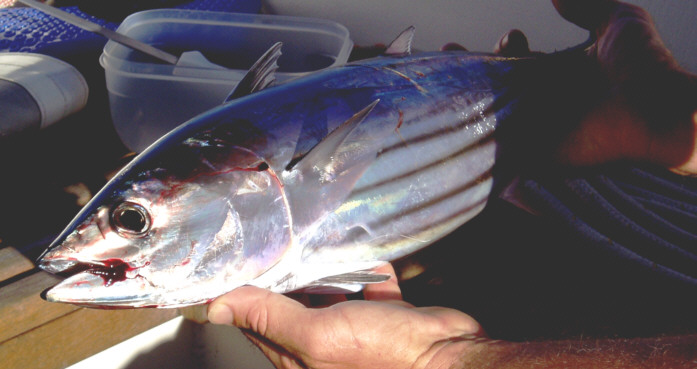
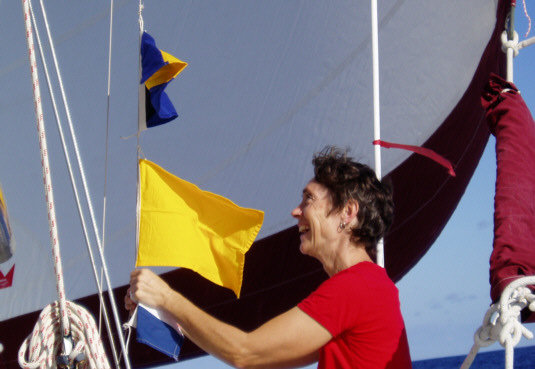
On January 21, the time had finally come. The weather forecast promised less wind, and from the northeast at that, a wind direction that was no longer unfavorable for us. The swell was also supposed to drop to about two meters. So we said goodbye to the German Momo, which definitely wanted to do some more diving in Turks and Caicos. We agreed to meet again towards the end of February in the northern Bahamas to continue our journey north together. At daybreak, it was anchors aweigh and off we went. Fortunately, the day before, I had already cleared the chain of algae and rock-hard little shells. That was a dirty and sharp job, which even involved old toothbrushes. To clean the inside of the chain links, this unconventional cleaning method proved to be the fastest. When we finally left the protective bay after two hours of motoring, we were curious about the swell awaiting us. We had mentally prepared ourselves for the announced two-meter waves, but didn't find them. On the contrary, the sea became flatter and flatter hour by hour, and the predicted wind stayed away entirely. So our iron genoa, meaning our trusty boat engine, had to remain in full use. Night came, then day, and another night, and the next morning we headed for the reef entrance in Abrahams Bay, on the small Bahamian island of Mayaguana. Previously, we had also completed Pascal's mission and handed his message in a bottle over to the mirror-smooth sea. We had also caught our obligatory fish on the line, thereby enhancing our culinary menu.
Our first reef passage
Now we were standing in front of our first reef passage. "Attention, the entrance to Mayaguana is very difficult. Only sail in when the sea is absolutely calm. Watch out very carefully for the small shoal right in the middle of the passage." That and much more were all the well-meaning advice and tips from the old Bahamas sailors.
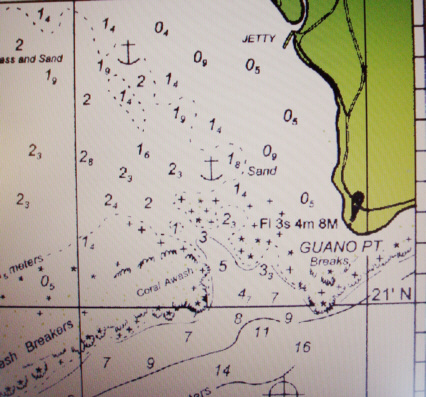
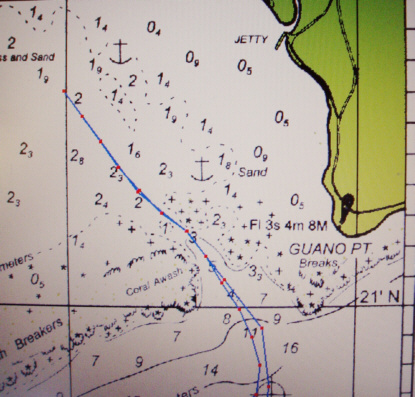
Yvonne, looking totally cool on the outside, stood right at the front on the bow pulpit on lookout. I, internally already a bit less cool, now had the steering wheel significantly tighter in my hand than usual. One eye on the screen with the electronic nautical charts, the other straight ahead in the water, and the third was always aimed at the depth sounder. At times, having only 30 cm of water under the keel was simply damn little and could bring out the odd drop of sweat on the helmsman. One ear caught Yvonne's commands, "port a little bit immediately! Watch out, the current is stronger here!", the other ear heard only a rushing sound. But that wasn't the sound of the sea, rather my own blood, which apparently had gotten a bit worked up. After ten long and tense minutes of sailing, we too had managed our first reef passage. We were finally inside the protected lagoon. Whoever says now that something like having three eyes etc. cannot be true, I can only reply that they simply have never experienced their "first reef passage" live.
Regarding today's electronic nautical charts, I would like to share something with the sailors among you. Our experiences with the Explorer/MapTech charts, here in the Bahamas, have been completely positive so far. They really match up almost to the exact spot, and we are very glad to be able to use such a fantastic system on board, naturally only in parallel with our tried and tested paper charts. How Christopher Columbus must envy me for this modern navigation aid.
Abrahams Bay on the island of Mayaguana
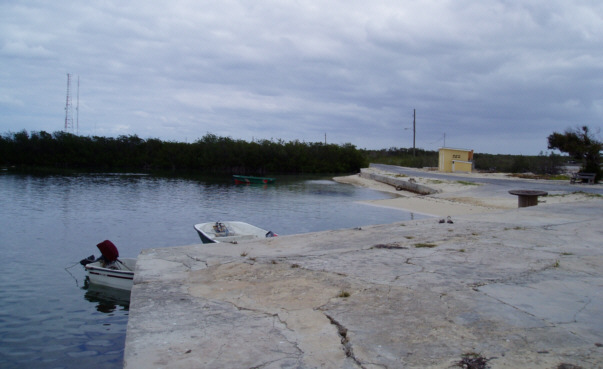
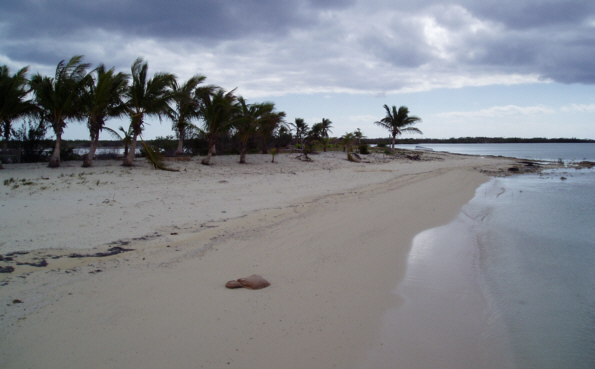
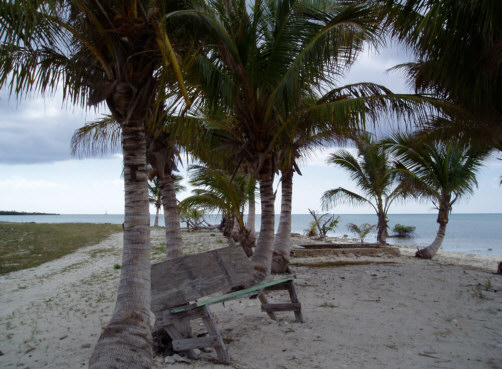
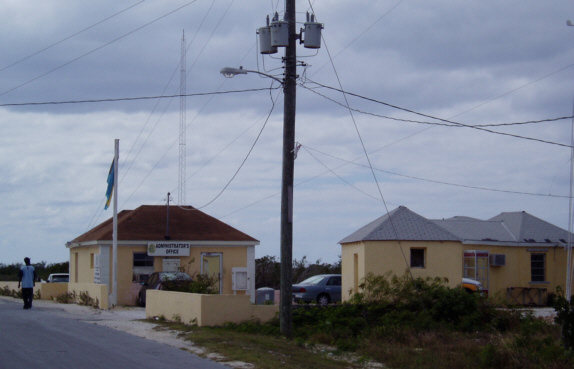
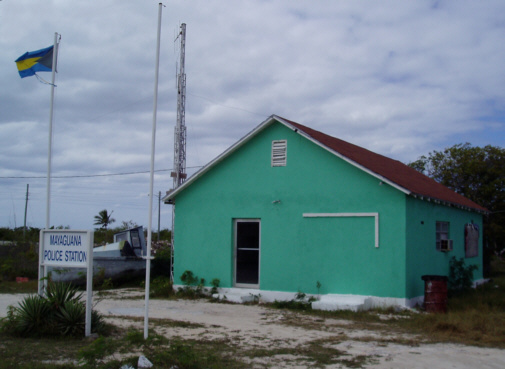
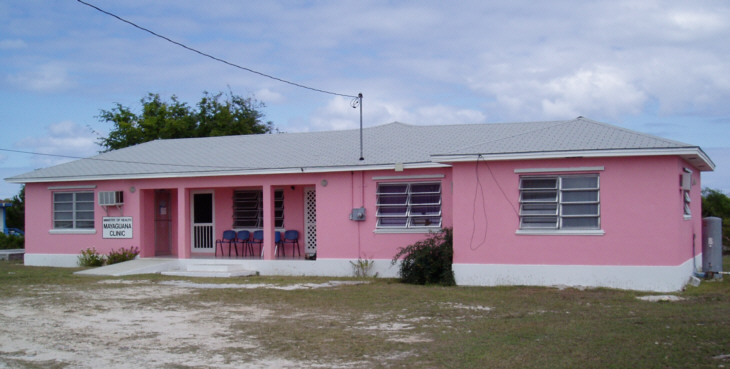
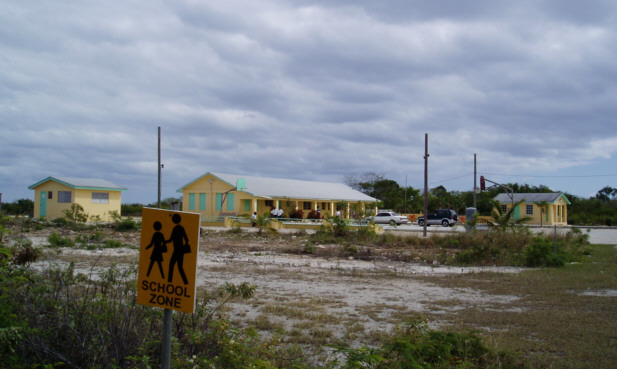
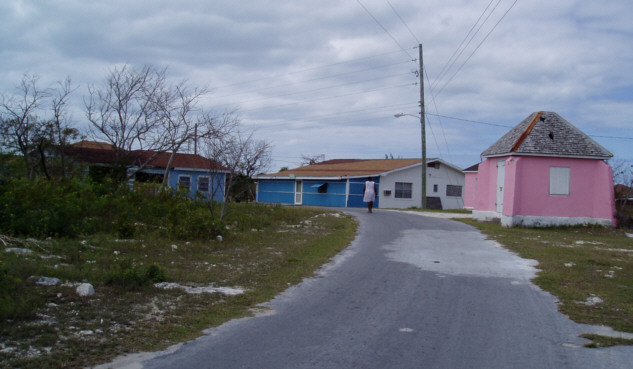
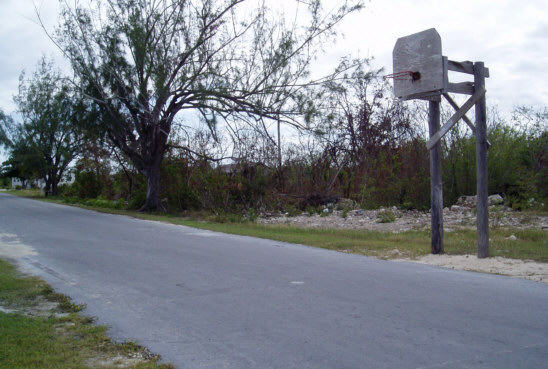
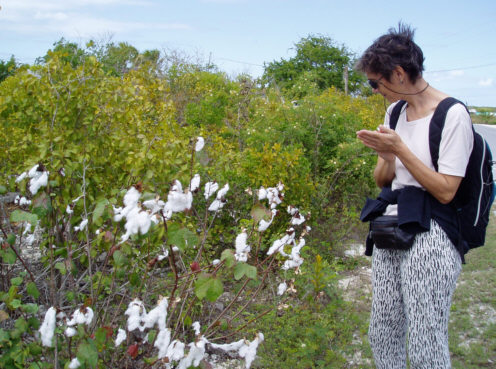
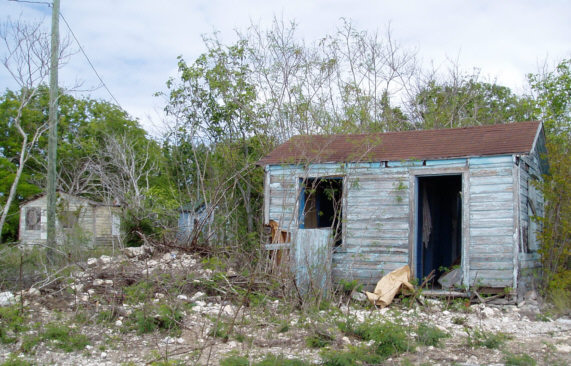
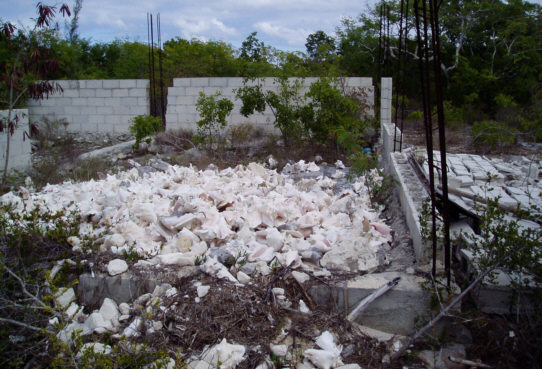
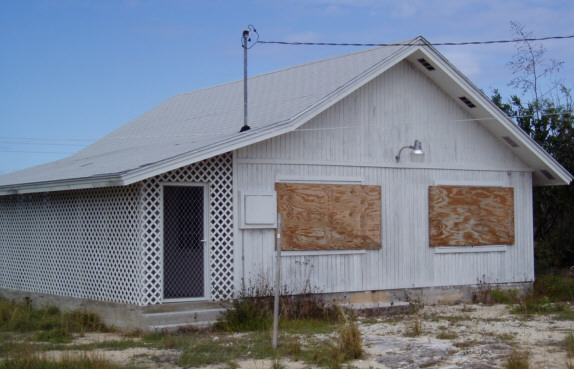
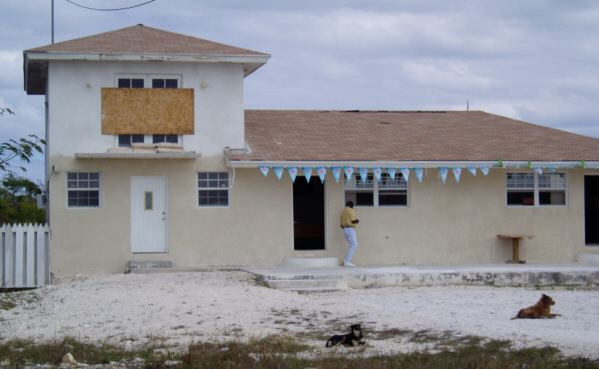
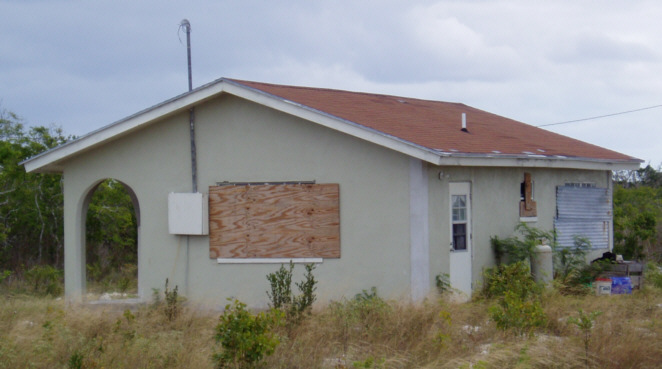
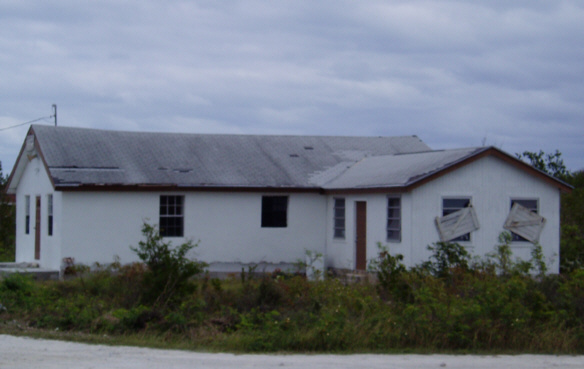
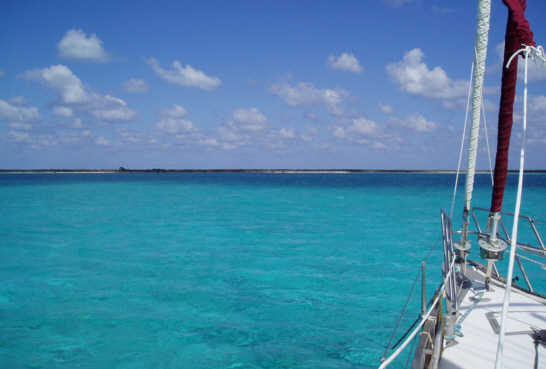
We lay here at anchor completely peacefully and well protected. Clearing in went smoothly once again, and the first stroll through the immediate surroundings was already done. Instead of the barred windows and doors, as was customary in South America and the Dom. Republic, we saw "boarded-up" houses here. That means for some windows the hurricane protection is not even removed anymore. That does not necessarily look very nice, but it saves a lot of work, because the next hurricane will soon pass over this group of islands again. After four small American yachts were still anchored here upon our arrival, they too left the bay the next day. Our MOMO was now all alone out there. Here in the Bahamas, unlike in Venezuela for example, this poses absolutely no danger. We could hardly get enough of the crystal-clear, turquoise water. I used to think that postcards with such a water color must surely be fake. Here I am taught otherwise. After two days of complete solitude, a large catamaran entered the bay. Despite the huge amount of open space, it anchored in our immediate vicinity. My slight annoyance about this, however, vanished abruptly when, shortly after dropping anchor, they came over to us on board and spontaneously invited us to a fish dinner on the cat. With a bowl of salad and a bottle of chilled rosé wine, we gladly accepted this invitation. When it also turned out that Walt spends every summer up in Alaska commercial salmon fishing on his large fishing boat and lives in the immediate vicinity of Seattle, our curiosity could no longer be contained. Coincidences are usually how you find out about the best anchorages and get the most valuable tips. It was the same this time. The evening was a complete success for us in every respect. Not only because of the interesting new information about Alaska and the west coast of Canada, but also because of the two excellently prepared fish. Starting with a yellowfin tuna sushi appetizer and then an excellently cooked gilt-head bream, it rounded off the evening culinarily. We will certainly be very happy to accept the invitation from Lee and Walt to visit them on the US West Coast in due course.
Port Nelson on the island of Rum Cay
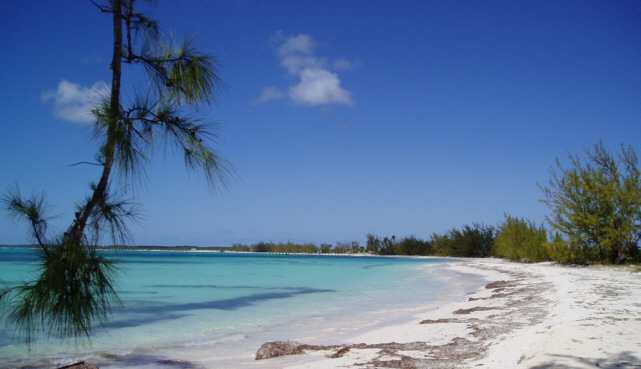
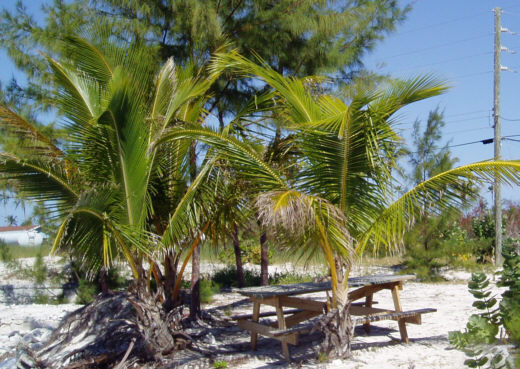
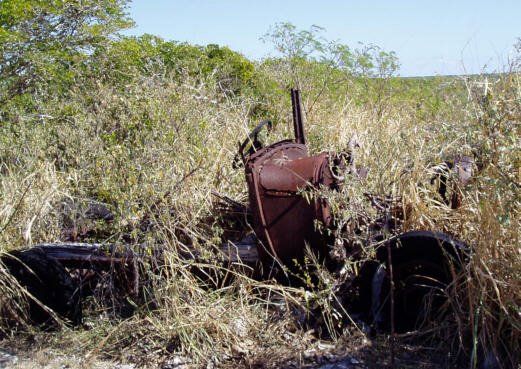
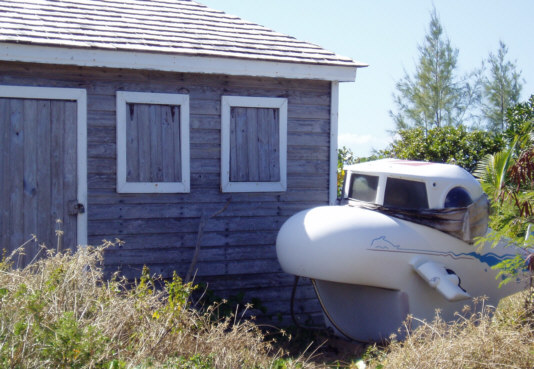
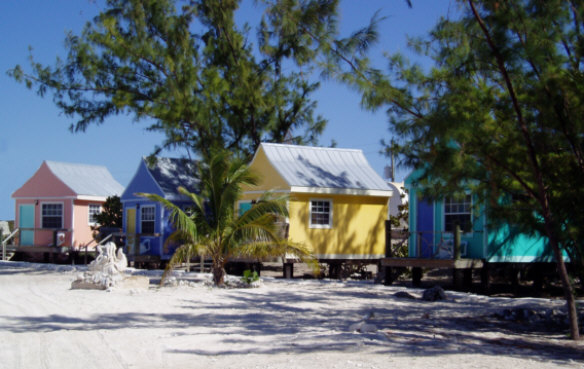
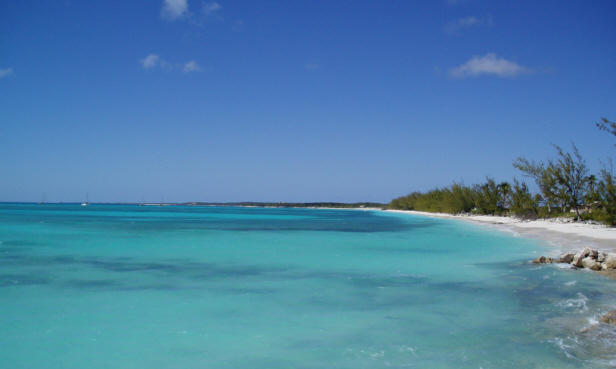
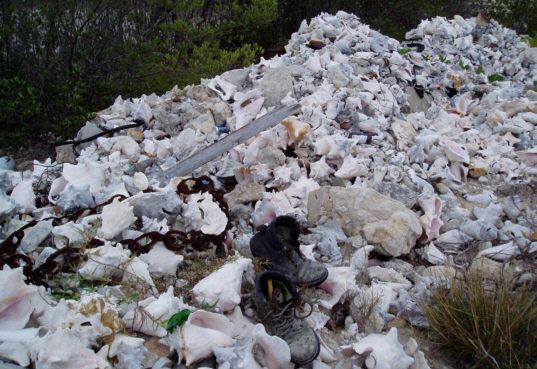
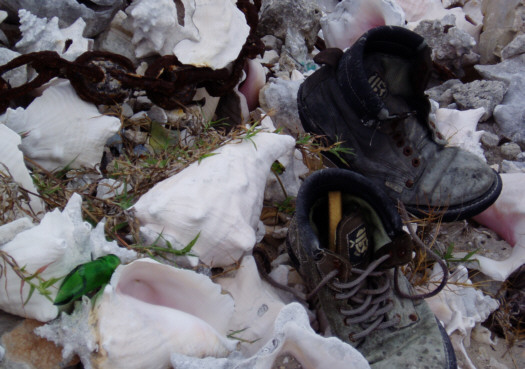
This island is much smaller than Mayaguana, but already a little more touristy. Here you will already find a very small marina and two miniature shops (3 by 3 meters in size), which receive fresh goods only once a week. That is always on Thursday, specifically when the mail ship briefly docks in Port Nelson. Alongside the few houses of the locals, there are also five colorful vacation homes available for rent. Several other houses were still under construction, which, however, looked as though work had stopped. In any case, no one was ever seen working there. Half-finished and abandoned construction sites like that do not look very inviting anywhere in the world. However, once again, the dreamlike sandy beaches and crystal-clear water were very inviting. Another island, truly made for relaxing. This naturally assumes that you can entertain yourself and do not need an additional entertainer for that. Since we were expecting Ursi, a friend of Yvonne, up in George Town by mid-February, we unfortunately had to leave this island again after only a few days. At this time of year, this reveals a bit of the problem with the Bahamas. Up in the north, one storm front after another moves from the USA toward Europe. For us down here, that unfortunately means the wind shifts from east to south, then through west to north. So with strong westerly winds predicted, we cannot sail west or remain anchored in a bay open to the west. The same naturally applies to the other wind directions as well. Anchorage spots that are well protected on all sides are truly rare here. Thus, you always have to be on your guard and take advantage of every good opportunity to move forward.
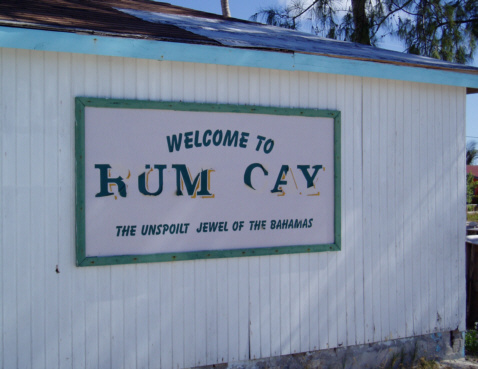
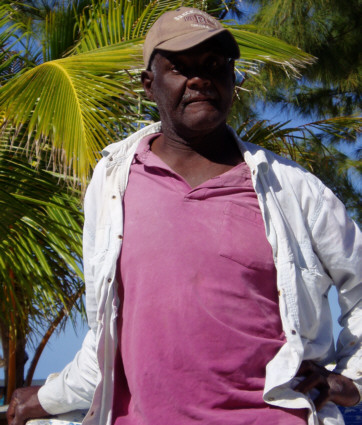
I would like to tell you one more little episode from Rum Cay. When we went ashore on the first day, I took a photo of the welcome board. Suddenly, an older man, unfortunately no longer completely sober, was standing next to us. He introduced himself as "the Moviestar" of Port Nelson and asked us to take a picture of him. He skillfully posed in front of a palm tree and, of course, we took the requested photo. When we arrived ashore the next day, he was already waiting for us on the beach. When he was handed his likeness on our computer printout, he beamed like a child under the Christmas tree. Sometimes it takes so little to make a person happy.