Trinidad · Grenada
Work and moments in Trinidad
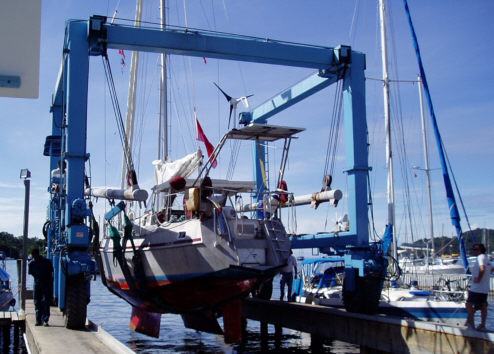
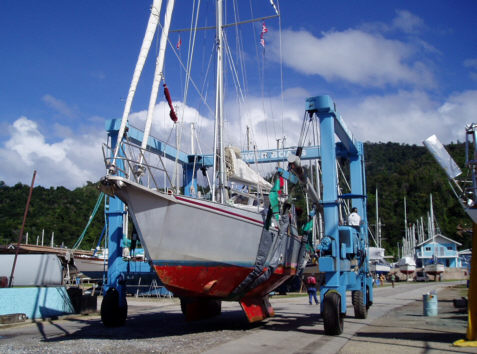
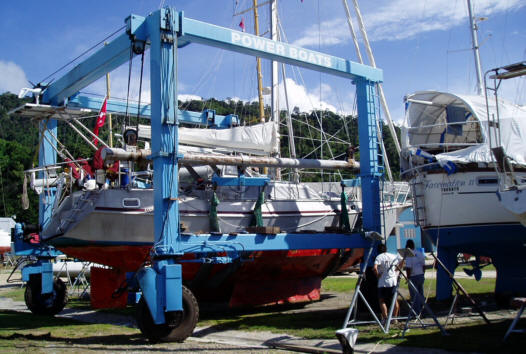
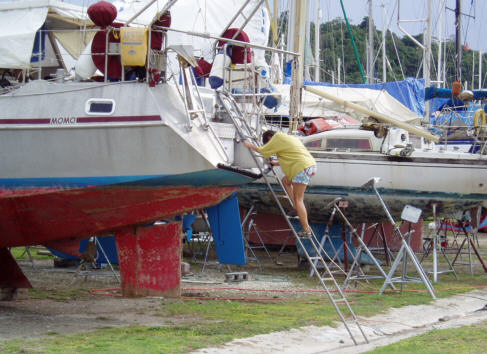
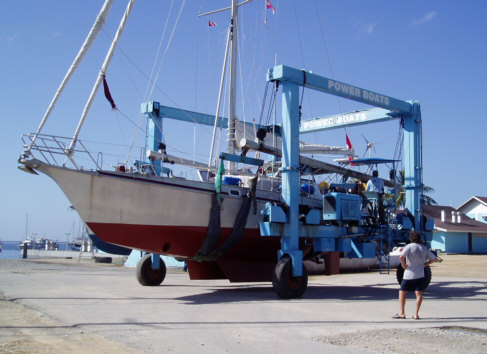
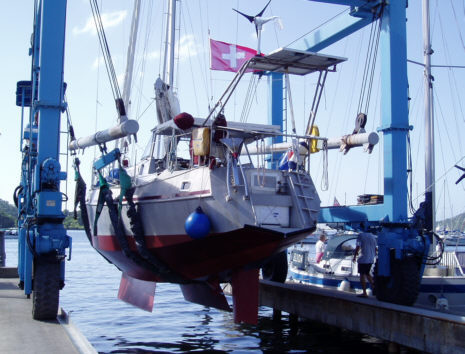
Well, here we are again. Advent has been transformed into an intensive month of work for us. On 2 December, our MOMO was hooked to the crane and carefully placed on land. This work was done very professionally here, and you could tell the crane crew had plenty of experience. Despite the momentary slight hustle and bustle, with some people, like us, just coming out of the water now and others wanting to get back in so they can sail north or towards Panama.
Since we had been anchored in Chaguaramas for a good week before our scheduled crane date, I was able to get quotes from several of the numerous boatyards during that time. And lo and behold, all the crane and mooring fees for the first 5 days on land were identical down to the cent. Only from the 6th day onwards and for pressure washing were there very minor price differences. So now it was a matter of choosing "our" boatyard based on a gut feeling. During my various visits to collect quotes, I quickly noticed that by far the friendliest staff, both in the office and around the boatyard itself, could be found at Power Boat. Our decision was made quickly, and we were not disappointed later on. We were welcomed in a professional, reliable, honest, helpful, and, as I said, very friendly manner. None of this is to be taken for granted here in the Caribbean. First on the agenda was scraping off the unloved barnacles, those small, sharp, and very hard shells, from the hull. Anyone who has ever done this knows what kind of work I am talking about. Last spring in Brazil, on Yvonne's birthday, we had already carried out this unloved but unfortunately necessary underwater work. Well, now it is my birthday, and accordingly it is clear: it is time to scrape barnacles again.
Justice does prevail after all on our MOMO!
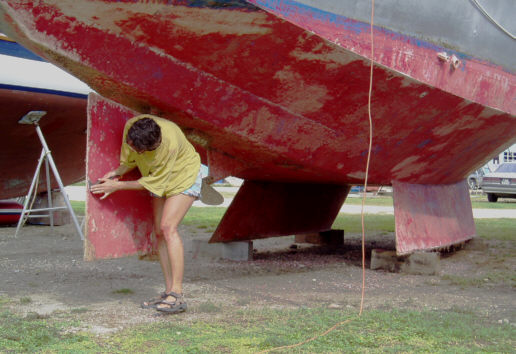
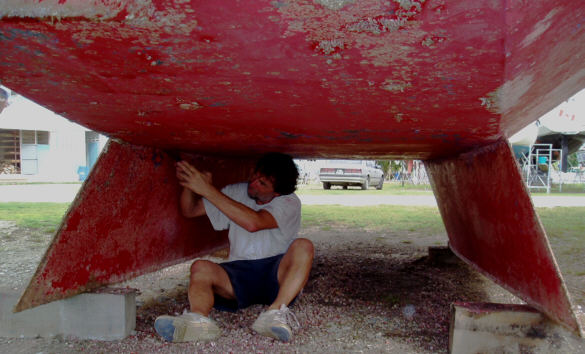
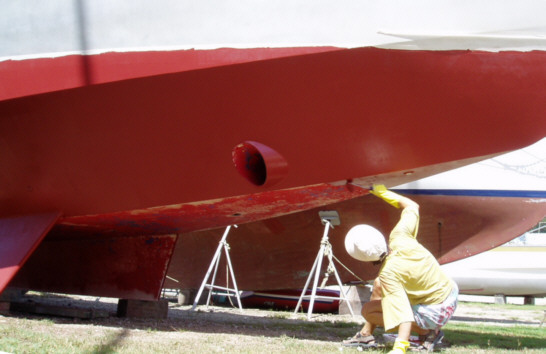
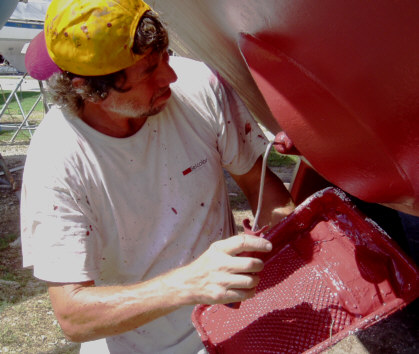
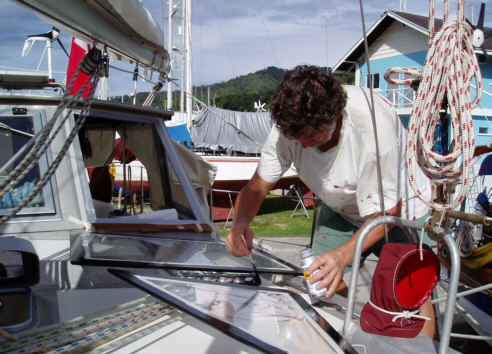
Scraping, pressure washing, sanding, masking, applying three coats of antifouling, replacing anodes, doing it all over again for the propeller and bow thruster, and the underwater hull of the MOMO is done. Now, almost unbelievably and yet sadly true, the cockpit windows need to be re-glued with SIKA once again. The cockpit roof gets a new, dark headliner so it absorbs dangerous UV rays better. The boat engine gets new oil and a little bit of pampering besides. Then I try to make the large genoa furler run a bit smoother again, unfortunately without success. The entire inner drum will have to be replaced later. The aluminum of the housing and the stainless steel used do not get along well here either! But because we were really in the mood for work, the raw aluminum cockpit sides were finally sanded down again, Yvonne continued her fierce battle with vinegar against the mold and then oiled the entire teak interior once more. The dinghy (our small tender) had removable wheels fitted so that we can pull it up better on sandy beaches in the future. The spreader bars were wrapped in plastic tubes so the sails won't chafe against them anymore. The wind scoops all got fabric covers because the plastic is starting to break down. A new, energy-efficient anchor light had to be mounted on the stern davit, and the outboard motor was due for a service. The eight planned days of work on land suddenly turned into sixteen. That is how quickly our schedule changes nowadays. Sometimes influenced by a beautiful landscape, then by the weather, or simply by a whim of our own. That is also part of the new, great freedom we are now allowed to enjoy.
Insight into our work in Chaguaramas, on Trinidad
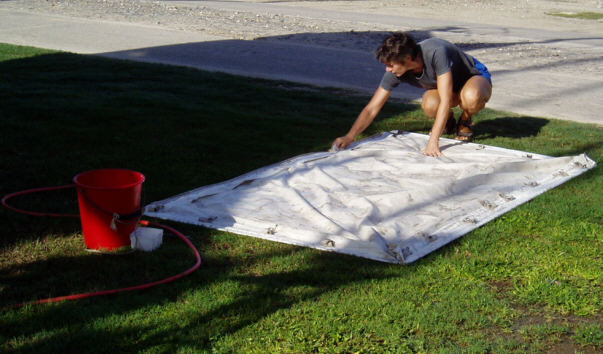
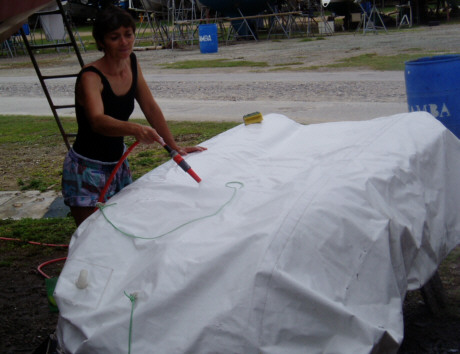
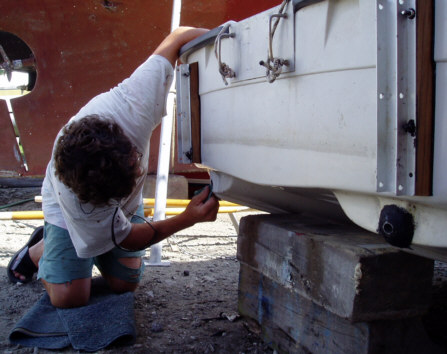
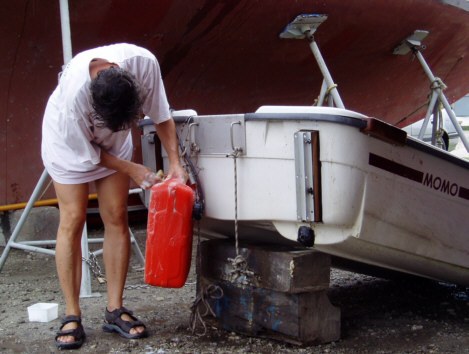
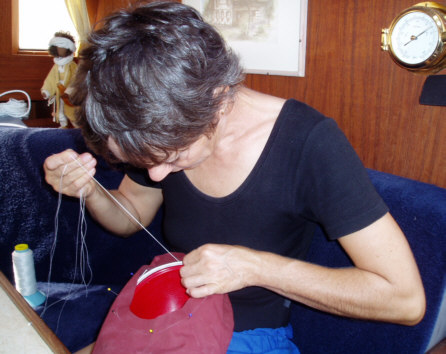
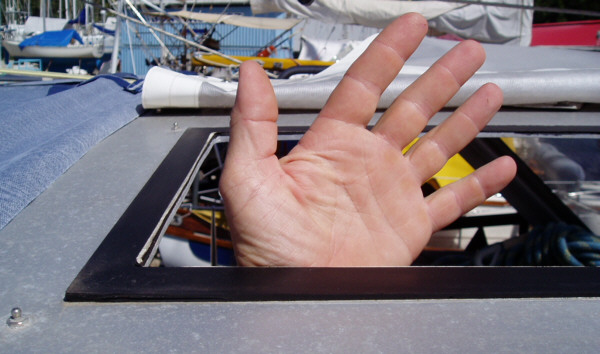
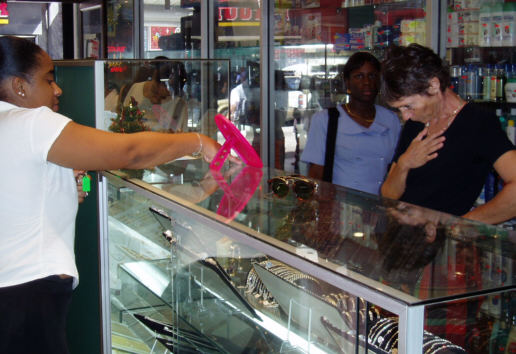
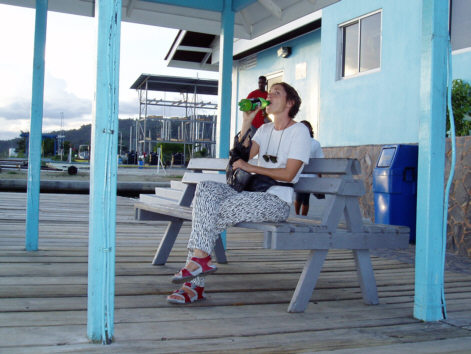
A few brief moments, without work, in Trinidad
From Chaguaramas, Trinidad to Prickly Bay, Grenada
December 18, 2003. At nine o'clock in the morning, the shore power is disconnected and our spruced-up MOMO is gently motored back to the crane slip. Afterward, her diesel tanks are filled to the brim and the last TT dollars are spent in the small supermarket. Clearing out with immigration is quick, and the only minor hitch occurs when our weapons are returned. The officer tries to hand me a completely different weapon instead of ours. At first, he doesn't understand why I refuse to accept it. He then leads me into the official arms room, which we would rather call a messy, dusty broom closet, and I have to help him search for my weapon in there. After this little intermezzo, we head back to the boat as fast as possible. Cast off and immediately set course for Grenada. The German Momo is already waiting for us a few miles further north. When we leave the wind and wave-sheltered area of the island, we are surprised by an uncomfortable northeast swell. Our course is north, which means sailing hard on the wind. After nearly three weeks of standing still ashore, the MOMO bucks like a young cow let out into the meadow again. However, the MOMO crew does not find this funny at all. Even less so their stomachs, which are completely empty after a short time. So, to begin with, we are both flat out in the cockpit. Every little task, whether keeping watch or trimming the sails a bit better, becomes an exhausting ordeal. About four hours later, I decide to resort to chemical pills after all. And lo and behold, the little red pill makes things much more bearable right away. That is also important, as we still have a whole night sail ahead of us. However, this goes off without a hitch, and the next morning we reach Prickly Bay on Grenada. Our lesson from this short passage of only 85 nm is that we will definitely never again head straight out onto the rough sea after spending so much time ashore. A classic "alpine sailor mistake" that we made there.
Grenada and the capital St. George's
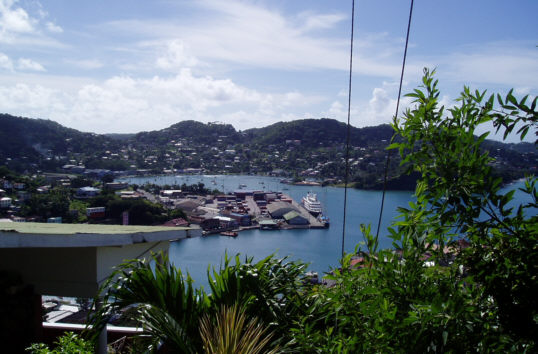
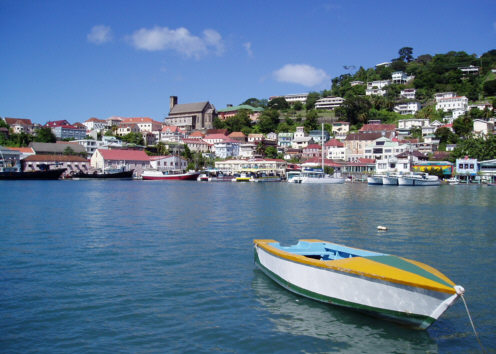
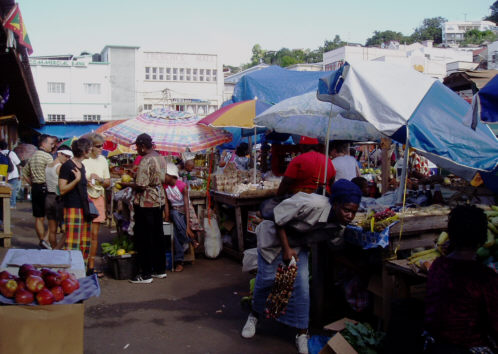
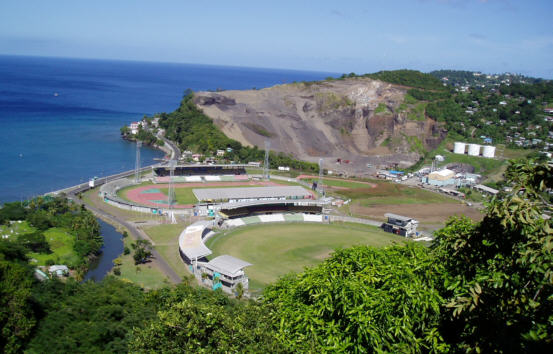
Not too long ago, Grenada was in the headlines of the world press for a brief moment when the Americans briefly occupied the island with about 5000 marines in the 1980s. The head of state at the time, Coard, has been sitting in prison high above the capital ever since.
Steep green volcanic mountains characterize the 345 square kilometer and southernmost island of the Windward group.
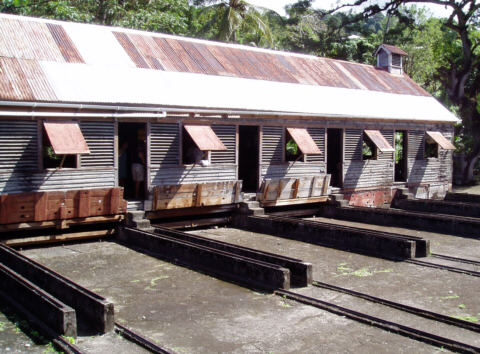
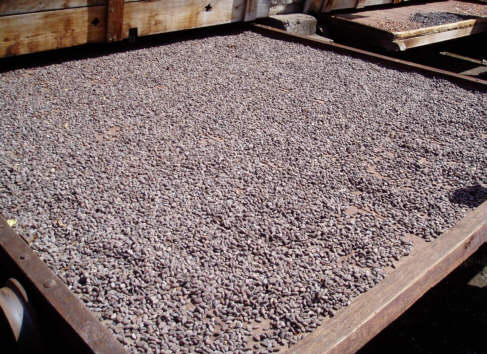
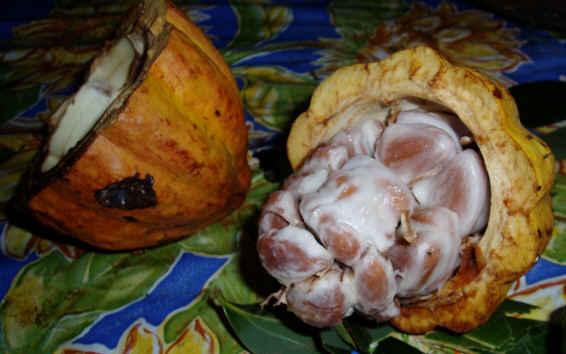
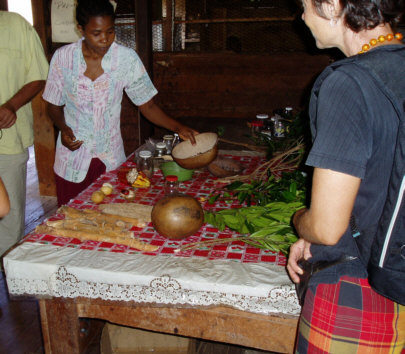
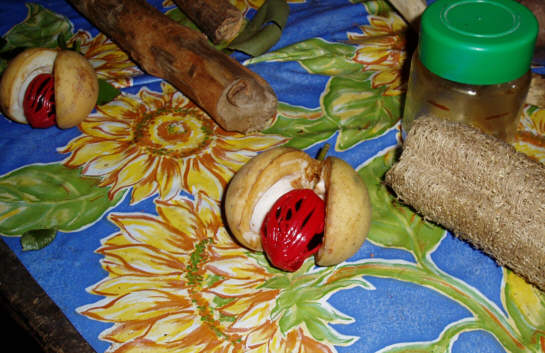
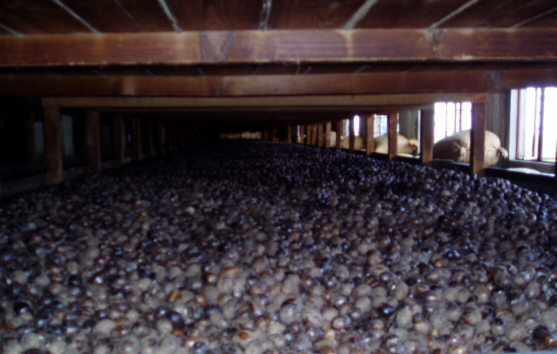
Grenada is actually better known as the Spice Island. Agriculture was and still is the most important economic sector. Indeed, 30% of the world's nutmeg production comes from here.
Tourism is now also beginning to flourish here, which is understandable given the natural beauty of the island. In contrast to Tobago, the people are much friendlier toward us white people.
At anchor in Clarke's Court Bay
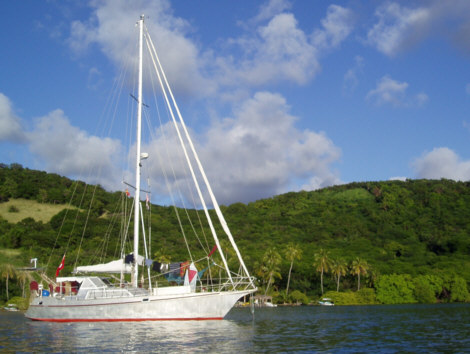
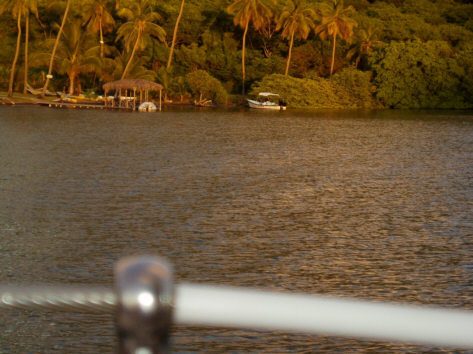
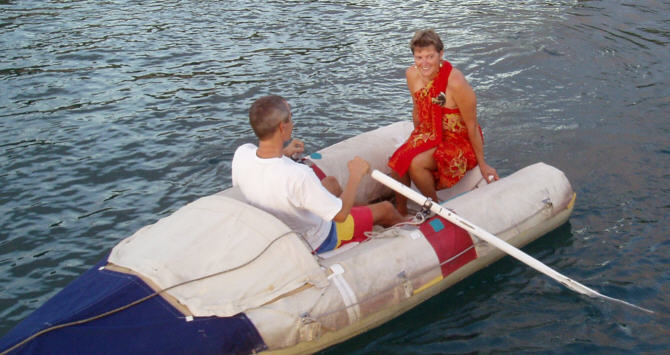
After we completed the official clearance ceremony in Prickly Bay, it quickly became too cramped for us there. Too many boats clustered together and, on top of that, a constant swell that can become quite annoying. So we took a quick look at the nautical chart and found a bay nearby that was protected against the swell. No major shopping facilities and hotels in the immediate vicinity, which sounded quite good, at least to us.
So, anchor up and away we went. On the way, we saw quite a few yachts anchored closely together in various bays. Our joy was great when we found "our anchorage" practically empty. Fortunately for us, the great mass of sailors cares more about the nearby supermarket and restaurant than about peace and quiet and a more secluded anchorage.
After the work-intensive recent weeks, we took things a bit easier again. Swimming, reading, snorkeling, and in between, of course, the everyday boat chores, which also include writing and updating this homepage, alternated comfortably.
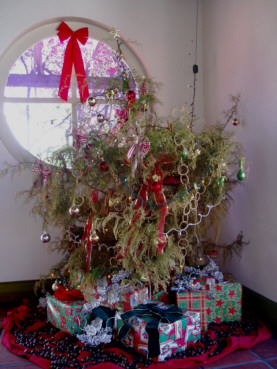
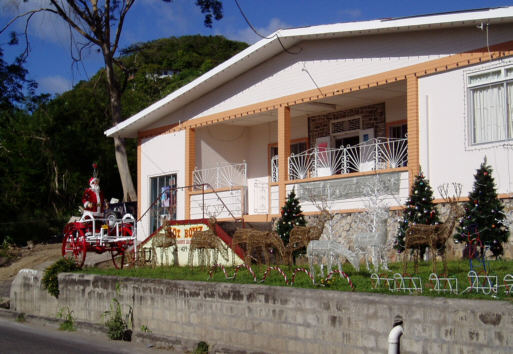
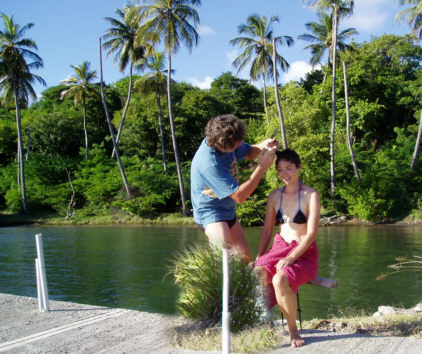
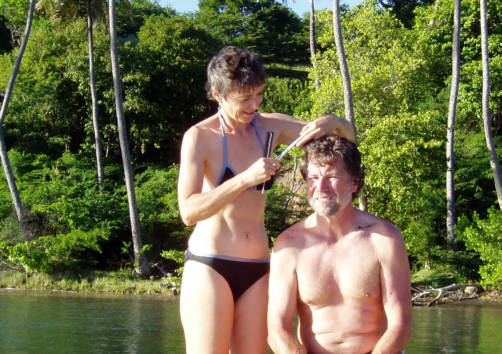
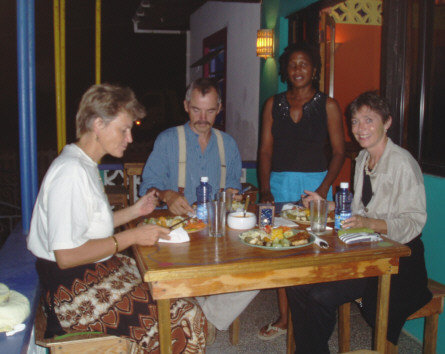
On Christmas Day, we had a Swiss/German festive meal with Barbara and Wolfgang from De-Momo on board our boat. Beforehand, however, we had to "dress up" a bit for this occasion. A haircut was on the agenda once again. The hairdresser's chair was set up in a tropical, idyllic setting, and the hair fell into the sand in turn. The few extra "steps" that now adorn our heads do not bother anyone here.
Actually, we wanted to sail on to Carriacou in the north of Grenada around December 26. An unusual change in the weather, however, kept us from doing so. Atypical, strong winds from west to north and a 4 m swell currently make the trip north impossible. This easily drives charter crews to despair, as they usually have to return the boats further north. This weather change doesn't really bother us, except perhaps for having to deploy an additional stern anchor.
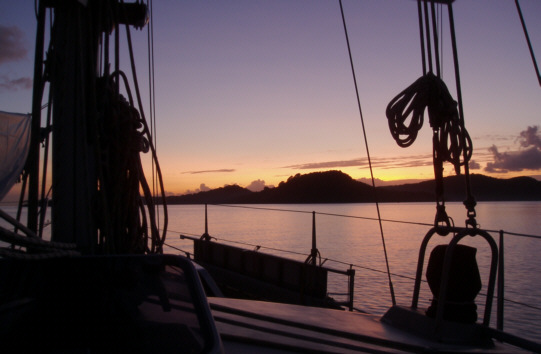
So we are currently continuing to enjoy life here in Clarkes Court Bay and preparing for our necessary visit to Switzerland. At the end of January/beginning of February 04, we have to fly back there to finally get our new Swiss passports. This now results in really very expensive and precious passports for us, and all that because Swiss bureaucracy is not a whit better than in any small, underdeveloped banana republic. Certain authorities certainly won't like hearing this, but unfortunately, this statement is 100 % true.
Inflexible whenever things don't go strictly according to their standard operating procedure. For people like us, traveling the open ocean, globetrotters, or individuals who cannot be easily pigeonholed, there is no understanding. The full power of the state can be easily and casually exercised against them, legally certainly even correctly.
Grenada, the Nutmeg and Spice Island