
Tobago · Trinidad
Charlotteville on Tobago
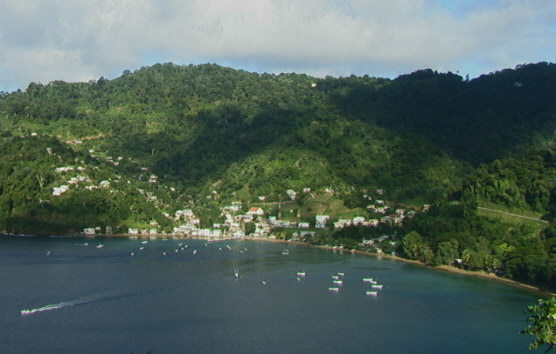
We have now been on Tobago for a month. My feelings towards the locals are still very divided. From absolute racism, with an almost unimaginably foolish arrogance, to a truly very warm and friendly manner towards us, I have experienced everything so far. After all, we are only guests of this country and the local population for a limited time. To some extent we are very welcome, and to another we are merely tolerated grudgingly. Having your own boat, clean clothes and shoes already makes you count among the very rich people here, and that partly creates this great jealousy towards us. Of course, we must not forget the past of these people's ancestors, who were abused in the most horrible way as slaves by the white people.
We currently still spend our days quite casually here in the bay of Charlotteville at the quiet anchorage. The usual chores of all kinds of minor work on MOMO, island hikes, snorkeling and long discussions with other sailors make the days fly by. In addition, there is always a joyful reunion with other sailboat crews with whom we formed friendships a long time ago in other countries. Of course, there is always a lot to talk about and the latest tips, warnings and recommendations are exchanged. Actually, it is just like it used to be with our friends and acquaintances. The difference is only in the topics. What seemed very important to us in Switzerland is no longer of any significance here. Today, of course, the reverse is also true. From a Swiss perspective, our topics and problems are certainly not comprehensible, which I even understand. Unfortunately, the weather is not quite playing along yet and is showing its very, very wet side. The humidity therefore rises at times to just under 100% and with it our fight against the mold in the boat. By the way, this is a real Sisyphean task and takes a bit of a toll on Yvonne's morale. She takes the "mold" much too personally and her sense of cleanliness gets quite shaken up.
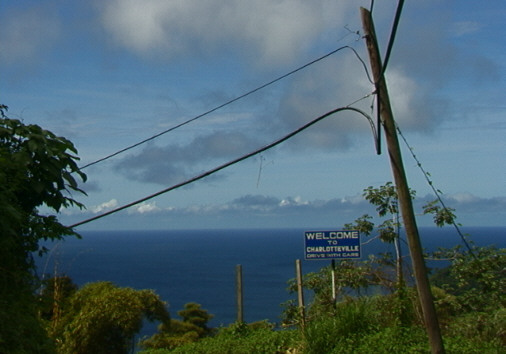
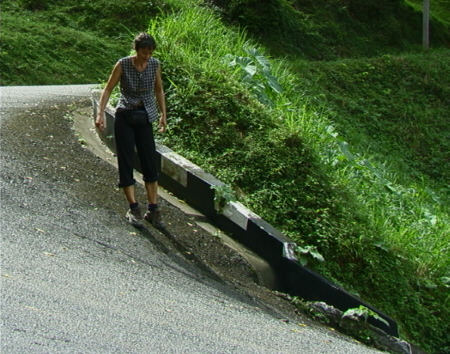
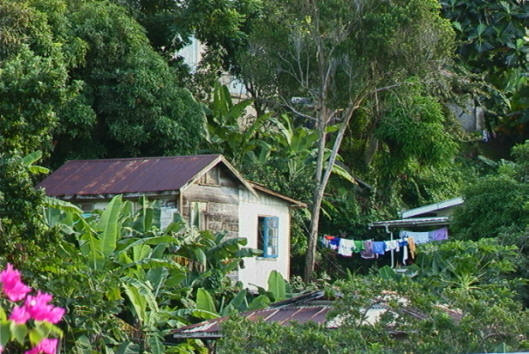
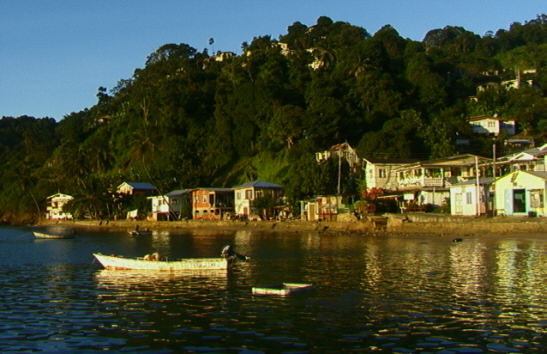
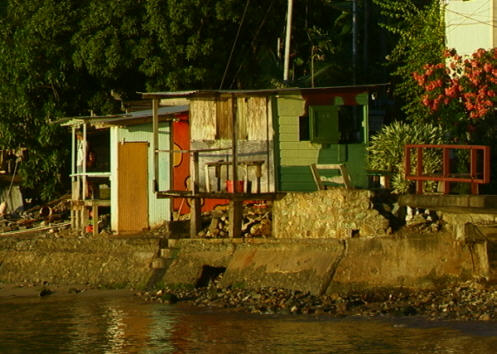
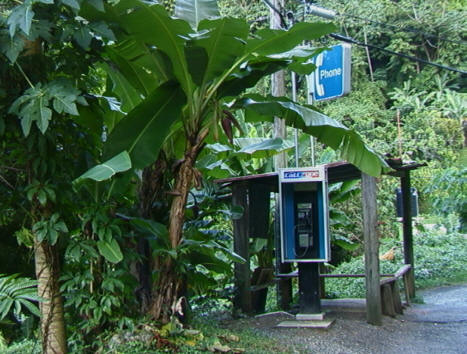
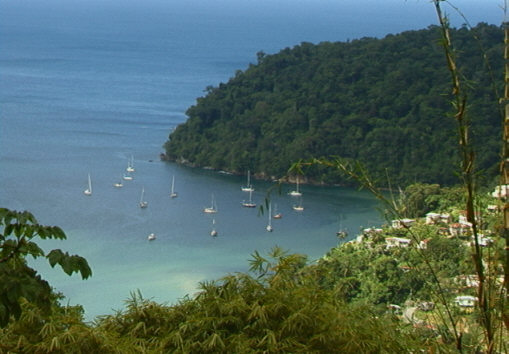
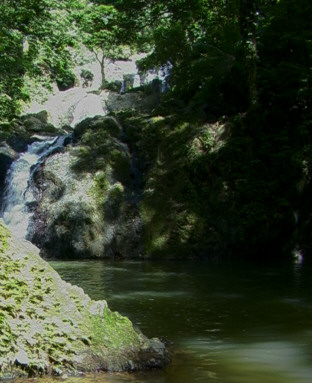

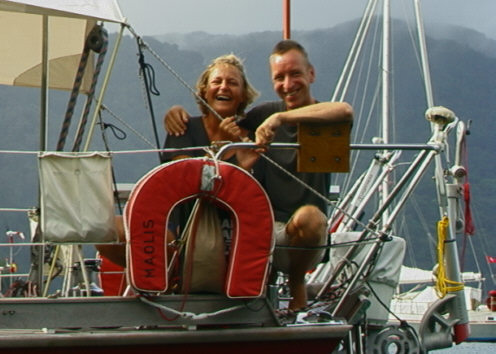
In terms of scenery, Tobago is a very beautiful, pristine island, still without large hotel complexes and without infrastructure for us sailors. The government is trying to keep the tourism, which is growing here too, within clear limits. Not cheap mass tourism, but a kind of ecotourism is being built up. Hopefully that will work out!
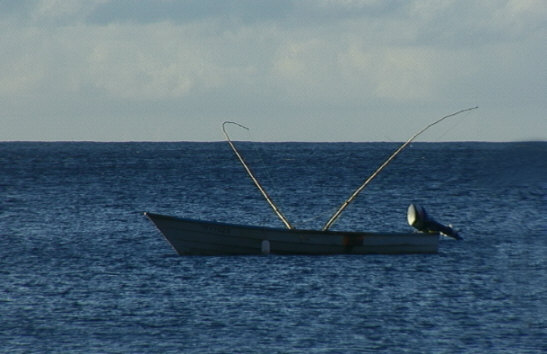
The village of Charlotteville, with only 900 inhabitants, is located on the northwest coast of Tobago and lives mainly from fishing. With a few small guesthouses and restaurants, a tentative attempt is now being made to get a piece of the tourist pie. If you are looking for absolute peace and quiet and still intact nature, I can only recommend Charlotteville as a holiday destination.
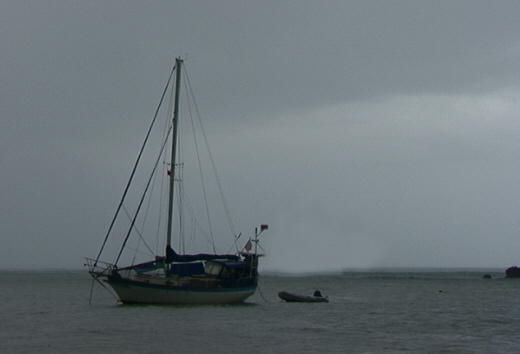
On November 27, we weighed anchor and set off in the direction of Trinidad. Despite a weather forecast that was actually suitable for us, we had to motor the entire 80 nautical miles with our iron genoa. We were confronted with an unpleasant swell, no wind, heavy rain showers with extreme gusts, and visibility under 50 meters. I thought North Sea sailing must be something like this, but we are here in the Caribbean after all. Well, at least the temperature, with its approx. 30 degrees, is still right.
Here in Chaguaramas on Trinidad, we now have to renew the antifouling. That means our MOMO has to come out of the water. They say Trinidad used to be a cheap shopping country for sailors, but that was back then. Today, the prices for nautical equipment and materials are about as high as in Europe. Only the cost of a worker is still quite low here. But since we want to do the work ourselves, that unfortunately does no good for us.
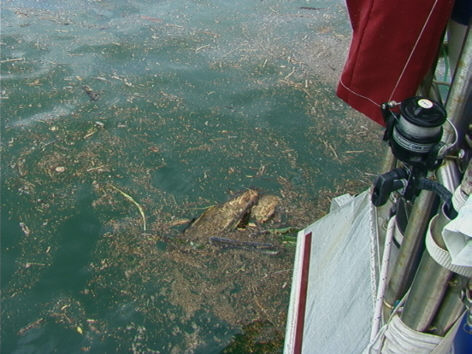
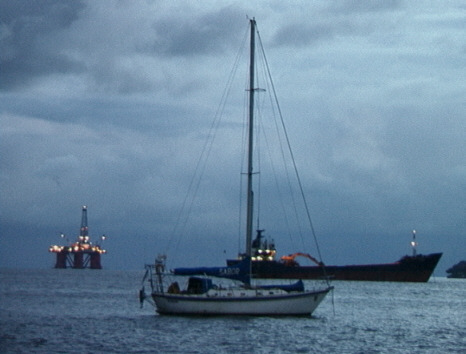
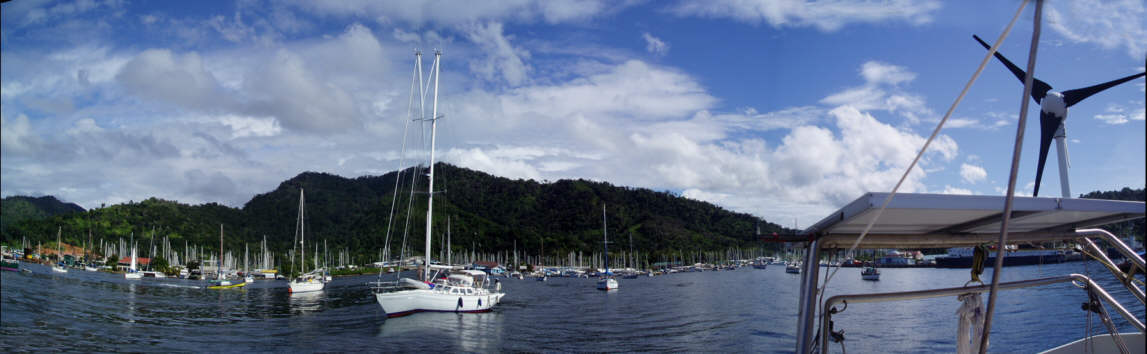
The scenic difference could not be much starker at the moment. From the idyllic anchorage to a crowded industrial port. From the absolute peace and quiet of nature to the noise and exhaust fumes of large cargo ships. From the unique view of the still intact primeval forest of Tobago to the view of an oil rig and a forest of masts. To top it all off, there is the more than murky and diesel-enriched water of Chaguaramas Bay.
Yet such places are also part of a long-term sailor's life. The opportunities to find boat materials, suitable and affordable places to carry out certain work are unfortunately limited. We then just try to get everything done as quickly as possible and are already eagerly awaiting the day of our departure.
The new burgees
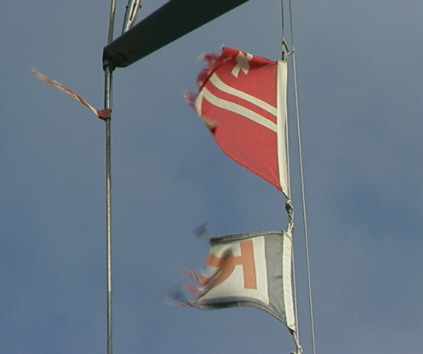
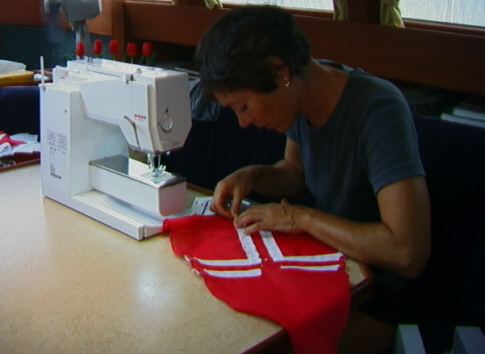
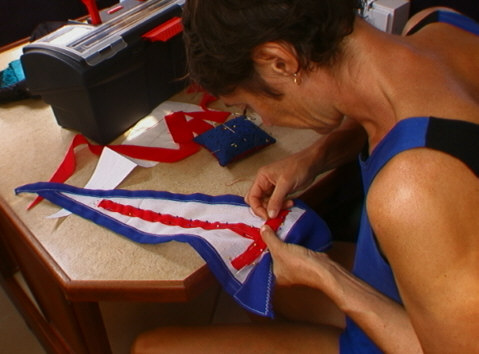
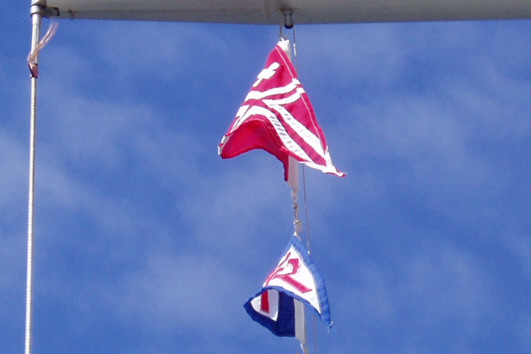
Within just two years, very little is left of the two burgees. I think both deep sea organizations should actually know best what the quality requirements for their burgees should be.
The daily small maintenance tasks are part of our life on board
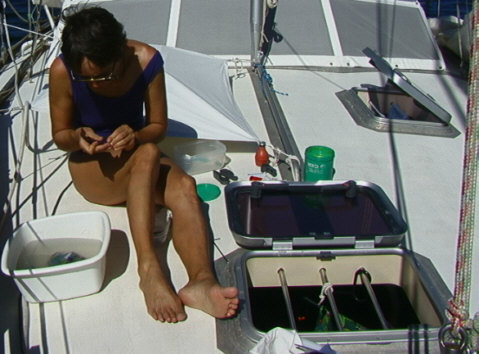
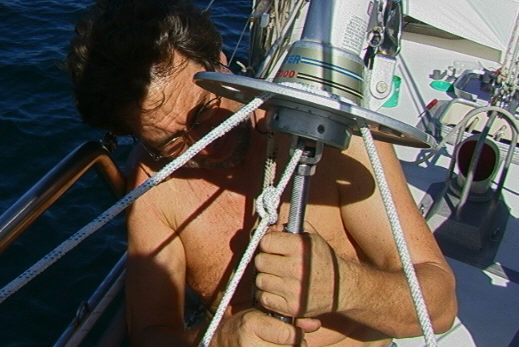
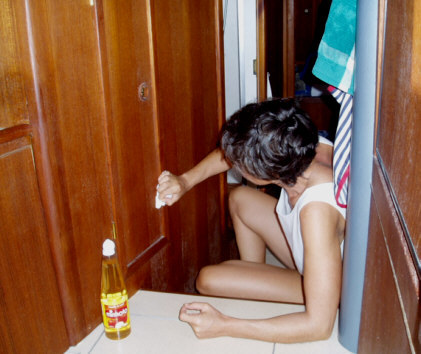
It used to be said, work first and then pleasure. Today it is for us: despite the idleness in the anchorage, something on the boat is maintained or repaired every day. The strain on the individual parts is really immense and the quality of the material unfortunately does not always keep up. It is always a small comfort for me when I hear about the long repair and defect list of the other sailboats. By the way, an extensive article about this problem was written in the sailing magazine "Yacht", No. 17 of 13 August 2003. There, a statistic clearly shows how unbelievably high the failure rates of individual devices and materials on board are and how unimaginably bad some so-called marine grade products actually are.